


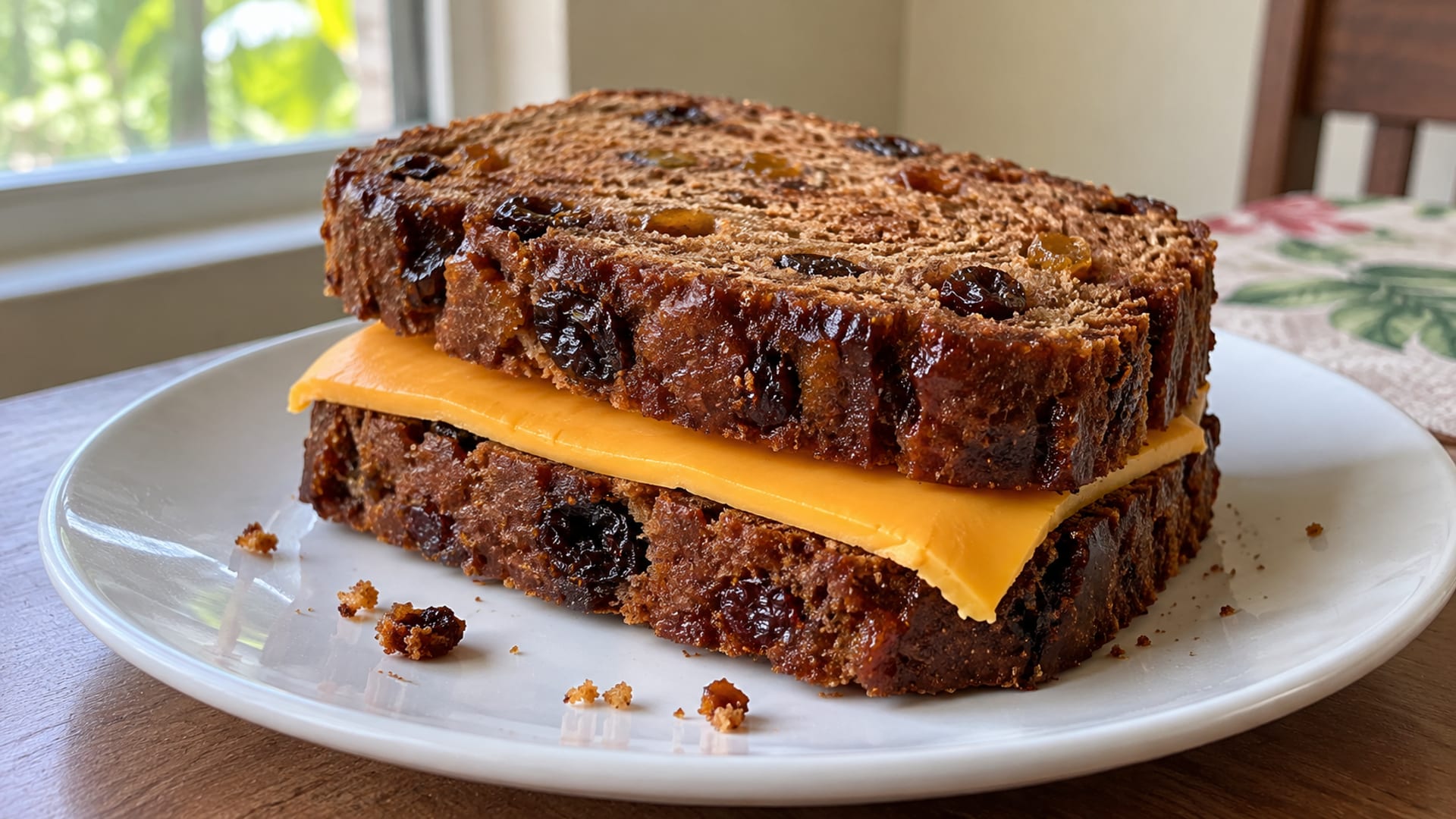
Jamaican bun and cheese is a dark, sweet-spiced Easter loaf, sliced and eaten with soft, processed cheddar, most often Tastee Cheese from a tin. The bun grew out of the British hot cross bun, and the pairing is strongest around Easter. In Jamaica you can buy the bun in supermarkets, at bakery counters and from local bakeries. The larger fruit-filled loaves belong to the weeks before Good Friday and Easter weekend, and outside that window the spice buns are the ones to look for.
What goes into the bun
Jamaican Easter bun is a dark, dense, moist loaf. Brown sugar, molasses or browning, cinnamon, nutmeg and mixed spice give it its flavour, and stout or malt is also used. Raisins and other dried fruit run through the loaf.
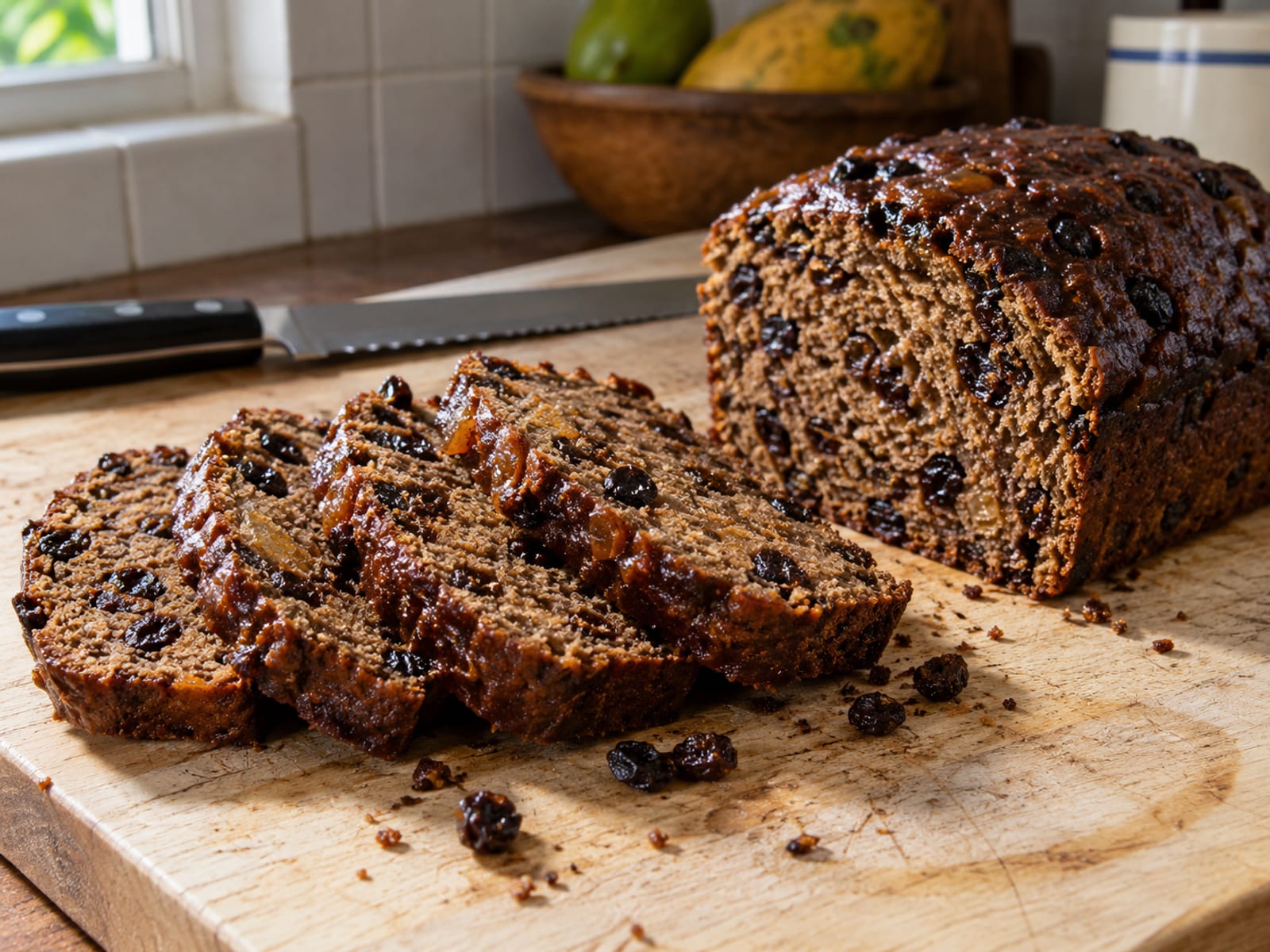 The bun is a dark, dense loaf that is sliced for the cheese.
The bun is usually sold as a loaf, and it is sliced for the cheese. Bun and cheese is a sandwich-like snack made from slices of the bun with slices of soft processed cheddar between them. Tastee Cheese is the familiar canned cheese for the pairing, though mild aged cheddar and other processed cheeses may also be used.
Where the tradition came from
The bun has a British ancestor. English Heritage records hot cross buns as spiced Easter buns eaten on Good Friday, with the cross standing for the Crucifixion. Jamaica took the smaller British bun and made it into a loaf that is darker and richer, with molasses, spices and fruit, usually served with canned cheese. The BBC has described bun and cheese as Jamaica's answer to the hot cross bun.
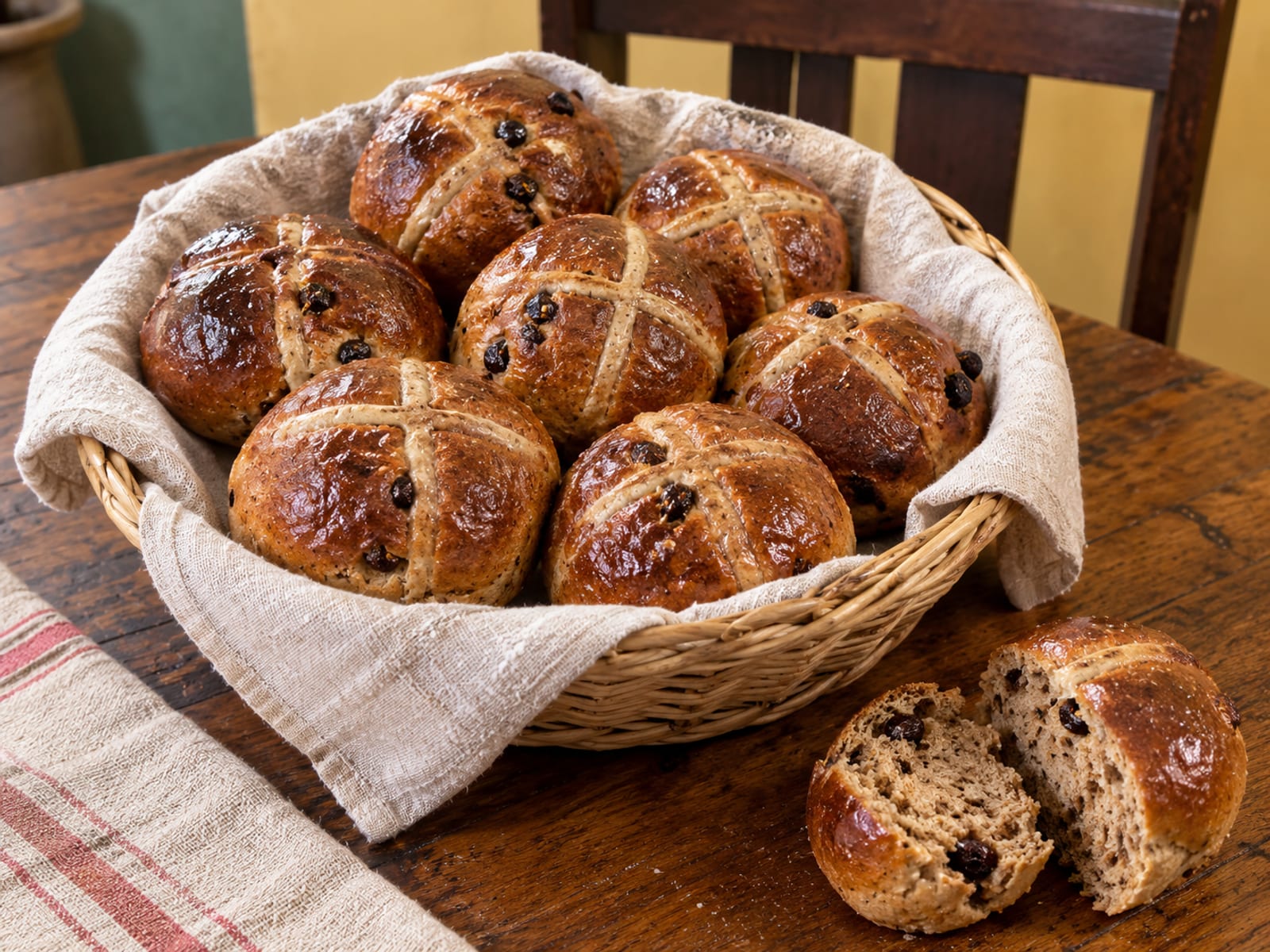 The British hot cross bun is the ancestor of the Jamaican loaf.
The tradition is also about family. The food is tied to family gatherings, childhood memories, gifting and seasonal celebrations. The Jamaica Observer reported that some Jamaicans eat bun and cheese throughout Easter and may swap regular meals for it. A 2025 Gleaner feature describes Easter bun-making as a family tradition passed down through generations, and it shares a home recipe with a twist.
The pull reaches well beyond the island. The Jamaica Observer collected Easter bun memories from Jamaicans living in Canada, China and elsewhere, and Jamaica's official Jamaica 55 cultural material describes bun and cheese as an important Easter food for Jamaicans abroad.
The cheese
Tastee Cheese is the best-known Jamaican pairing. Tastee describes its product as locally made canned cheese, eaten in Jamaica and internationally. It is soft, sliceable, salty and cheddar-style rather than a fresh cheese, and it is mild enough to balance the sweet, spiced bun.
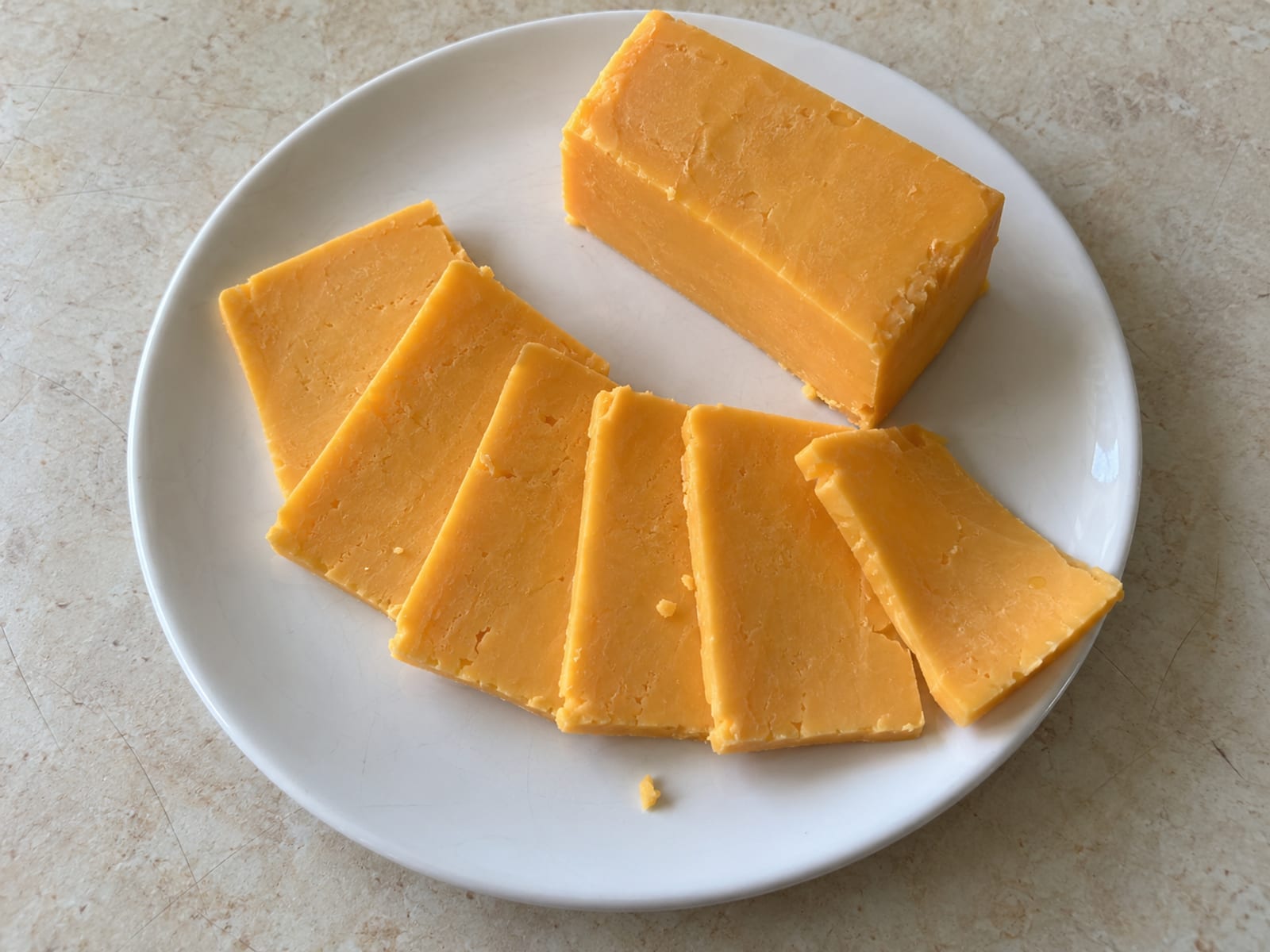 Soft processed cheddar is sliced and set between slices of bun.
Mild aged cheddar also works. A 2025 Gleaner recipe says the bun may be served with Jamaican cheese or mild aged cheddar.
Tastee says its canned cheese is not limited to Easter, although Easter is the main season for the pairing.
Brands and bakeries to look for
- National Baking Company makes National Traditional Jamaican Easter Bun and National Spiced Bun.
- HTB, also produced by National Baking Company, sells HTB Easter Bun, HTB Spice Bun and HTB Bran Bun. Its 2026 Easter campaign began in March, with sampling and promotions before the holiday.
- Yummy Bakery makes Yummy Easter Bun, which is sold in a 35-ounce size.
- Maxfield Bakery sells Maxfield Easter Bun through its own website.
- Local bakeries commonly take Easter orders, though availability, collection area and production dates vary from one bakery to the next.
When bun season runs
Bun is strongly seasonal around Easter. Some spice buns are sold beyond the holiday, but the larger fruit-filled Easter loaves are most closely tied to the weeks before Good Friday and Easter weekend. Buy early in Easter week, because the big loaves can sell out.
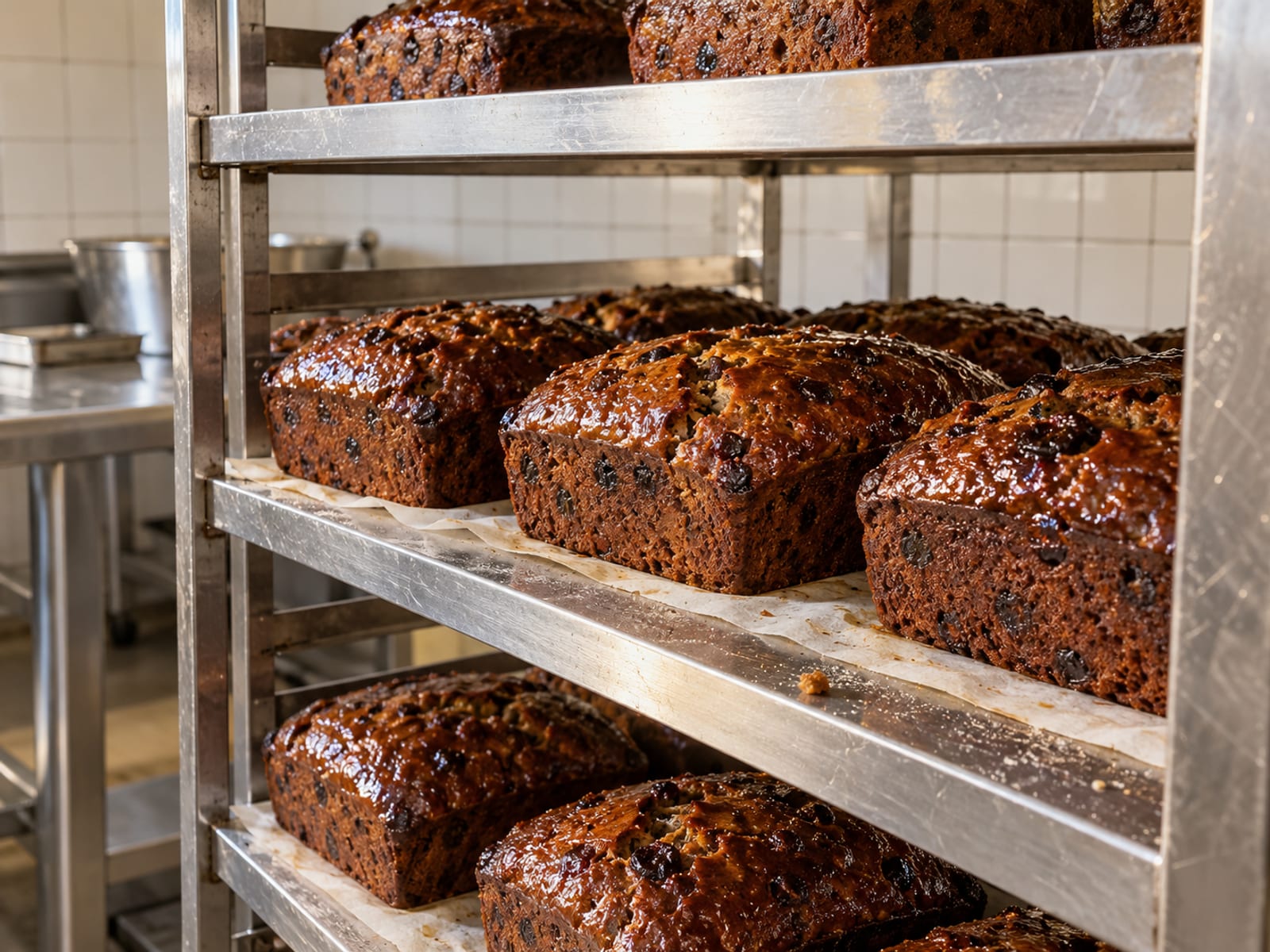 The big fruit-filled loaves are tied to the weeks before Good Friday.
Outside those weeks, look for the spice bun, and order early from a bakery that takes Easter pre-orders.
Which bun to pick
The names on the shelf mean different things, so read them before you pay. An Easter bun is the large, fruit-filled loaf that the season is built around. A spice bun is a smaller product, and some are sold beyond Easter. A bran bun, such as HTB Bran Bun, is a different style of loaf again. A prepared bun-and-cheese serving is a separate purchase from a whole loaf, so check what the price covers.
Buying for family overseas
If you are buying for family in another country, decide first whether you want a whole loaf, a smaller bun, a tin of cheese or a prepared serving. Each one is a different purchase with its own price, so settle the product before you start comparing listings.
Where to buy it
Loshusan Supermarket in Kingston lists HTB Easter Bun, Yummy Easter Bun and other bun products. Its delivery and pickup covers Kingston, Portmore and Spanish Town, with same-day cutoffs of 3 pm for Kingston and 11 am for Portmore and Spanish Town. Portmore and Spanish Town are in St. Catherine.
Orette Enterprise lists National Spice Bun and HTB Easter Bun, and it offers island-wide delivery from J$350 (about US$2.20) as of October 2026. Its hours are Monday to Friday, 8:30 am to 5 pm, and Saturday, 9 am to 5 pm.
Maxfield Bakery sells its Easter Bun through its own website, and the loaves on that listing are marked sold out. National Baking Company products and HTB are also sold through National's brand network and Jamaican supermarkets.
Independent and community bakeries may take pre-orders. Ask about collection, production dates and whether they deliver, since each bakery sets its own schedule.
Confirm before you go that the seller is open and has stock, because listings change quickly near Easter.
If you plan to travel with a loaf or a tin of cheese, a whole loaf and canned cheese are easier to carry than a prepared serving. Check the airline rules and the food rules of your destination country before you pack. For a wider look at what can cross a border, read Can you bring Jamaican food home?
Before you buy
Prices, with dates
The cheese figures come from the Consumer Affairs Commission survey. These are loaf and packaged-product prices, not island-wide prices. Prices vary by size, shop, parish, promotions and stock, so compare the price, the loaf size and the seller together before you buy.
To find other bakeries and places to eat by parish, browse the restaurant directory.
Common questions
What is Jamaican bun and cheese?
Bun and cheese is a sandwich-like snack made from slices of sweet, dark, spiced Jamaican Easter bun with slices of soft processed cheddar between them. The bun is usually a loaf with raisins or mixed peel, flavoured with spices, molasses, browning, stout or malt. Tastee Cheese is the familiar canned cheese for the pairing.
Why do Jamaicans eat bun and cheese at Easter?
The tradition joins Christian Easter observance with Jamaica's version of the British hot cross bun. Families tie the food to gatherings, childhood memories, gifting and the season. Some Jamaicans eat it throughout Easter and may replace regular meals with it.
What kind of cheese is used in bun and cheese?
The traditional choice is soft processed cheddar sold in a tin, and Tastee Cheese is the best-known brand. It is smooth, salty and firm enough to slice. Mild aged cheddar can also be used, as a 2025 Gleaner recipe shows.
Where can I buy bun and cheese in Jamaica?
Supermarkets, bakery counters and local bakeries stock it during the Easter season. Loshusan in Kingston and Orette Enterprise both sell bun products, and Orette offers island-wide delivery. Independent bakeries may take pre-orders, so ask about pickup and production dates before you go.
How much does a bun cost in Jamaica?
There is no single island-wide price. Listings as of October 2026 put Easter loaves between about J$1,274 and J$2,100 (about US$8 to US$13), but the loaf sizes differ, and the listings do not all give weights. Compare the price per loaf with its size before you decide.