

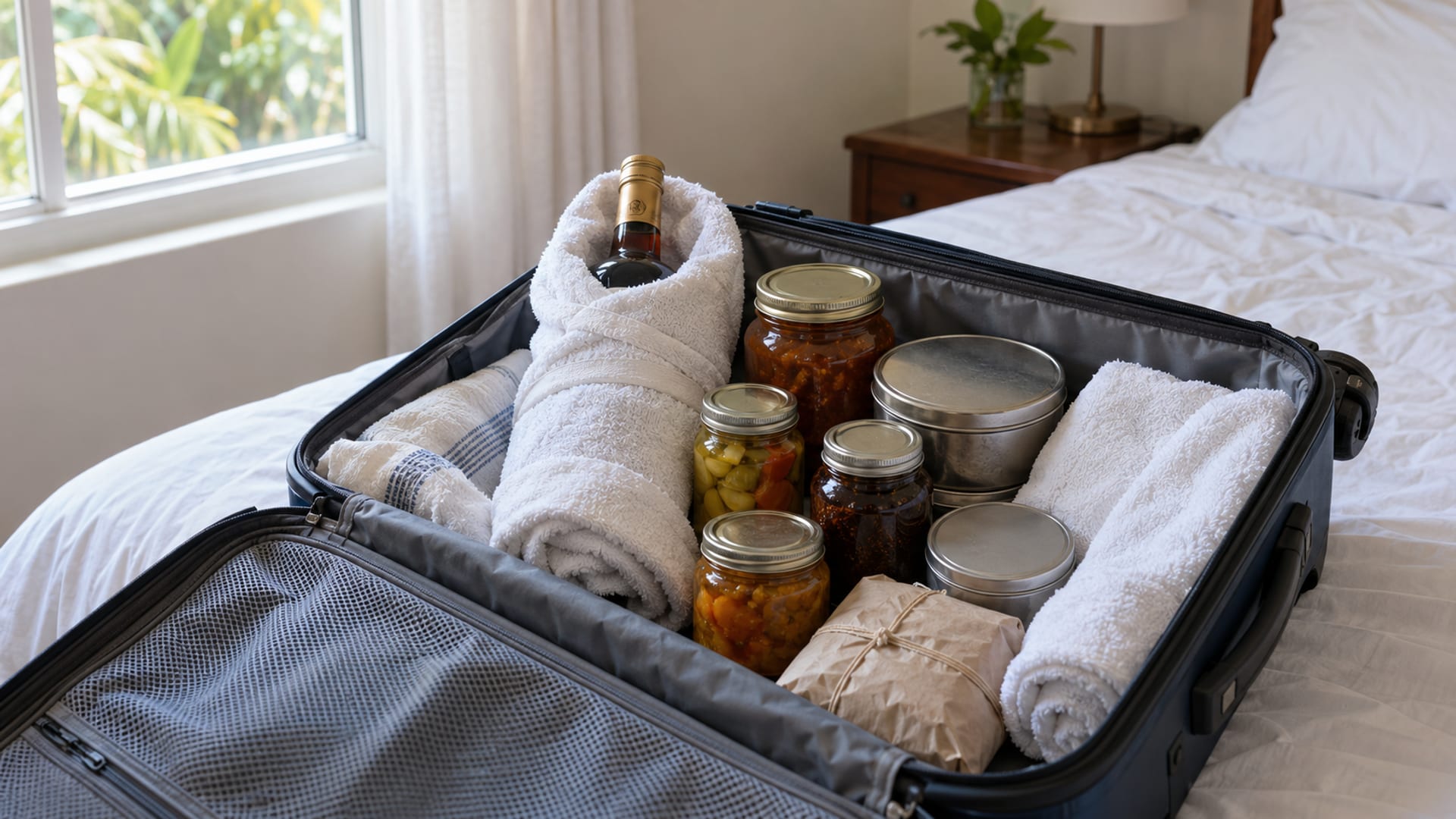
Yes, but the answer changes sharply by destination, and it depends on the exact item. Great Britain does not let you bring meat patties in from Jamaica. Canada only allows meat that is commercially prepared, cooked, shelf-stable and sealed, and a fresh bakery patty is none of those. The United States admits a beef patty only if it meets APHIS rules and you can prove where its beef came from.
Canned ackee depends on the product and the processor, sealed jerk seasoning is the simplest item to pack, and rum has its own allowances. Declare every food and agricultural product you carry. Before you buy anything, decide whether it is fresh, cooked, canned, shelf-stable, meat-based, plant-based, liquid or alcoholic, and keep the original label, the receipt and any proof that the product came from Jamaica.
Start with the country you are flying to
The answer is set by the country you land in, so start there. A patty that is fine for one border can be refused at the next, and the security rules at the airport are a separate set of rules again.
 Each destination country sets its own food rules.
United States
Declare every agricultural product to US Customs and Border Protection. That includes patties, meat, fruit, vegetables, ackee, sauces, spices and rum. CBP says travellers must declare food and agricultural products, and USDA APHIS inspectors make the final entry decision.
Fresh and frozen fruit and vegetables may be prohibited or restricted, depending on the product and where it comes from. Commercially packaged canned products are assessed under USDA, FDA and CBP rules, so canning alone does not make a product admissible. Jamaican canned ackee is item-specific: the FDA keeps an import alert on ackee because of hypoglycin A, and the product and its processor matter. Declare all of them.
Jamaica is listed by APHIS as free of foot-and-mouth disease, but beef, pork and poultry are also assessed against the BSE, swine-disease and poultry-disease rules. A Jamaican beef patty can be admitted only if that patty and its beef origin meet the APHIS requirements, the product is otherwise admissible, and you can prove its country of origin. A purchase receipt shows where you bought the patty. The label or other documentation has to show where the product, and its beef, came from.
A freshly baked, unlabelled patty gives the officer far less to go on than a commercially packaged product whose label shows what it is and where it was made. Poultry patties have separate disease restrictions. Cooked poultry from affected countries must be commercially packaged, labelled, shelf-stable and unopened. Pork can also bring different restrictions, so check the current APHIS animal health status before you fly.
Great Britain
Great Britain does not allow travellers arriving from countries outside the European Union to bring in meat or meat products. That includes Jamaican beef, chicken, goat and pork patties, along with sandwiches containing meat. Milk and milk-based products are also prohibited, apart from limited powdered infant milk, infant food and medically required special food.
That makes a fresh Jamaican patty unsuitable for entry into England, Scotland or Wales. Northern Ireland follows different arrangements, so check the rules for your final destination if your flight ends there.
Plenty of everyday packaged food is on the unrestricted list. Bread, cakes without fresh cream, biscuits, chocolate, confectionery, pasta without meat, packaged soup, stocks, flavourings and processed packaged plant products are all listed as unrestricted categories. Commercially canned ackee and sealed jerk seasoning fit more comfortably into that group than fresh ackee or a meat-filled patty.
Most fresh fruit and vegetables from outside the EU need a phytosanitary certificate. GOV.UK lists pineapple, coconut, citrus, banana, plantain, mango, passion fruit and guava among the fruits that can enter without one. Ackee is not on that list, so fresh ackee needs further plant-health confirmation before you travel. The Great Britain plant-product rules set out the detail.
Canada
Canada requires you to declare all food products. From Jamaica, Canada does not permit fresh, dried or cured meat. A commercially prepared meat product may be permitted only if it is cooked, shelf-stable, sealed, travelling with you, clearly labelled with what it is and where it was made, and compliant with the country-of-origin rules. Beef products must also meet Canada's BSE country requirement, and the limit is 20 kg.
A fresh Jamaican beef patty from a bakery does not fit that shelf-stable, sealed-package category. Freezing or vacuum-packing it does not change the product category. A commercially canned or retort-packaged beef product may qualify if it meets the packaging, shelf-life, labelling, origin and quantity conditions.
Canada permits baked goods, pastries and bread up to 20 kg when they contain no meat. Condiments and dressings are allowed up to 20 kg or 20 litres. Processed fruit and vegetables, including canned products, are allowed up to 20 kg or 20 litres. Spices, tea and coffee are allowed up to 20 kg.
Canned ackee and commercially packaged jerk sauce generally fit the processed fruit, vegetable or condiment categories, subject to inspection and any product-specific rules in CFIA's personal-use table.
What to buy in Jamaica before the airport
If you want a patty for the flight, or for your first meal after landing, Tastee Patties is a practical stop in Kingston. The head-office patty shop is at 25A Half Way Tree Road, Kingston 5, and its published hours are Monday to Saturday, 7:00 am to 10:00 pm. Tastee also has branches in St. Andrew, St. Catherine, St. James and St. Thomas. The Montego Bay branch is at 105 Barnett Street and is open Monday to Saturday from 7:00 am to 10:00 pm. Tastee's official locations page gives addresses, phone numbers and opening hours.
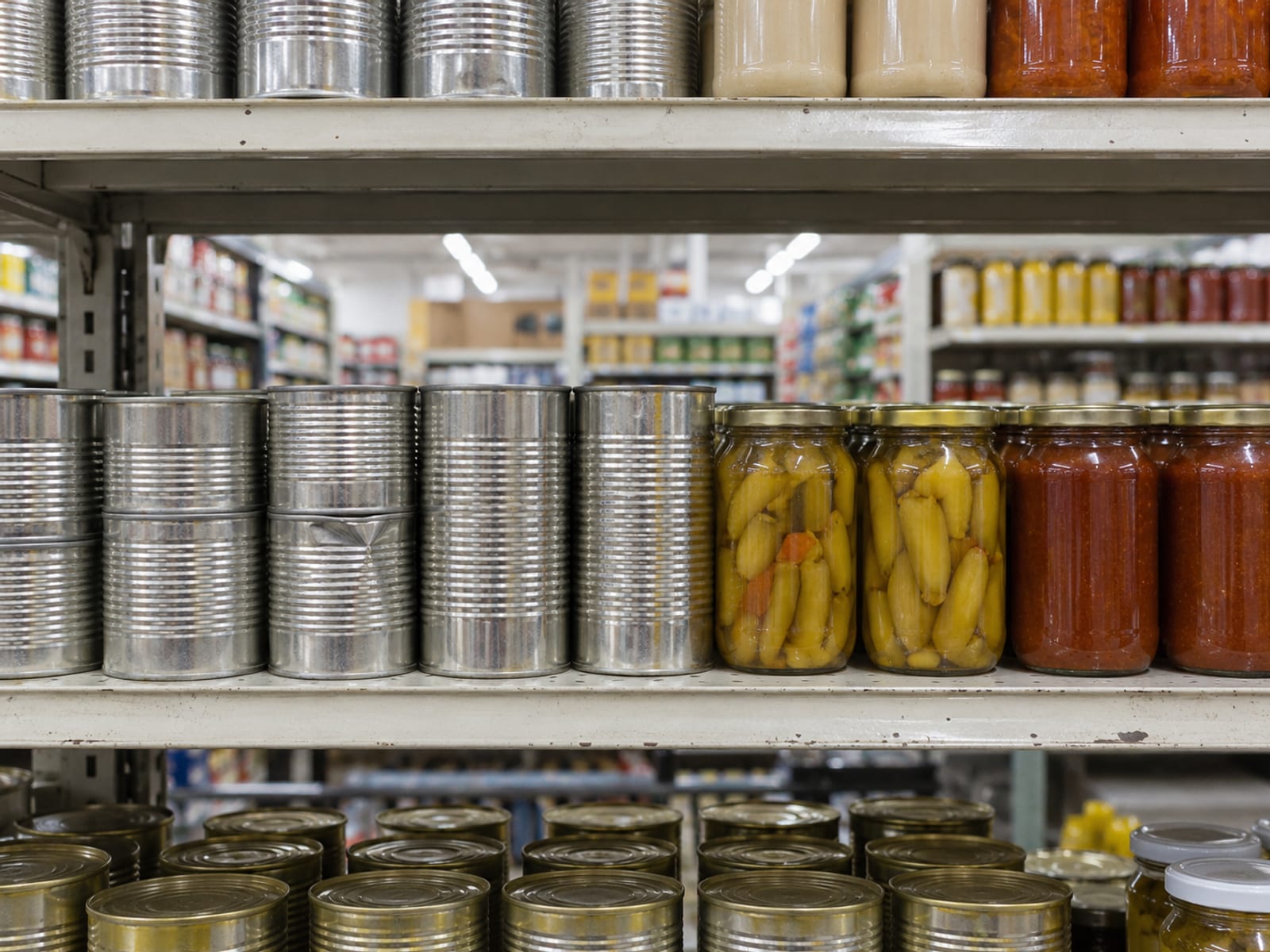 Supermarket stock in original packaging is easier to carry home than a fresh bakery item.
Confirm the current patty price and whether the branch takes cash, cards or both before you go. The Bakery lists beef, chicken, curry goat, shrimp, fish and callaloo patties, with published opening hours of 10:30 am to 6:00 pm. Its website does not give a complete address, current prices or payment methods, so ask the shop for those details. You can start at The Bakery Jamaica.
A supermarket is often more practical than a fresh bakery counter when you are shopping for food that has to travel. Shop Jamaica lists Grace canned ackee, 540 g, at J$1,250 (about US$8), and Walkerswood jerk seasoning, 280 g, at J$890 (about US$6), with prices as displayed on October 14, 2026. Those are online retail prices, so treat them as a guide rather than an airport or in-store price.
Walkerswood says its products are sold in major supermarkets, speciality stores, cafes and airport departure-lounge stores. Its factory is in St. Ann, and the company describes its jerk seasonings and sauces as using Jamaican-grown herbs, spices and Scotch bonnet peppers. Keep the factory label intact so an officer can see exactly what the product is.
For rum, the Joy Spence Appleton Estate Rum Experience is in Nassau Valley, Jamaica. The official site says it is open Tuesday to Saturday, 9:00 am to 3:30 pm, with walk-ins welcome and reservations recommended for groups of 15 or more. The estate shop sells Appleton Estate rum and local craft items. Ask about bottle size, price and accepted payment before you buy. You can read more at Visit Appleton Estate.
Wray & Nephew's official site identifies its white overproof rum as Jamaican and gives product and cocktail information. Whichever bottle you buy, keep it sealed and keep the receipt.
Fresh patties, canned ackee and dry seasoning
Fresh patties
Fresh patties are the item most likely to cause trouble, because the filling matters as much as the pastry.
For the United States, declare every patty and keep its original packaging and receipt. A beef patty is admitted only if its beef origin can be proven and the product meets the APHIS requirements. The inspecting officer makes the final decision, and poultry and pork fillings follow their own disease rules.
For Great Britain, meat patties from Jamaica are prohibited. Do not pack a beef, chicken, goat or pork patty for entry into England, Scotland or Wales.
For Canada, a fresh bakery patty is not the same thing as a sealed, shelf-stable commercial meat product. Treat it as not permitted.
If you want local food before a flight out of Kingston, the Kingston restaurant directory lists places by area. You can also compare the background in Jamaican Patties Explained: Juici, Tastee and Mother's, Prices, and Why They Are Yellow and Juici vs Golden Krust vs Tastee: Jamaican Patty Chains in America Compared.
Ackee
Fresh ackee needs a product-specific check for every destination.
For the United States, fresh and frozen fruit and vegetables may be prohibited or restricted, depending on the product and where it comes from. Do not pack fresh ackee unless the APHIS import requirements database specifically authorises it. Commercially canned ackee is the more suitable product to investigate, provided it is unopened, labelled and declared. Home-canned ackee is not allowed.
For Great Britain, fresh ackee requires further plant-health confirmation because it is not listed among the certificate-free fruit exceptions. Commercially processed and packaged ackee follows a different category, but keep the can sealed and check the current GOV.UK food rules before you fly.
For Canada, processed fruit and vegetables, including canned products, are allowed up to 20 kg or 20 litres for personal use, subject to inspection and origin rules. Fresh ackee should be checked in CFIA's Automated Import Reference System before you fly.
Jerk seasoning and sauce
Dry jerk seasoning is usually simpler to pack. Keep it in its original labelled package, declare it, and place it where airport security can inspect it easily. Canada allows spices up to 20 kg for personal use. The United States still requires you to declare agricultural products, even when the spice is dry and commercially packaged.
Jerk sauce is treated as a liquid, gel or paste at airport security. A full-size bottle cannot go through US, UK or Canadian carry-on screening unless it was bought after security under the applicable duty-free rules.
A sealed sauce bottle of 100 ml or less can usually go in your carry-on, subject to the airport's rules. Larger bottles belong in checked baggage. Wrap them against leaks, keep the commercial label intact and declare the sauce at customs. Sauces containing meat or poultry can face extra restrictions.
Read TSA's travel tips, GOV.UK's airport liquid rules and CATSA's liquid and non-solid food rules for the airport you are using, since each one sets its own limits.
Carry-on or checked baggage?
In the United States, TSA's 3-1-1 rule allows liquids, gels, aerosols, creams and pastes in carry-on bags only in containers of 3.4 ounces or 100 ml or less. The containers must fit in one quart-size clear bag, with one bag per passenger. A full-size bottle of jerk sauce or rum must go in checked baggage, unless it is bought after security as duty-free and stays sealed under the applicable airport and airline rules. TSA screening rules do not decide whether the destination country admits the food or alcohol.
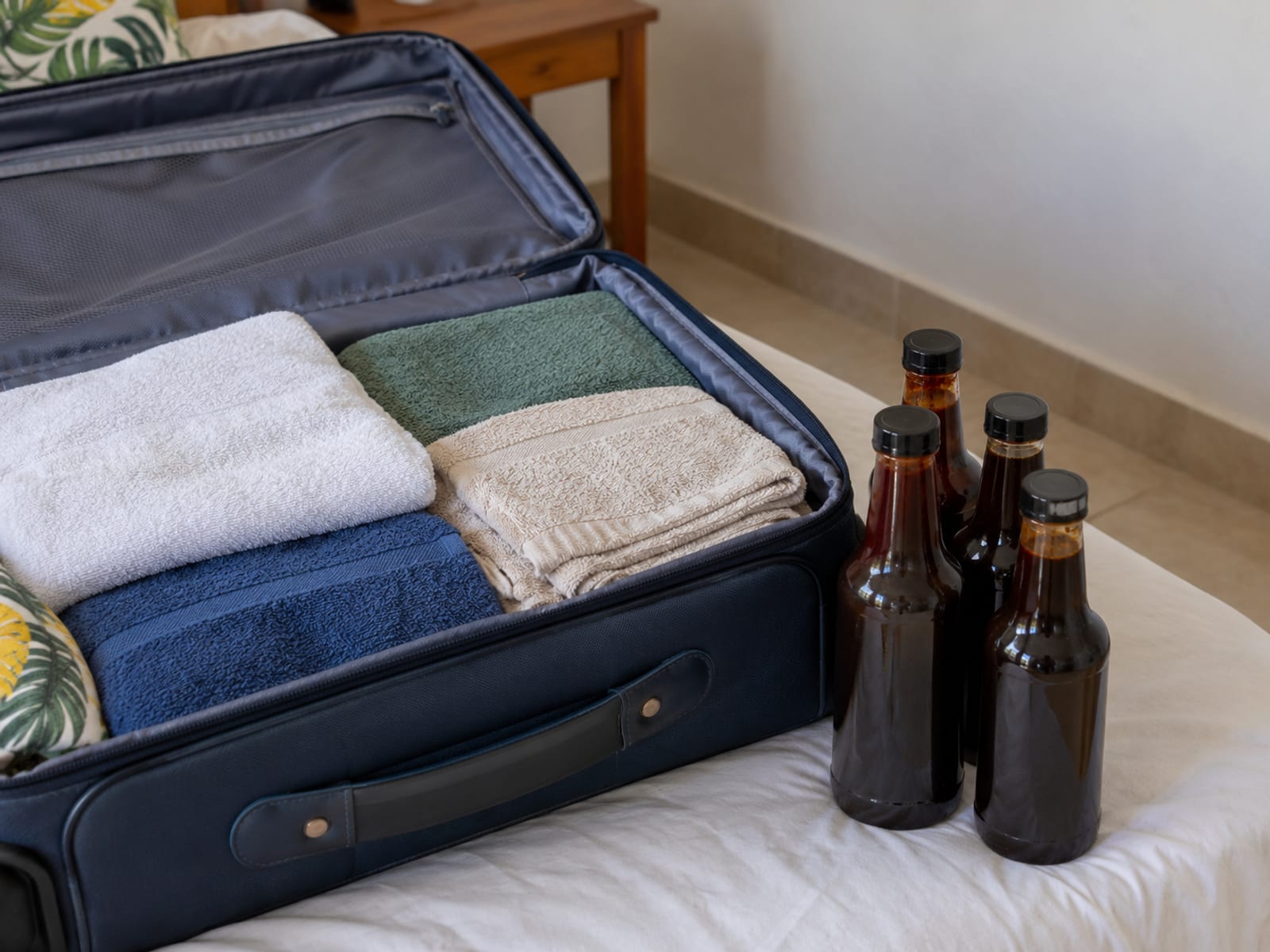 Larger bottles belong in checked baggage, wrapped against leaks.
In Great Britain, most airports do not allow liquids in containers over 100 ml through security, even when the container is only partly full. The rule covers drinks, sauces, soup, jam, honey, syrup and pastes. Airport rules can differ, so check the departure airport and every transit airport. Duty-free liquids can normally travel in the cabin when they remain sealed in the security bag and the receipt is visible. Do not open that bag before your final destination.
Canada limits carry-on liquids and non-solid foods to containers of 100 ml or 100 g or less. They must fit in one clear, resealable one-litre bag. CATSA treats alcohol, jam, jelly, syrup and similar foods as liquids or gels, so a jar of jam follows the same rule as a bottle of sauce.
Full-size bottles of jerk sauce and rum should go in checked baggage. For flights in and out of Canada, CATSA allows alcoholic drinks in checked bags at 70% ABV or less, with drinks between 24% and 70% ABV limited to five litres per person. That is an aviation-security limit, separate from the customs allowance below. Pack bottles with leak protection, keep the labels on, and declare the food and alcohol at the destination border.
How much rum can you bring?
For the United States, a traveller aged 21 or over can generally bring one litre of alcohol duty-free for personal use, subject to state law and CBP requirements. You can bring more, but it may attract duty and federal excise tax, and large amounts can be treated as commercial. Declare it.
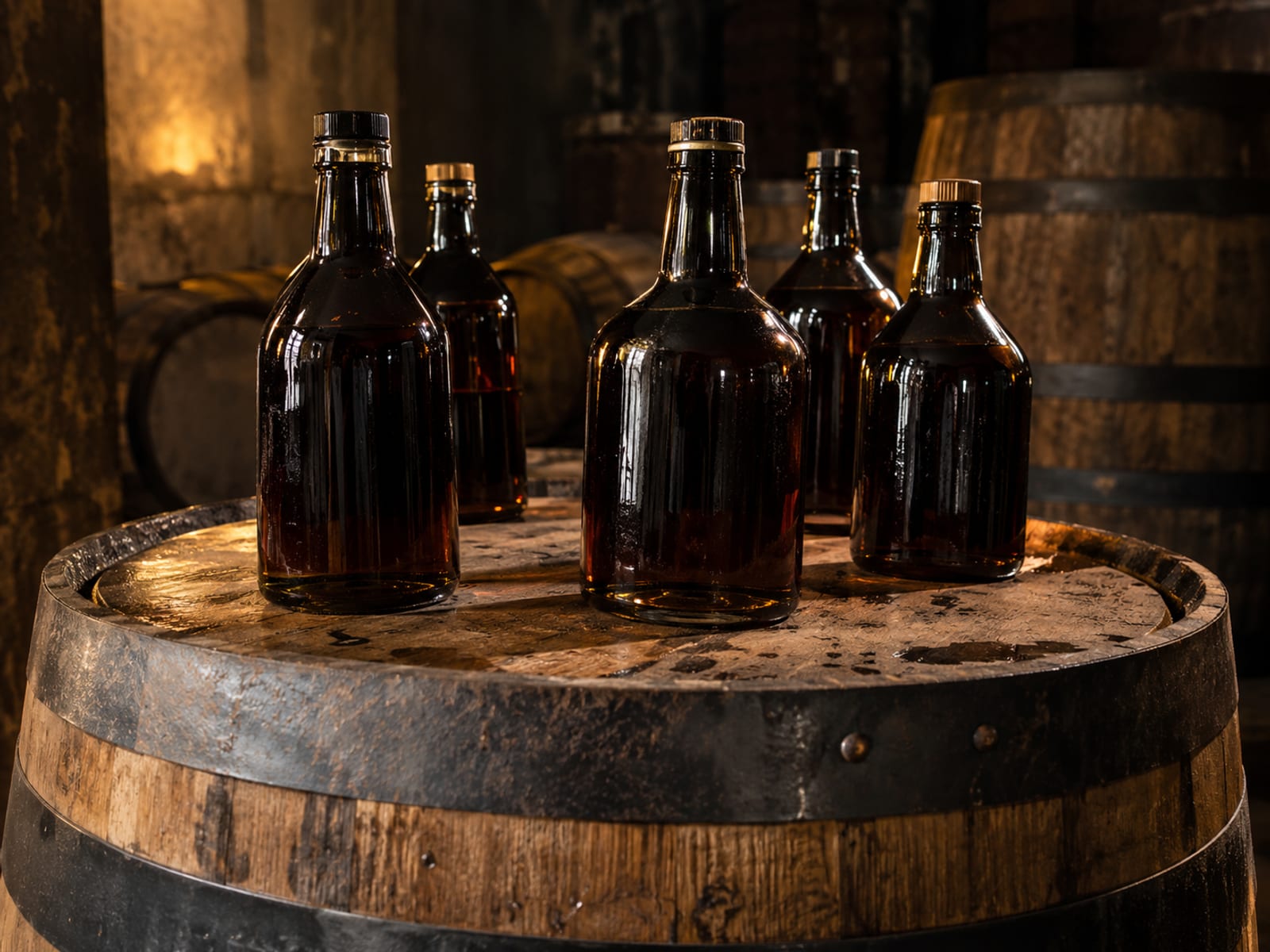 Keep any bottle sealed and keep the receipt.
For Great Britain, the personal allowance is 4 litres of spirits or other alcoholic products above 22% ABV. The goods must be for your personal use or as gifts. Alcohol above the allowance must be declared, and tax and duty can apply to the total amount in that category. The allowance applies to Great Britain, and Northern Ireland has different arrangements.
For Canada, the CBSA personal allowance can include 1.14 litres of spirits, depending on whether you are a resident or a visitor, your age and the province or territory where you enter. Duties and taxes apply above the allowance, and provincial liquor rules can add conditions of their own.
A Jamaican overproof rum may also be limited by airline and security rules, so check the alcohol percentage before you pack it. Keep the bottle sealed, put it in checked baggage unless it qualifies as duty-free carry-on, and declare it at the border.
Where to eat before you fly
If you have time for a proper meal before departure, the part of the island where you are staying makes the difference. For Montego Bay, read Best Restaurants in Montego Bay, Jamaica: From the Hip Strip to Local Spots. For Negril, Best Restaurants in Negril, Jamaica: On the Beach, With a View, and Local Spots covers both beach and local options. For Ocho Rios, see Best Local Restaurants in Ocho Rios, Jamaica (Beyond the Cruise Port).
If you are staying in Kingston, Best Restaurants in Kingston, Jamaica: Rooftops, Lunch Spots and Local Favourites is the place to start. For Portmore, Restaurants in Portmore, Jamaica: Open Late, Delivery and Birthday Dinners covers late and delivery options. If you want a meal away from an all-inclusive resort, Eating Outside Your All-Inclusive: Local Food Near Negril, MoBay and Ochi Resorts is a useful read.
For more food ideas to take with you, read Where to Get the Best Jerk Chicken in Jamaica, Parish by Parish, Jamaican Breakfast: What Locals Eat and Where to Get It, Jamaican Food to Try: 25 Dishes and Where to Find Them, Ital Food in Jamaica: What It Is and Where to Eat It and Where to Eat in Treasure Beach, Jamaica (and the Pelican Bar).
Common questions
These answers follow the rules above, so check the destination in each one before you pack.
Can you bring beef patties from Jamaica to Canada?
A fresh Jamaican beef patty should be treated as not permitted. Canada allows certain commercially prepared, cooked, shelf-stable meat products in sealed commercial packaging, but a fresh bakery patty does not fit that category. Declare any food you carry, even one you think may not be allowed.
Can you bring Jamaican patties to the US?
Only if it meets the APHIS requirements and you can prove where its beef came from. Declare it, because CBP and APHIS make the final decision. Poultry and pork fillings have their own rules, and a freshly baked patty with no label gives the officer the least to go on.
Can you bring ackee from Jamaica?
Canned ackee is item-specific. For the United States, the FDA keeps an import alert on ackee, so the product and processor matter. Great Britain and Canada assess it under their own processed-food rules. Fresh ackee needs a product-specific check before you fly, and you should declare it either way.
Can you bring jerk sauce or seasoning on a plane?
Dry seasoning can usually travel in its labelled package, subject to customs inspection. Sauce counts as a liquid at airport security, so carry-on containers generally need to be 100 ml or less. Put larger bottles in checked baggage, protect them from leaks and declare them at the border.
How much rum can you bring back from Jamaica?
For travellers aged 21 or over entering the United States, one litre is generally duty-free. Great Britain allows 4 litres of spirits above 22% ABV for personal use, and Canada's CBSA allowance can include 1.14 litres of spirits, depending on your status and province. Keep the bottle sealed, check its alcohol percentage and declare it.
Rules can change with disease status, product type, airport policy and destination law. Check the official customs and agriculture page immediately before you fly, keep your receipts and declare the food. When you are ready to plan a meal before the flight, use the Jamaica restaurant directory to find places by parish.