


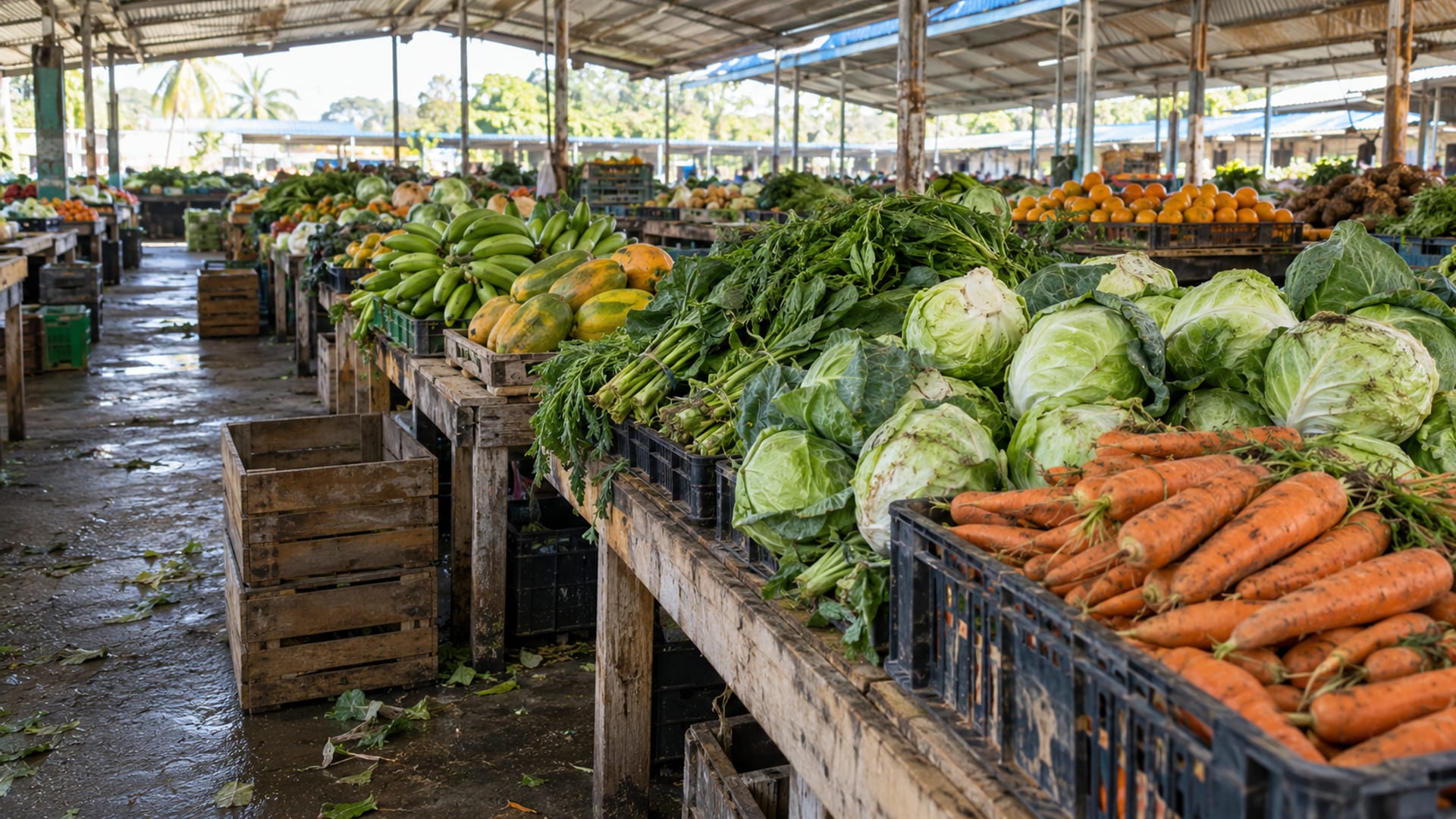
Coronation Market is a working produce market in downtown Kingston, and it is where Kingston residents and resellers buy fresh vegetables, fruit, ground provisions and cooking staples. It trades Monday to Saturday, and Saturday is normally one of the busiest days. Go in daylight, carry Jamaican cash, and expect prices to be quoted by the pound or the kilogram and to move with the weather and the supply.
A market rebuilt more than once
Coronation Market was built in 1936 as the Grass Yard. In 1938 it took the name Coronation Market. The market has been hit hard since then. Fires and unrest in 2010 caused major disruption, and fires destroyed sections again in 2013 and in December 2022.
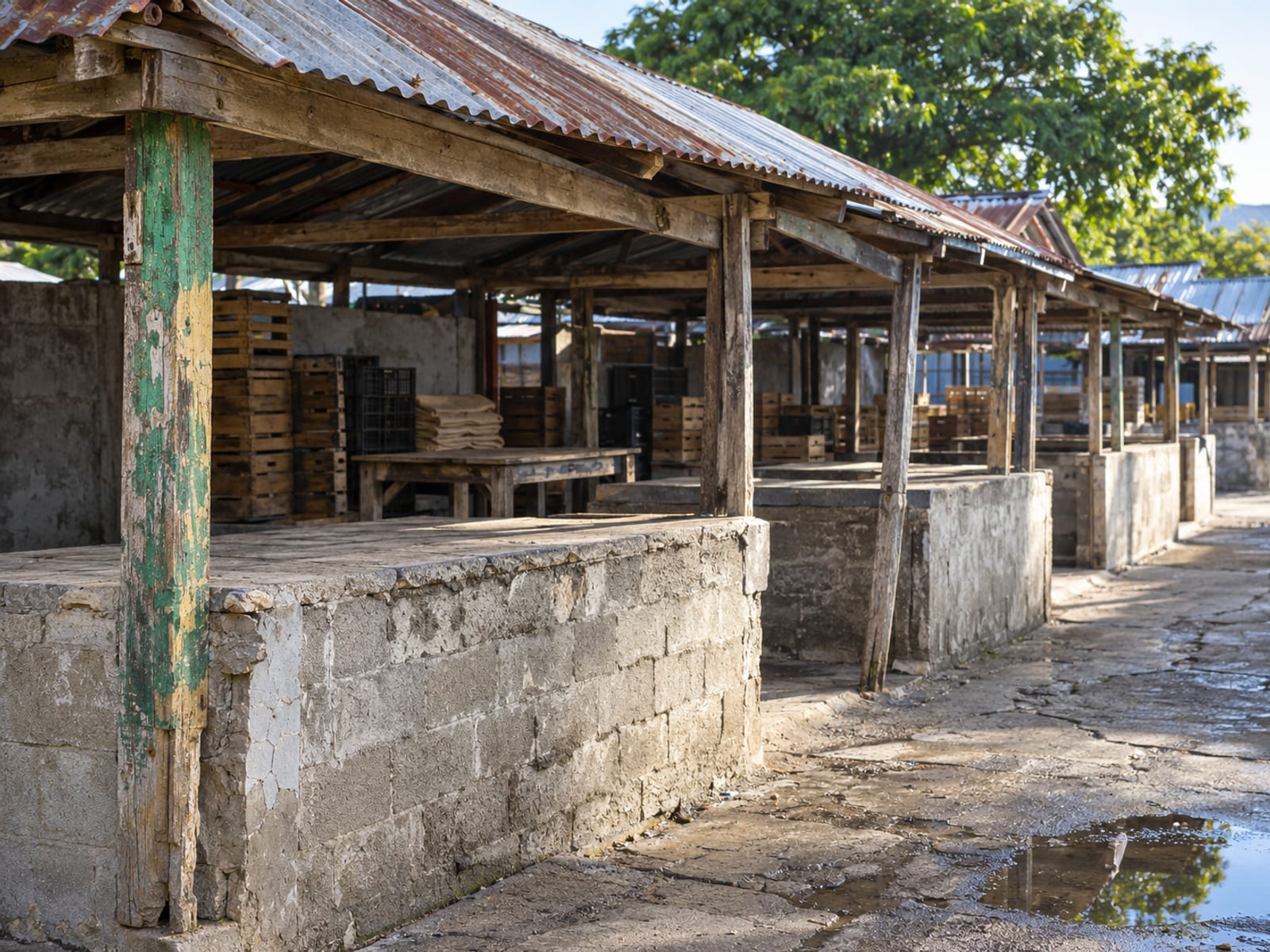 Some vendors rebuilt fire-damaged stalls themselves, using concrete or wood.
Vendors have pitched in. In November 2023, Finance Minister Nigel Clarke announced an initial allocation to begin repairs through the Kingston and St. Andrew Municipal Corporation (KSAMC). The Jamaica Gleaner reported that some vendors rebuilt fire-damaged stalls themselves, using concrete or wood. Expect a working market, with stalls of mixed age and build.
When to go
The market operates Monday to Saturday, and activity picks up after Wednesday. Saturday is normally one of the busiest days, although weather, supply and public events can change trading levels. A 2025 Gleaner report described Coronation as usually busy, but it noted thinner activity during storm preparations. If a storm is coming, expect a thinner market that week. Availability also changes with the season, the weather and local harvests, so a visit during a supply shock can look different from a normal week.
Each stall keeps its own hours, and the food stalls can run on different times from the produce vendors. In March 2020, the Jamaica Information Service reported that the market would close on Saturday night for sanitisation. Plan your visit for daylight, and go early enough to see the full range of stock. If you want a quieter visit, aim for the early part of the week, since activity builds after Wednesday.
Confirm before you go: check with the vendors you plan to buy from for that day's hours, because storms and public events can change them.
What you will find on the stalls
The market sells fresh fruit and vegetables, ground provisions and cooking staples. Names you will hear and see include tomatoes, sweet peppers, lettuce, cabbage, carrots, watermelon, Scotch bonnet peppers, ginger, scallion, Irish potatoes, sweet potatoes, peas, onions, garlic, gungo peas, plantains and cucumber. Yam and green banana belong to the ground provisions the market handles as well.
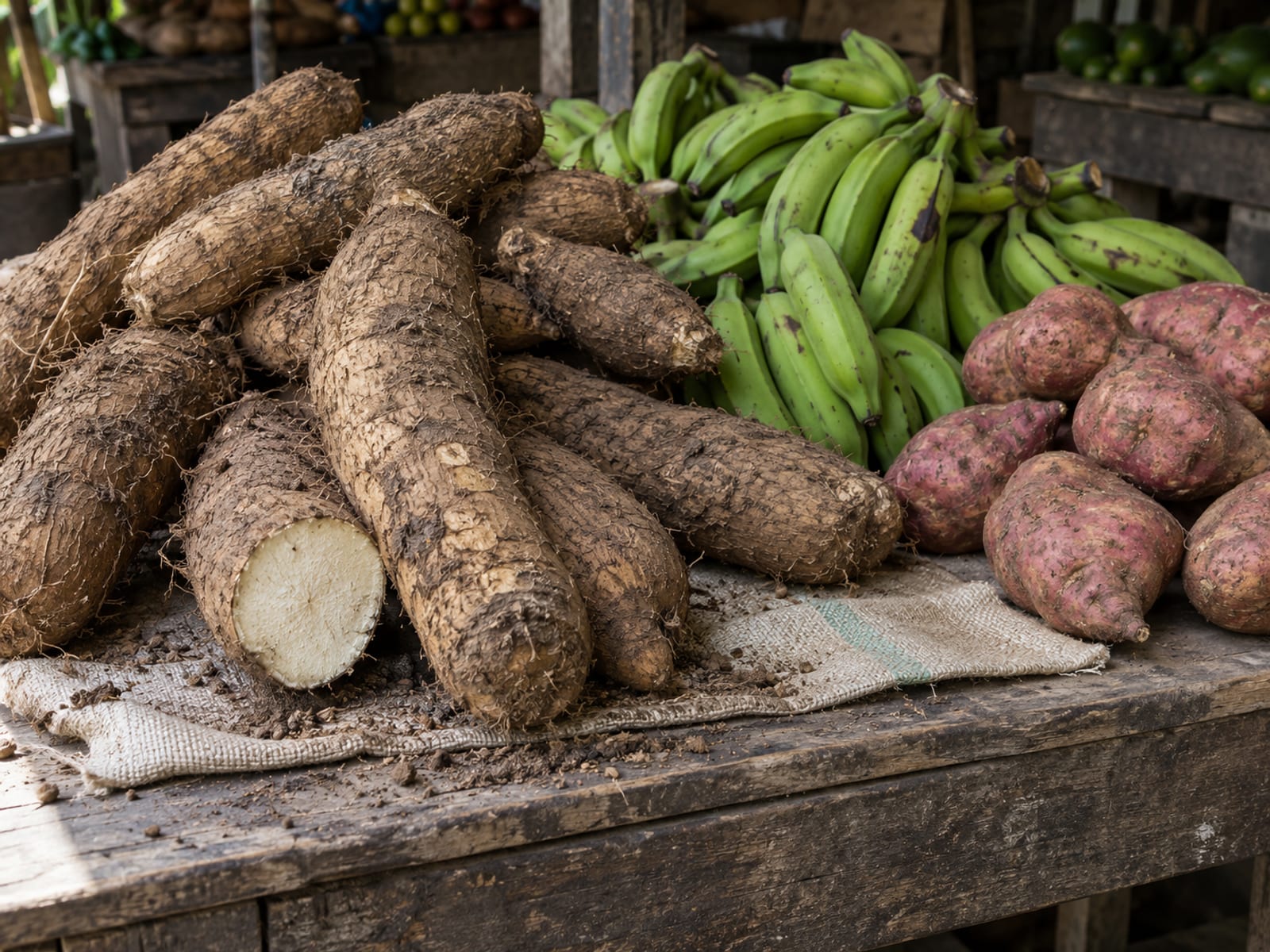 Yam, green banana and sweet potatoes are among the ground provisions sold at the market.
Callaloo farmers and vendors also sell eggs, tinned goods, salt fish, salt mackerel and cooking oil around the market. Coronation is mainly a produce market. If you are shopping for a household, start with the staples such as onion, garlic, ginger and scallion, then move on to fruit and ground provisions. If you want a hot plate instead, the food stalls and cookshops in the wider market area are where to look. Decide on your purpose first, because the produce stalls and the food stalls are not the same thing.
For the fruit side of your shopping, our guide to Jamaican fruits and where to buy them covers guinep, ackee and the other seasonal choices.
What produce costs, and the dates behind the numbers
Produce prices at Coronation depend on the season, the weather, the harvest and whether the produce is local or imported. Local and imported produce are priced differently, which is one reason the same item can show a wide range. In August 2024, the Jamaica Observer reported sharp price increases after Hurricane Beryl, when local supplies were temporarily reduced and more imported produce reached the market.
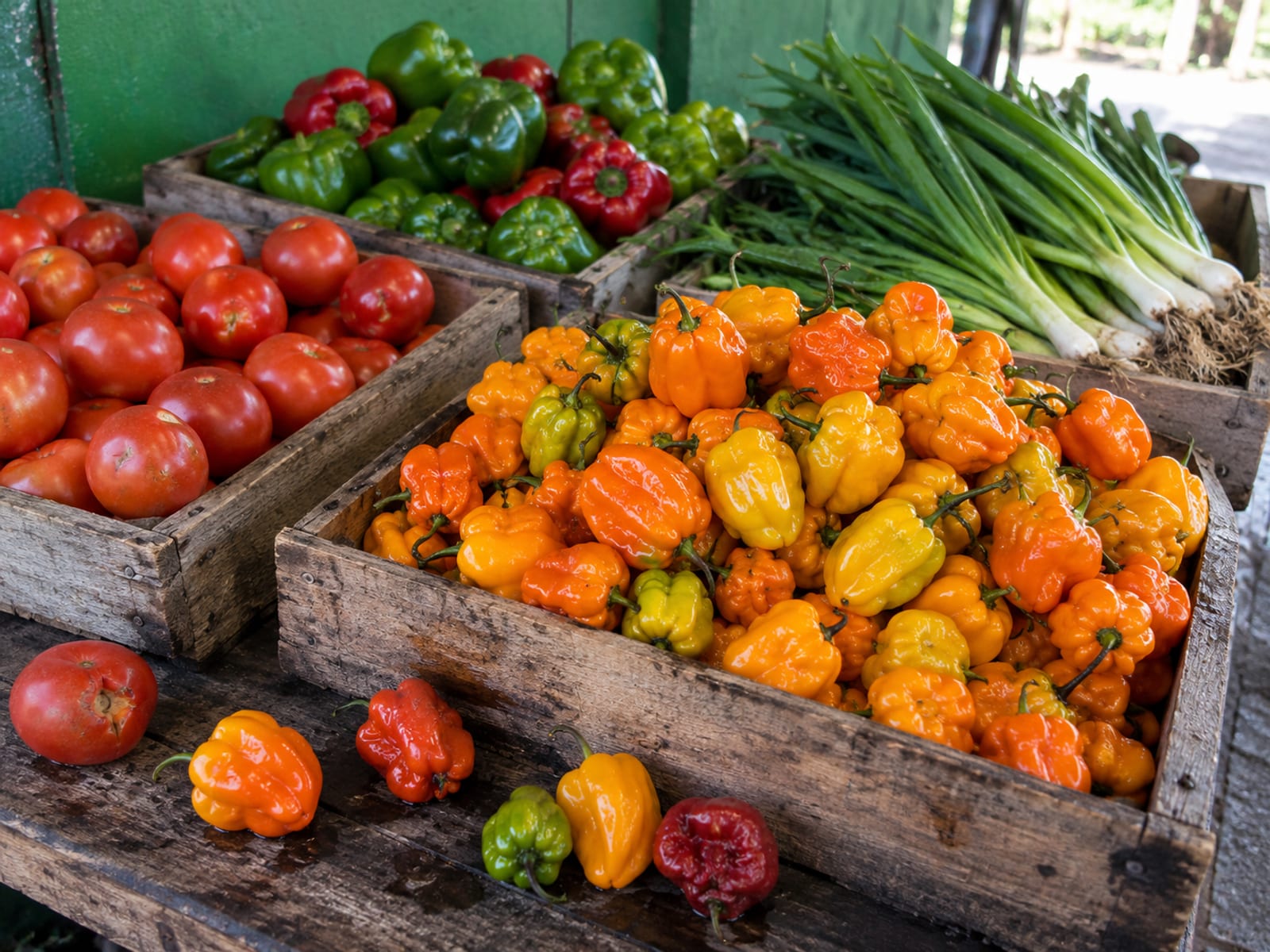 Tomatoes, sweet peppers and Scotch bonnet peppers were among the priciest items on the August 2024 list.
These were the prices the Observer reported that month, per pound.
Scotch bonnet pepper was the most expensive item on that list, and carrots were the cheapest. For a household list, carrots, cabbage, Irish potato and watermelon were all under J$300 a pound. A pound of tomatoes at the top of that range cost about four times as much as a pound of carrots.
The Consumer Affairs Commission's Ministry of Agriculture price survey for the week ending July 20, 2024 recorded Coronation urban-market prices by kilogram.
Storms move prices too. In October 2025, the Gleaner reported that market vendors were warning consumers to brace for price increases as a storm approached.
A kilogram is about 2.2 pounds, so multiply a per-pound figure by about 2.2 before you compare it with a per-kilogram one. US dollar figures use about JMD 159 to US$1 (Bank of Jamaica, October 13, 2026). Treat these figures as examples from those dates, not fixed rates. Weather, harvests, imports and transport costs can change a price within days, so check the figure with the vendor before you buy.
Paying, getting there and staying safe
Vendors take payment directly, and card acceptance varies from one stall to the next. Carry Jamaican cash, and carry only what you plan to spend, keeping a little apart from the rest so one purchase does not leave you short for the next. Bring a bag or two of your own, since you will carry what you buy on foot. Before you buy anything large, find out whether the vendor takes cards.
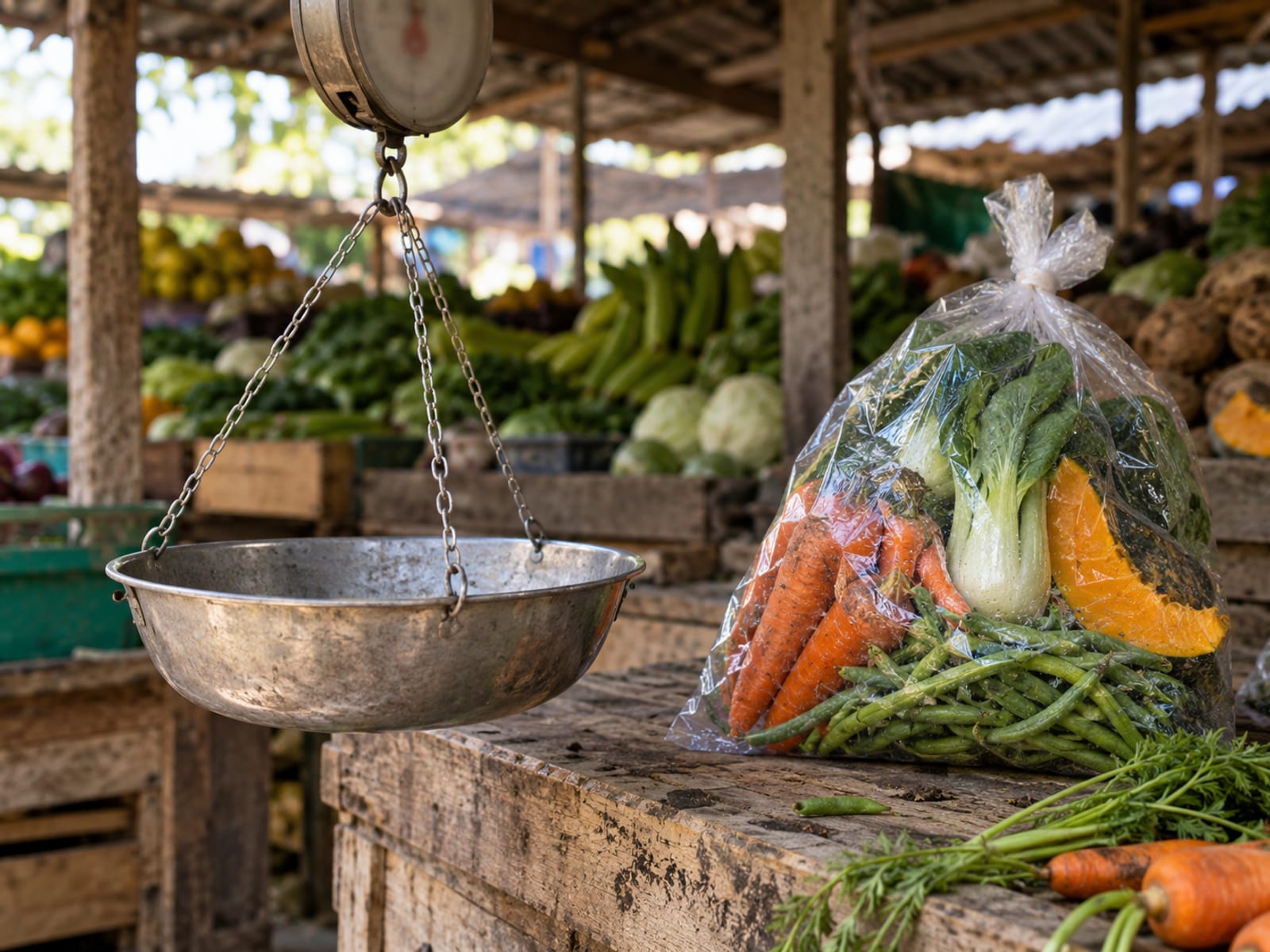 Produce is priced by the pound or the kilogram, so compare the same unit from stall to stall.
Coronation sits in downtown Kingston, close to the wider market district. Arrange transport in advance, and use a licensed or trusted taxi. The Jamaica Constabulary Force advises travellers to record the taxi's details, so note the plate before you get in.
Keep cash, phones and jewellery out of sight, and do not display valuables. Stay alert in crowds, use well-lit routes and avoid walking alone. The police advise calling 119 for emergencies and 311 for Crime Stop. The Jamaica Tourist Board also advises visitors to keep an eye on their belongings and to travel in groups when they are unsure of an area. The Jamaica Information Service has also carried police advice on safety in the downtown market district, which is worth reading before a first visit. Check local conditions as well, because police operations, severe weather and market disruptions can affect access.
Produce is commonly priced by the pound or kilogram, depending on the vendor and product. Compare the same unit from one stall to the next, pound with pound or kilogram with kilogram, before you decide whether a price is worth it. If a vendor's price sits well above the range for that item, compare it with other stalls before you pay.
If the market is one stop in a wider food day, our guide to what food costs in Jamaica compares jerk, patties and a sit-down meal. To find somewhere to eat in the city afterwards, browse restaurants in Kingston.
If you are home from abroad and want to cook while you are here, the market is where to buy the ingredients for a family meal. Carry Jamaican cash in smaller notes so that paying each vendor is simple.
Common questions
What is Coronation Market in Jamaica?
Coronation Market is a large public agricultural market in the central market district of downtown Kingston. It opened in 1936 as the Grass Yard, and vendors there sell fresh produce, fruit, ground provisions and cooking staples. It is a working market for Kingston residents and for vendors who buy to resell, not a supermarket or a fixed-price attraction.
What are the opening hours of Coronation Market?
The market trades Monday to Saturday, and Saturday is normally one of the busiest days. Stalls keep their own hours, and food stalls can run on different times from produce vendors. Go in daylight and check with the vendors you plan to visit, since storms and public events can change trading.
What food is sold at Coronation Market?
Expect fresh fruit and vegetables, ground provisions and cooking staples such as tomatoes, sweet peppers, Scotch bonnet peppers, cabbage, carrots, yam, plantain and green banana. Eggs, tinned goods, salt fish, salt mackerel, cooking oil and callaloo are also sold around the market. Onion, garlic, ginger, scallion and Scotch bonnet pepper are all sold there, so a cook can buy the basics for a seasoning base in one place. Food stalls and cookshops operate in the wider market area as well.
Is Coronation Market safe to visit?
It is a functioning public market, so use ordinary downtown precautions. Keep cash and jewellery out of sight, stay alert in crowds, use well-lit routes and avoid walking alone. Use a licensed or trusted taxi, and call 119 for emergencies or 311 for Crime Stop.
What are current food prices at Coronation Market?
The dated figures are from 2024. In August 2024, tomatoes and sweet pepper were J$700 to J$800 per pound (about US$4 to US$5) and Scotch bonnet pepper was J$1,200 per pound (about US$8), while the July 20, 2024 survey priced green cabbage at about J$396 per kilogram (about US$2). Prices move with the season, so check the price with the vendor before you buy.