


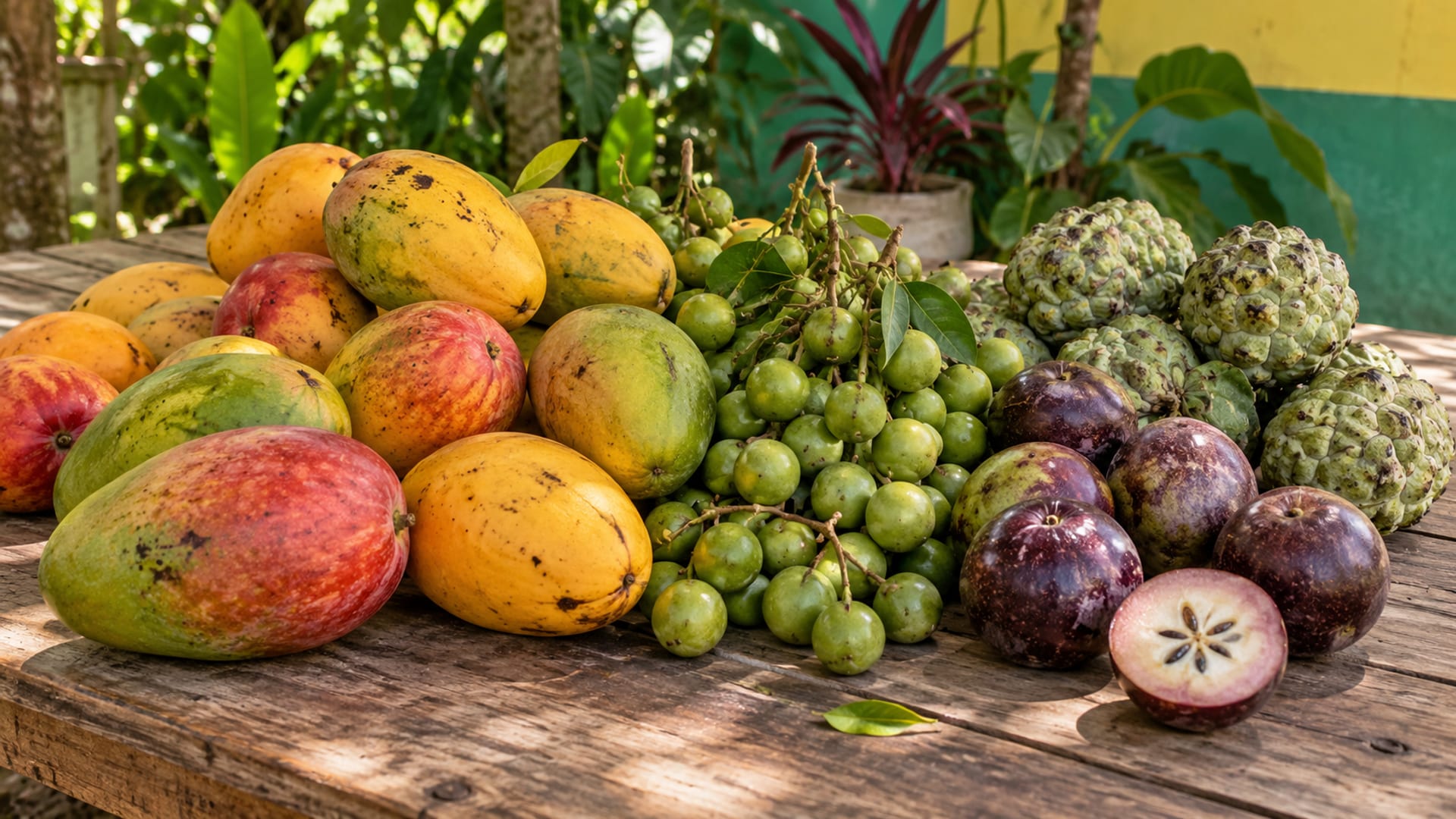
Guinep and Otaheite apple are the two fruits to taste first. Guinep is mainly in season from June to November, and Otaheite apple gives two crops a year. Ackee, Jamaica's national fruit, is one to eat only when the pod has opened fully on the tree and the fruit has been cooked properly, and Kingston's Coronation and Papine markets are major places to buy fresh fruit in the city.
Fruits to try first
Guinep is a small green fruit with tart, juicy, orange-coloured pulp around a large seed. You eat the pulp from around the seed, and readers from abroad may know it as Spanish lime. Otaheite apple, also called Jamaican apple or Malay apple, is a red, crisp, juicy fruit with white flesh. Its flesh is lightly sweet and watery rather than sugary. Many of these fruits have a second name outside Jamaica, so a name you know from home may point to the same fruit.
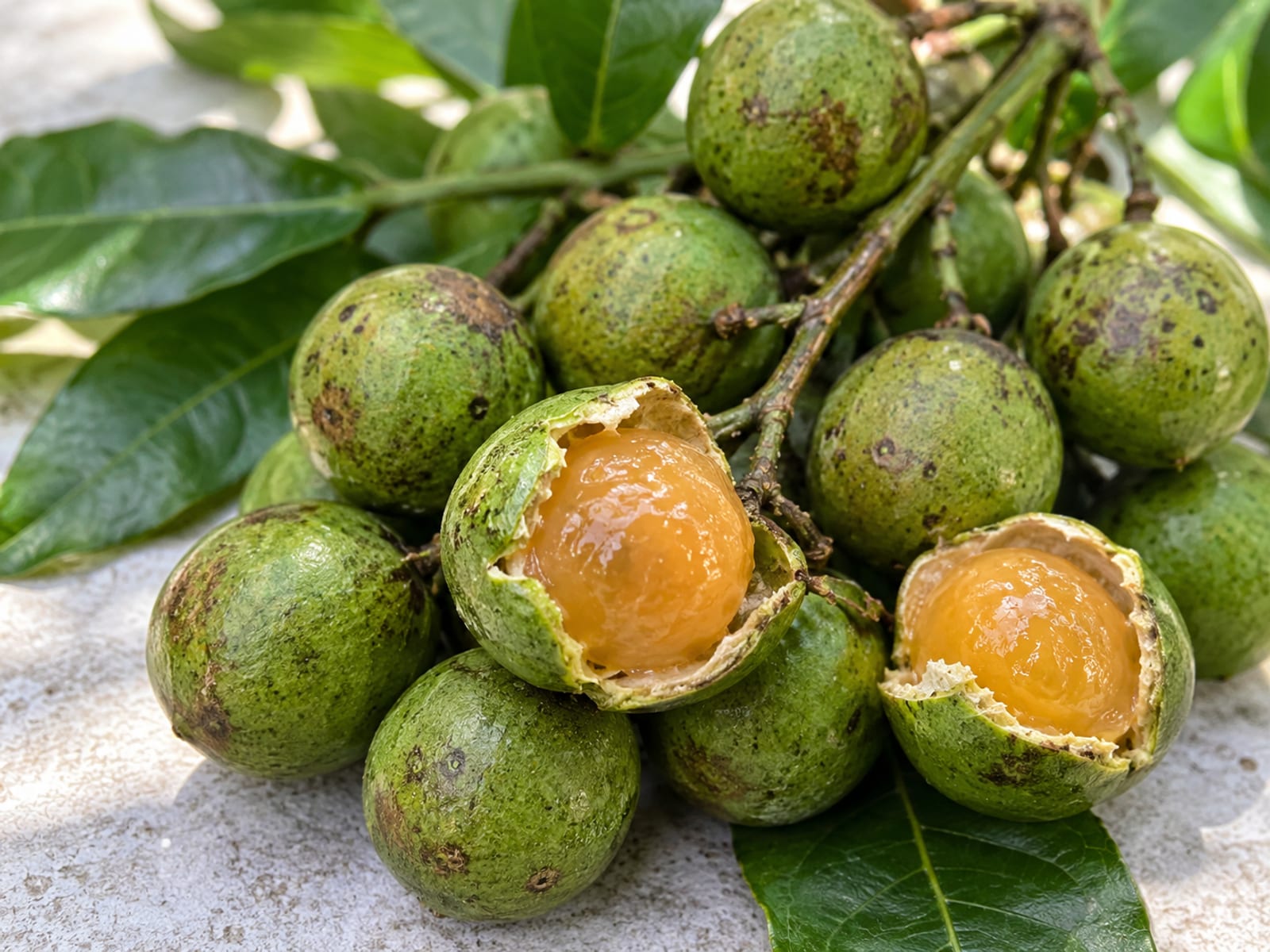 Guinep pulp is eaten from around the seed.
Mangoes are strongly tied to Jamaica's summer, and roadside vendors and markets are likely to have their widest selection during the main crop period. Julie mango is small and rich in flavour, with relatively little fibre. East Indian mango is large and aromatic, with a fuller mango flavour and more fibre than some varieties.
Naseberry, also called sapodilla, has brown skin and very sweet, grainy, caramel-like flesh. Star apple has a purple or green skin, and what you eat is the soft, jelly-like pulp, since the bitter skin is not for eating. Sweetsop, also called sugar apple or custard apple, has segmented green skin and sweet, custard-like pulp inside.
Soursop is a large, spiny green fruit with soft white pulp, and it is often used for juice and drinks. June plum has firm green or yellow skin and a sharp, juicy flavour, and it can be eaten ripe or green with salt. Jackfruit has very large, sweet golden pods around its seeds. Breadfruit is starchy and is usually roasted, boiled or fried rather than eaten raw.
The right choice depends on whether you want a snack, a juice fruit or something cooked. Ask the vendor what is ripe that week.
When each fruit is in season
Seasons overlap across the island, and they vary with parish, rainfall, elevation and the individual tree.
A fruit that is ripe in one parish may not be ripe in another the same week, so check what is on offer when you arrive. If your trip falls in summer, you can plan for both mango and guinep, since their main windows overlap from June to August. From January to April, star apple is the crop to look for, and from September to December, June plum is in season. Some travel guidance places a star apple crop from late September, so the two windows can overlap at the end of the year.
Ackee: the national fruit and how to prepare it safely
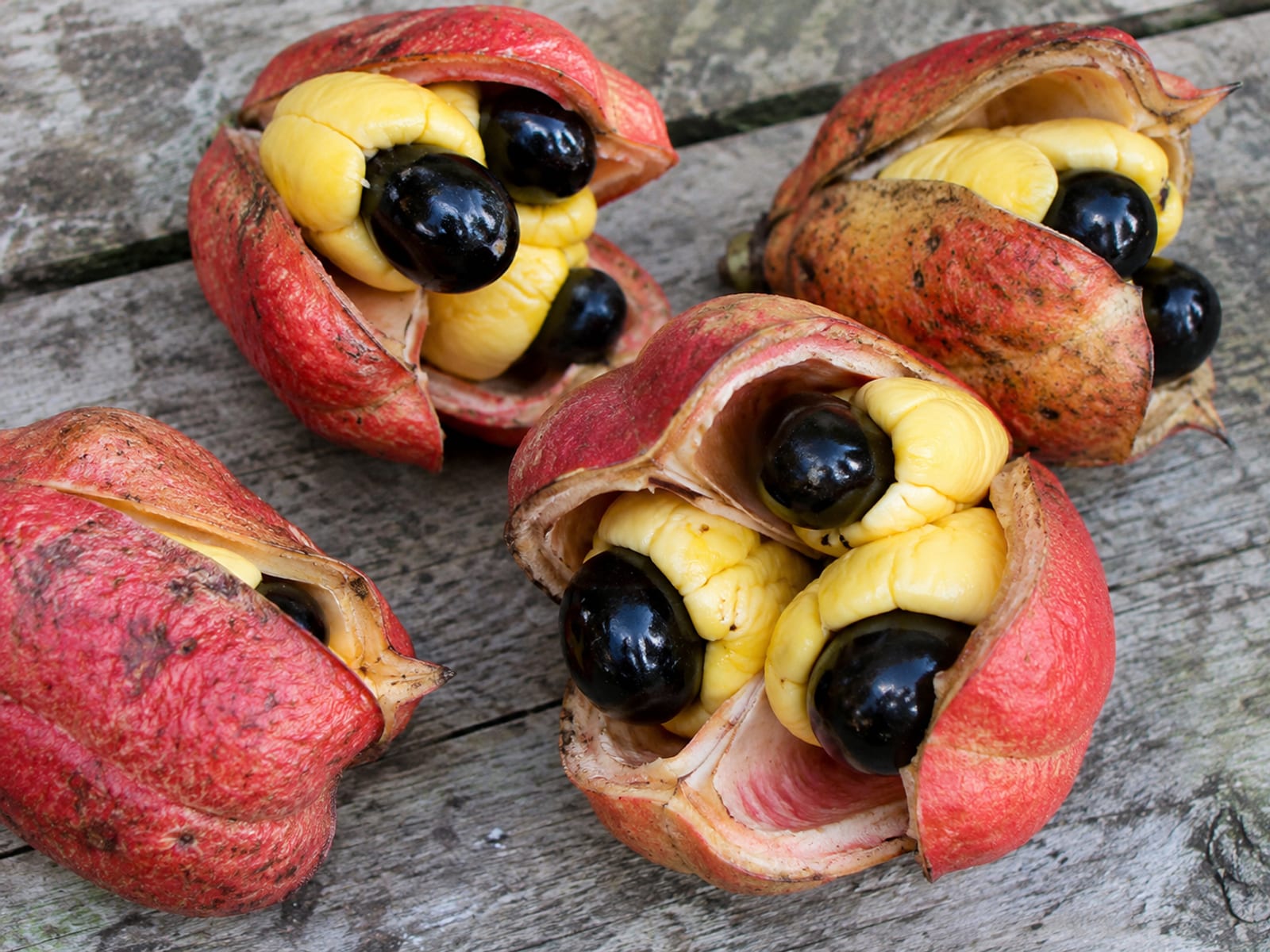 Only pods that have opened naturally on the tree are used.
Ackee is Jamaica's national fruit, and it is the main ingredient in ackee and saltfish. Its scientific name is Blighia sapida. When the pod opens naturally, it shows yellow or cream arils around black seeds. Ackee came to Jamaica from West Africa and is now deeply tied to the country's food and identity. It produces repeated crops, and timing varies by tree and area, so check with the vendor about which pods are ready.
Ackee is the main fruit-safety concern that Jamaican health authorities discuss. Unripe ackee can contain hypoglycin, a toxin that can cause severe illness or death. The Ministry of Health and Wellness issued a notice on May 4, 2016, with these steps:
The Ministry says ackee "should be allowed to open naturally and fully on the tree."
Ackee is traditionally cooked with saltfish, and the Jamaican food to try guide covers where to find that dish and other classics.
Where to buy fruit in Kingston, St. Elizabeth and Montego Bay
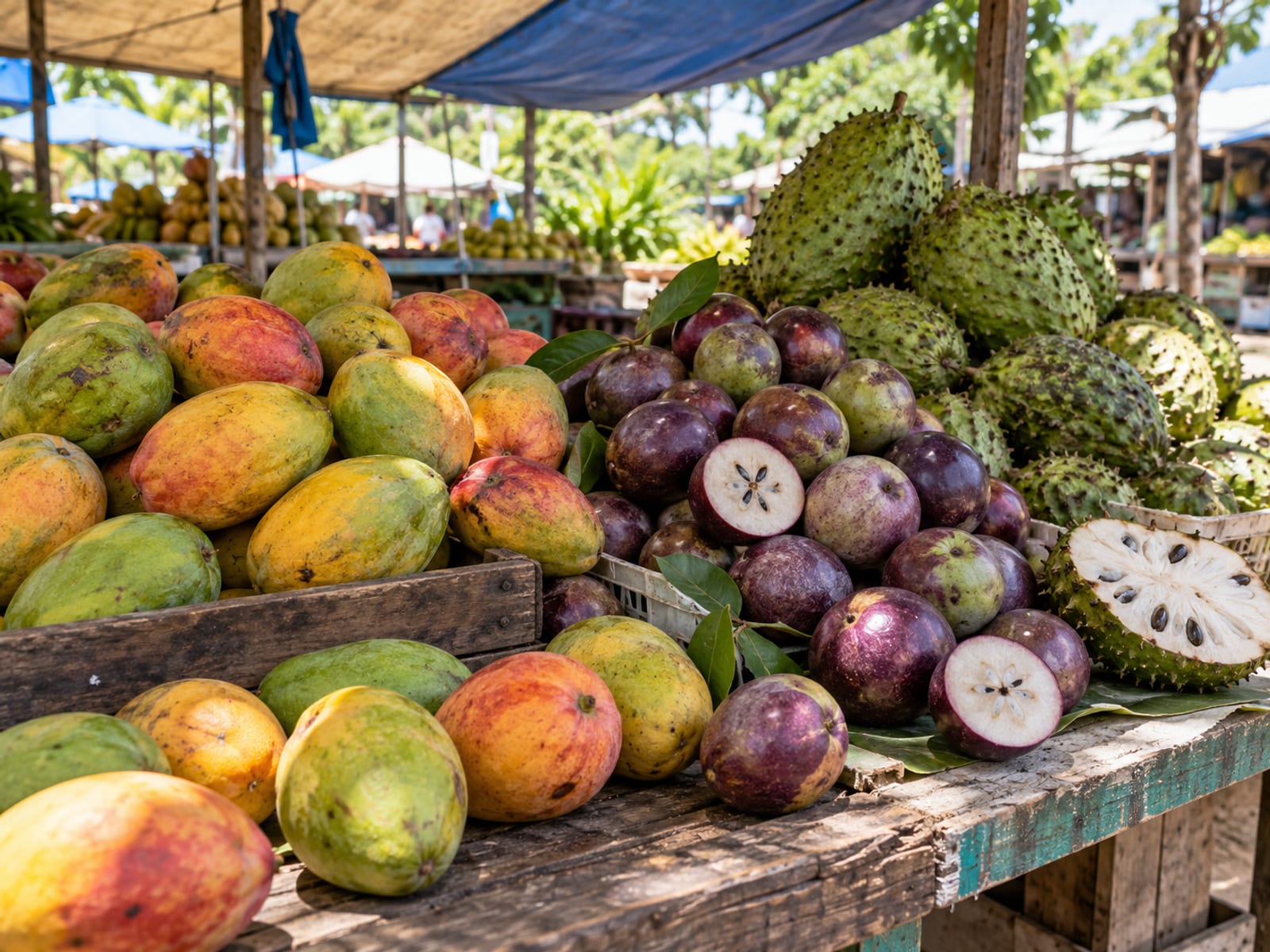 Fruit at markets and roadside stands follows the local harvest.
Coronation Market is at 34½ Spanish Town Road in downtown Kingston. Papine Market is at 2 Golding Avenue in Kingston 6, and Queens Market is at 110 Princess Street. Coronation and Papine are major places to buy fruit in Kingston.
Roadside fruit stands are common, especially during mango and guinep season. In St. Elizabeth, sellers around Junction and Santa Cruz sell fruit close to where it grows. Roadside selling also happens along the Palisadoes road.
Markets in Montego Bay sell seasonal fruit and produce that local farms supply, so what you find there follows the local harvest.
Fruit is usually priced by weight, item, bunch or bag, and the unit can change from one seller to the next. Specialty fruit such as guinep, star apple, Otaheite apple and sweetsop may be sold by the bunch, bag or single fruit, so ask the unit before you agree to a price. For a sense of produce prices, Consumer Affairs Jamaica's Kingston market survey for the week ending February 21, 2026 put local watermelon at J$550 to J$660 per kilogram (about US$3.50 to US$4), depending on the market. The JAMIS price-information system covers farmgate, municipal wholesale and retail prices, so it helps when you want a current figure.
Carry Jamaican dollars in small notes for roadside stands and informal stalls. Market hours differ by location and can change, so check with the market or the municipal office before a special trip. To get to a market, use its published street address and travel by hotel or licensed taxi. Confirm before you go that the fruit you want is in season that month, because seasonal fruit can appear for only a few weeks or months.
Practical tips before you buy and carry
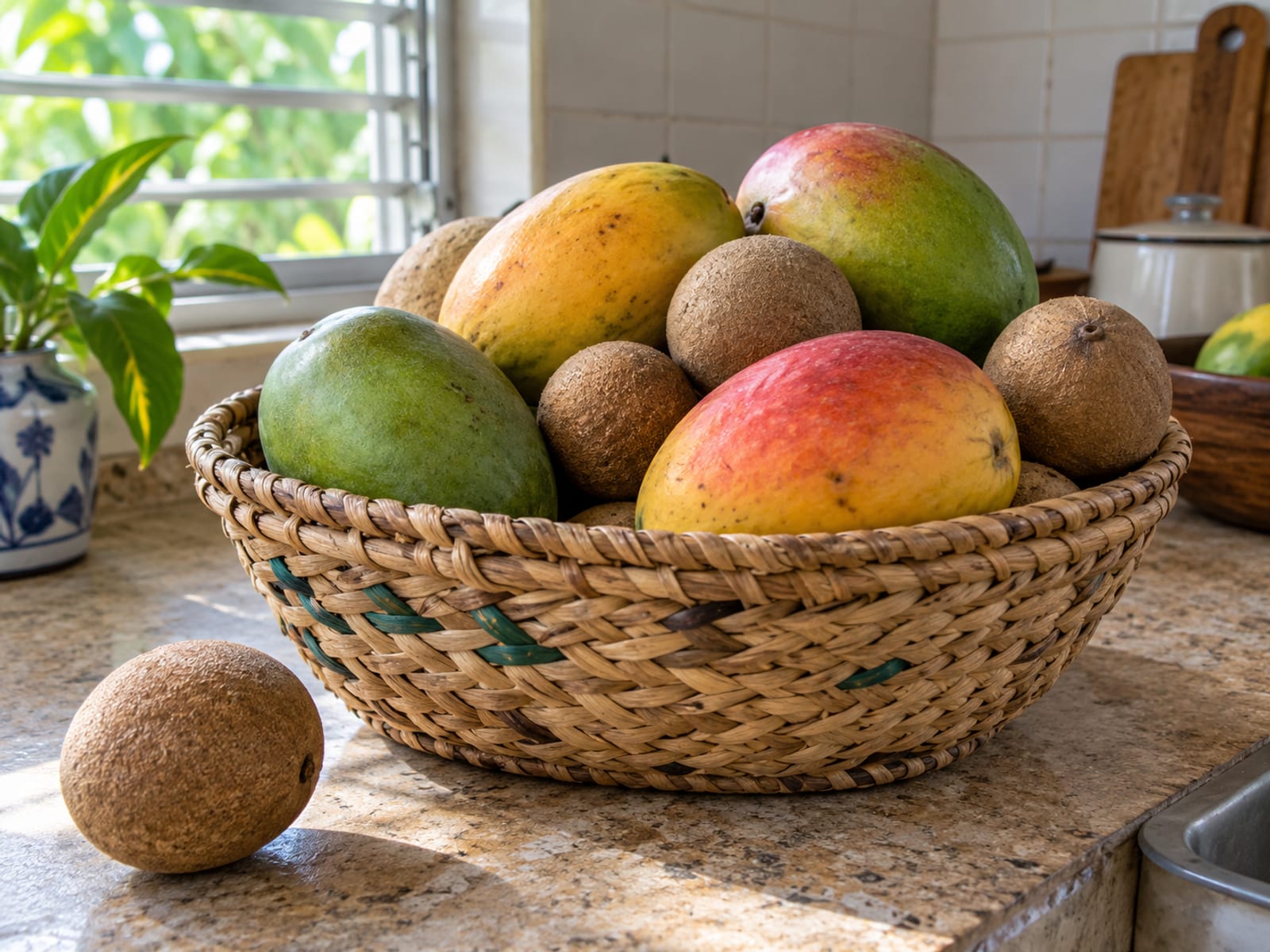 Firmer pieces travel better than soft ripe fruit.
Ask the vendor which fruit is ready to eat now and which should ripen at room temperature. If you are carrying fruit for several hours, choose firmer pieces, since soft ripe fruit bruises easily.
Wash fruit before you eat it, and follow the Ministry of Health's ackee rules every time. If you plan to take fruit abroad, check the destination country's agricultural and customs rules before you pack. For a guide to how US, UK and Canadian customs treat common Jamaican foods, see Can You Bring Jamaican Food Home? Patties, Ackee, Jerk Sauce and Rum Through US, UK and Canadian Customs.
For fruit in a drink, see Jamaican drinks to try, including sorrel, Irish moss and rum punch. To find places to eat by parish, use the restaurant directory, or start with restaurants in Kingston.
Common questions
What fruit is Jamaica famous for?
Ackee is the fruit most tied to Jamaica, since it is the national fruit and the main ingredient in ackee and saltfish. Mangoes, especially Julie and East Indian varieties, are strongly linked to the island too. Guinep, Otaheite apple, soursop, naseberry, star apple, sweetsop, June plum, jackfruit and breadfruit round out the list.
What are the best fruits to try in Jamaica?
A good first list is guinep, Otaheite apple, Julie mango, naseberry and sweetsop, with ackee once it has been properly prepared in a dish. Choose by what you want: a snack fruit, a juice fruit or something cooked, such as breadfruit. Ripeness changes from week to week, so check what is ready before you buy.
What is the national fruit of Jamaica?
Ackee is Jamaica's national fruit. Its pods open naturally on the tree to show edible yellow or cream arils, and it is traditionally cooked with saltfish, onions, tomatoes, peppers and seasonings.
Which Jamaican fruits are poisonous?
The main fruit-safety warning from Jamaican health authorities is about ackee, because unripe or improperly prepared ackee can contain hypoglycin. Only eat ackee that has opened naturally on the tree, and remove the seeds and membrane, wash, cook and discard the cooking water. For other fruits, follow local preparation guidance and check how an unfamiliar fruit is usually eaten.
When are mangoes in season in Jamaica?
The main mango season runs roughly from May through August, and Visit Jamaica describes August as a particularly strong point in it. Local agricultural guidance gives a wider production window from March to September. Julie and East Indian mangoes are both grown in Jamaica, and availability varies by parish, variety and rainfall.