
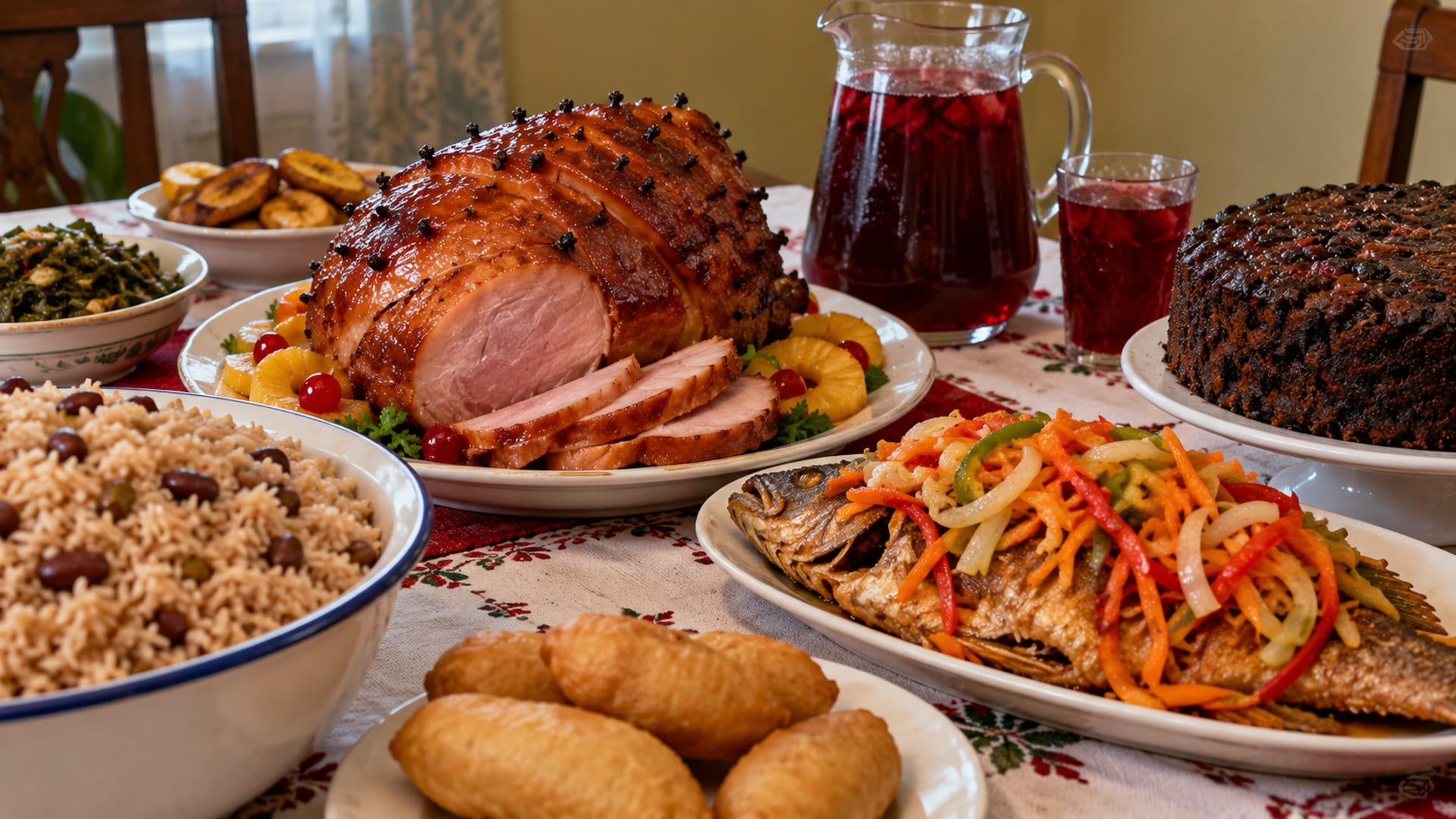
A Jamaican Christmas table commonly includes sorrel, Christmas fruit cake, ham, chicken, curry goat or curried mutton, rice and gungo peas, and fish, often escoveitch fish. Gungo peas are pigeon peas. There is no single mandatory Christmas plate, so the menu follows the household, the parish, the budget and the diet of the people at the table.
Christmas food is about cooking for a crowd. Families prepare large amounts for relatives, neighbours and visitors, and the meal is tied to hospitality and sharing. If you are visiting or coming home for the season, your first choice is simpler than the menu. Will you cook, buy ingredients, order prepared food, eat out or go to a market? Plenty of people combine two or three of those options.
What goes on the holiday plate
Sorrel is the drink most people picture first. It is a deep-red drink made from the calyces of the roselle hibiscus, usually infused with ginger and spices, and it may be served with rum. Producers are selling it through the year more often, and the Gleaner reported that trend in 2026, but the drink remains strongly tied to Christmas.
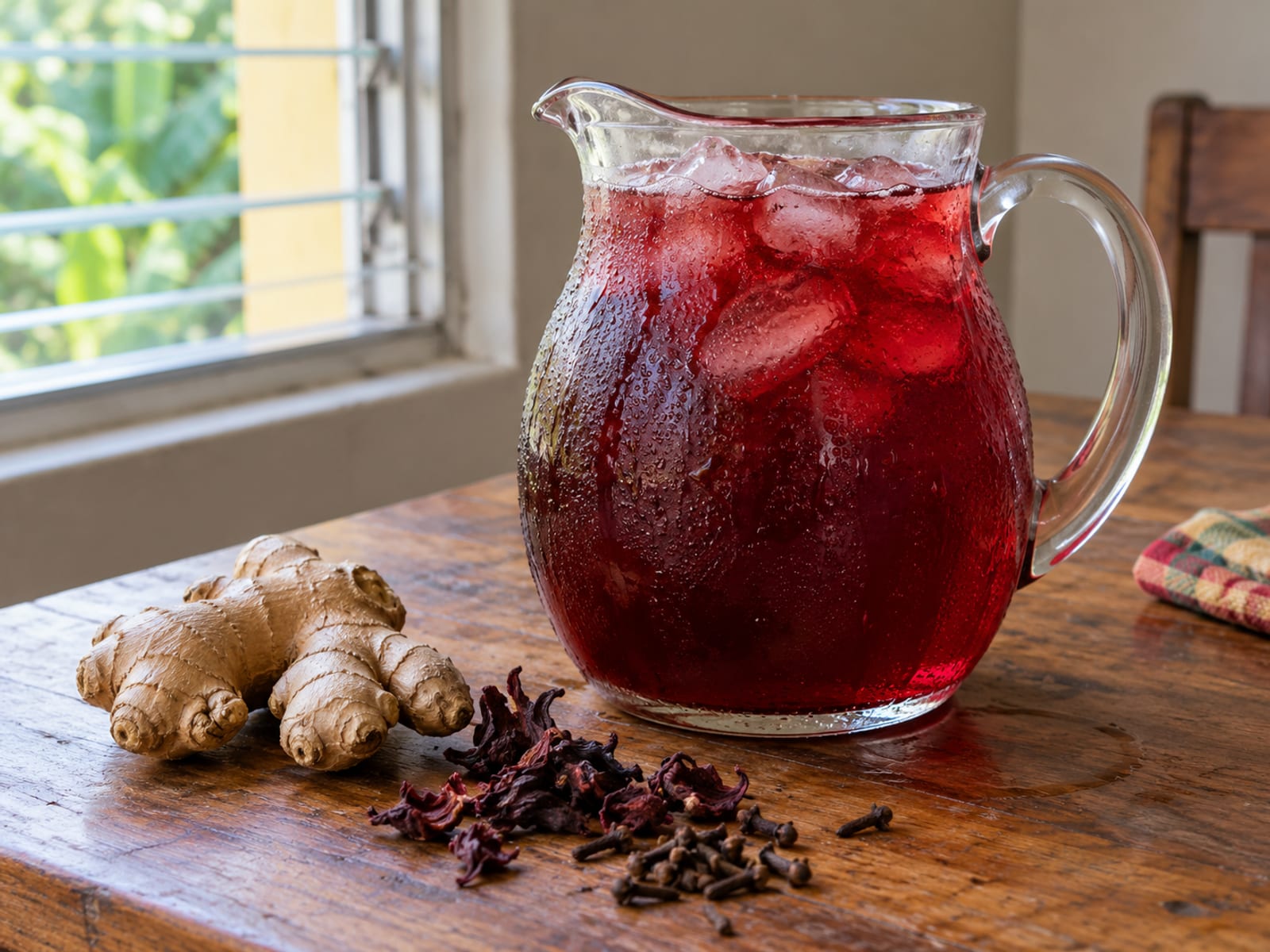 Sorrel is the drink most people picture first at Christmas.
Ham is a standard Christmas meat, and it is often glazed. Chicken can be roasted, baked, jerked, stewed or fried, so two households can serve very different chicken on the same day. Curry goat or curried mutton is a common main dish at Christmas gatherings. Fish is the other main option, especially escoveitch fish, which is fried and then topped with a sharp, pickled mixture of vinegar, onions, carrots, peppers and spices. Rice and gungo peas are the traditional festive side.
Some families serve both ham and curry goat. Others focus on chicken, fish, pork or vegetarian food. If you would rather eat out, restaurants, hotels and caterers may offer a Christmas menu built on the same traditional ingredients. For the everyday version of a family table, see Jamaican Sunday dinner and where to get one.
Other dishes that show up on Jamaican Christmas menus include roast beef, oxtail, pork, plantain, potato salad, tossed salad, callaloo, mannish water and eggnog. Breakfast and earlier meals may include ackee and saltfish, boiled green banana, roast breadfruit, fried plantain, hard-dough bread and fresh juice. For the morning side of the menu in more detail, read Jamaican Breakfast: What Locals Eat and Where to Get It.
How sorrel and Christmas cake are made
Christmas cake, also called black cake or fruit cake, is a dark, rich cake made with dried fruit soaked in wine and rum. Families may start soaking the fruit months ahead.
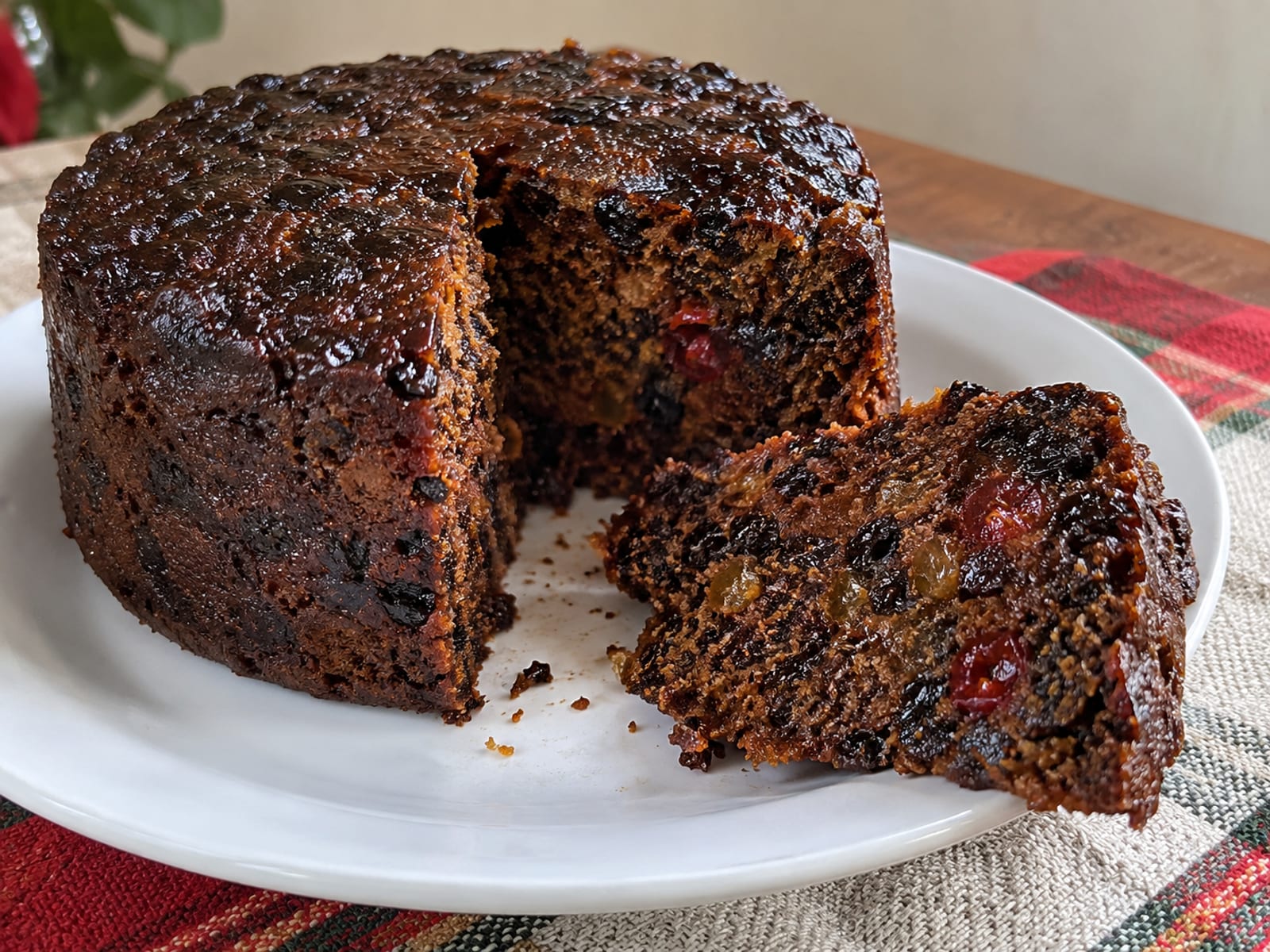 Christmas cake is made with dried fruit soaked in wine and rum.
Recipes differ in how much fruit, alcohol, browning, spice and texture they use. Some cakes are very dark and moist, while others are lighter or less alcoholic. If the cake is for a child or for someone who avoids alcohol, check the alcohol content before you serve it. Sorrel may be served with rum as well, so check that your glass is plain if you want a non-alcoholic cup.
For more on sorrel and the other drinks at the holiday table, read Jamaican Drinks to Try: Sorrel, Irish Moss, Rum Punch and More.
Where to buy Christmas cake, sorrel and holiday food
Holiday food comes from several kinds of seller: bakeries, caterers, supermarkets, produce markets, small home bakers and Christmas Eve markets.
Godeh Bakes, in Kingston 3, St Andrew, sells Jamaican Christmas cake through its online store. Its prices in October 2026 are in the table below. Delivery in Kingston and St Andrew starts at J$700 (about US$4.40), with higher fees for Portmore, rural St Andrew, Harbour View, Spanish Town and Hellshire. Card, debit-card and bank-transfer payments are offered, and the store's daily hours are 10 a.m. to 7 p.m.
Pollyanna Caterers, at 8 Stanton Terrace, Kingston 6, publishes Christmas menus with ham, sorrel, Christmas cake, rice and gungo peas, curried goat, chicken and escoveitch fish. Its booking office is open on weekdays from 10 a.m. to 5 p.m. Customers are asked to request a quote, so request one before you plan a budget.
Coronation Market in downtown Kingston is a place to buy fresh sorrel and gungo peas. On 19 December 2025, the Jamaica Observer reported sorrel at about J$800 a pound (about US$5.03), with vendors expecting prices to rise before Christmas. Buying before Christmas Eve can give you more choice and help you avoid last-minute price increases.
Grand Market stalls sell food, sweets, sorrel and Christmas goods on Christmas Eve. The vendors, prices, payment methods and road arrangements change by town and by year, so carry Jamaican dollars and ask each vendor whether cards or electronic payments are accepted.
Home bakers and bakeries may have limited capacity, so order a whole cake early. When you order, ask whether the cake contains rum or wine. That matters most if the cake is for children, for religious observance or for someone with dietary limits.
Grand Market and Jonkonnu
Grand Market, also called Gran' Market, is a Christmas Eve community market and street celebration. It traditionally takes place on 24 December and often runs into the early hours of Christmas Day. Families go into town for last-minute gifts, sweets, toys, clothes and food, and the streets fill with music, street dancing, food stalls, sorrel, cakes and children's activities.
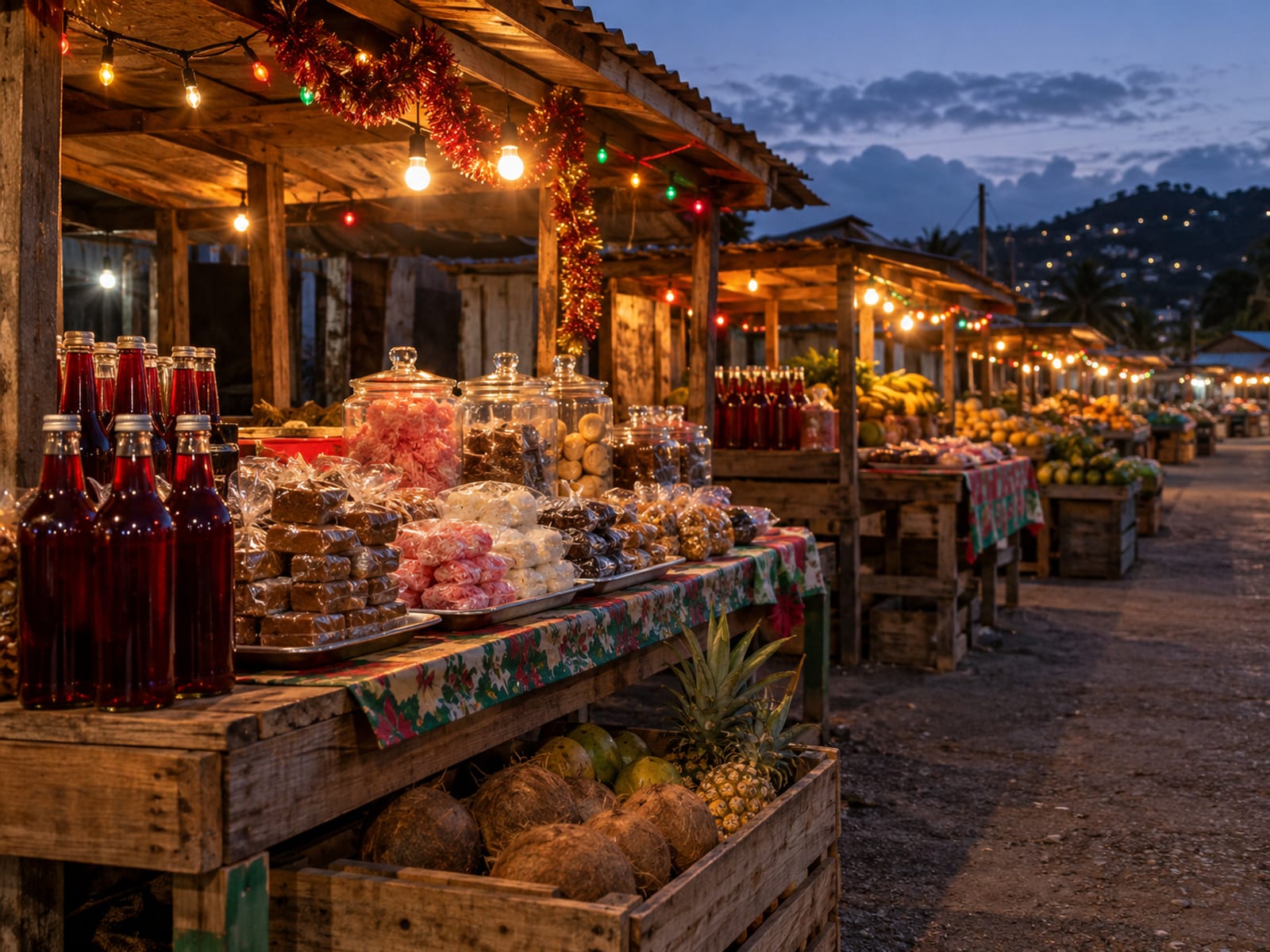 Food stalls, sweets and sorrel fill the streets on Christmas Eve.
Grand Market is not limited to one location. Markets run in towns across Jamaica, and downtown Kingston is one of the best-known examples, with activity around King Street, Orange Street and the surrounding downtown streets and vehicle restrictions during the event. Local arrangements change, so check the town's schedule and road access before you travel. Grand Market is a Christmas Eve activity, not a replacement for arranging Christmas Day lunch. For food events outside the holidays, see Jamaica food festivals, with dates and what to eat.
Jonkonnu, also spelled Jonkunnu or John Canoe, is a masked and costumed performance tradition linked historically with Christmas, Boxing Day and New Year's Day. Performers move in bands with drums, bamboo fife, graters and shakas. Traditional characters include the King and Queen, Cow Head, Horse Head, Pitchy Patchy and Belly Woman.
The tradition developed during the colonial period, when enslaved Africans had few holidays away from plantation work. Bands once moved through towns and villages during the season. Today, performances are less common as spontaneous street events. They are more often presented at cultural programmes, state events, school activities and local celebrations. The Jamaica National Library describes Jonkonnu as a traditional Christmas-time folk festival. To find a scheduled performance, ask the parish cultural office or an event organiser.
Christmas traditions that shape the table
The food sits inside a wider set of customs. Families attend church services, watch-night services and Christmas morning services, sing carols, and clean and paint their homes before the season. They visit relatives, gather with friends, and buy gifts, toys, clothes and sweets at Christmas markets. Jamaicans also stay up late on Christmas Eve for Grand Market.
Sharing is part of the tradition too. Food goes out to neighbours, relatives and people who may be alone, so the food often reaches beyond the household that cooked it.
Christmas desserts beyond the cake
Black cake is the most strongly associated Christmas dessert. Other traditional sweets include potato pudding, sweet potato pudding, coconut drops, grater cake made with grated coconut and sugar, gizzada (a pastry filled with sweetened, spiced coconut), pinda cakes or peanut cakes, and peppermint sticks. Recipes vary, so the same name can mean a slightly different sweet from one house to the next.
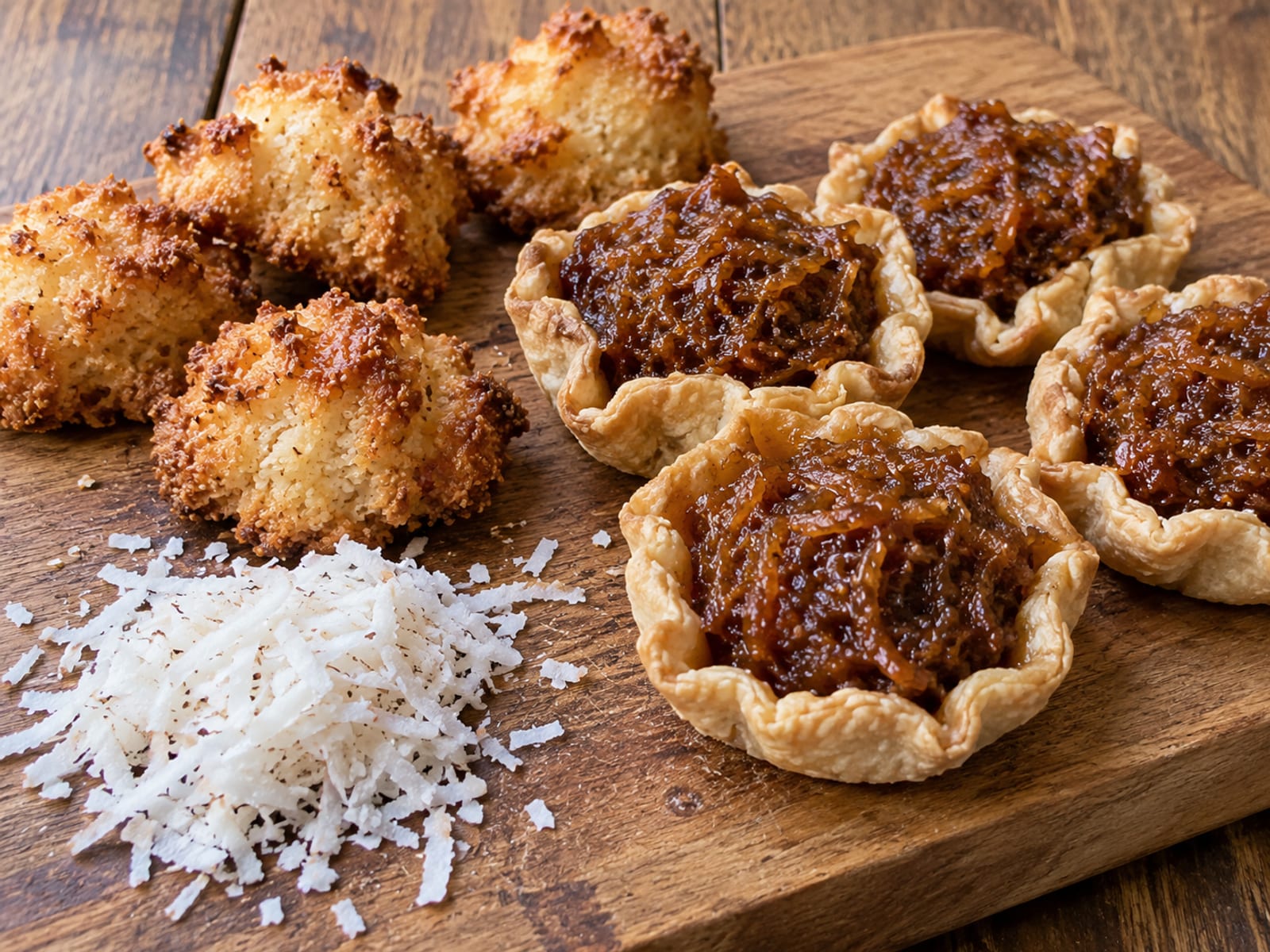 Coconut drops and gizzada are traditional sweets beyond the cake.
Plan your holiday food in four decisions
Four choices shape the rest of your planning:
- Which parish, town or resort area you will be in, because sellers, markets and delivery zones are local.
- Whether you need ingredients, a whole cake, drinks, a complete meal or a cultural event.
- The date and time you need the food. Christmas Eve and Christmas Day schedules differ, and Grand Market belongs to Christmas Eve.
- Whether the food must be alcohol-free, vegetarian, vegan, halal-compatible or suitable for children. Check each of these with the seller, since rum or wine can be in the cake and dietary options differ.
Common questions
What do Jamaicans eat at Christmas?
A typical Christmas table commonly includes sorrel, Christmas fruit cake, ham or chicken, curry goat or curried mutton, rice and gungo peas, and fish such as escoveitch fish. Oxtail, roast beef, pork, plantain and callaloo also appear on many menus. Households mix these to suit their budget, their guests and their dietary needs.
What are Christmas traditions in Jamaica?
Families cook and share large meals, prepare sorrel and Christmas cake, and give food to neighbours, relatives and people who may be alone. Church services, carol singing, cleaning and painting homes, and buying gifts at Christmas markets are part of the season. Visiting town on Christmas Eve for Grand Market is another tradition, and Jonkonnu performances are linked to Christmas Day, Boxing Day and New Year's Day.
What are traditional Jamaican desserts?
Christmas fruit cake, also called black cake, rum cake or Christmas pudding, is the most strongly associated holiday dessert. It is made with dried fruit soaked in wine and rum. Other traditional sweets include potato pudding, coconut drops, grater cake, gizzada and pinda cakes.
How do Jamaicans say Merry Christmas?
"Merry Christmas" is understood and commonly used in Jamaica. An informal spelling, "Merry Krismus", may appear in writing, but spelling and pronunciation vary from one speaker to the next. "Irie Christmas" is another warm, informal greeting, and "irie" conveys a positive, good or peaceful feeling. For a respectful greeting, say "Merry Christmas and a Happy New Year" or "Irie Christmas and a Happy New Year".
Where can you buy Jamaican Christmas cake?
Bakeries, caterers, supermarkets, market vendors and home bakers all sell it, and many sellers require advance orders. Godeh Bakes in Kingston 3 offers 1 lb and 2 lb cakes with delivery in Kingston and St Andrew. Before you pay, check the cake size, the price in Jamaican dollars, pickup or delivery, the lead time and the alcohol content.
Weh Fi Nyam lists restaurants parish by parish, so you can plan a holiday meal out, a quick stop for cake or a meal close to where you are staying. Start with the Weh Fi Nyam restaurant directory, or go straight to restaurants in Kingston or restaurants in St. Andrew.