
Escovitch fish, brown stew fish, steamed fish with okra and bammy, fried fish with festival, fish tea, run down and jerk fish are the fish dishes you are most likely to find on a Jamaican menu. Choose the preparation first, then the place. Hellshire Beach in St Catherine suits a plate of fried fish with bammy and festival, Little Ochie in Alligator Pond, St. Elizabeth, is known for jerk-roast fish and fresh seafood cooked to order, and Gloria's Seafood City at Victoria Pier in Kingston calls steamed fish a speciality on its website.
The fish dishes on Jamaican menus
Escovitch fish is fried fish topped with a spicy, vinegar-based sauce of pickled vegetables, usually onions, carrots and peppers. It is often served with festival, a lightly sweet fried dough, or bammy, a flatbread made from cassava. It is one of the best-known fish dishes in the country, and it is a good first order if you have never tried Jamaican fish before.
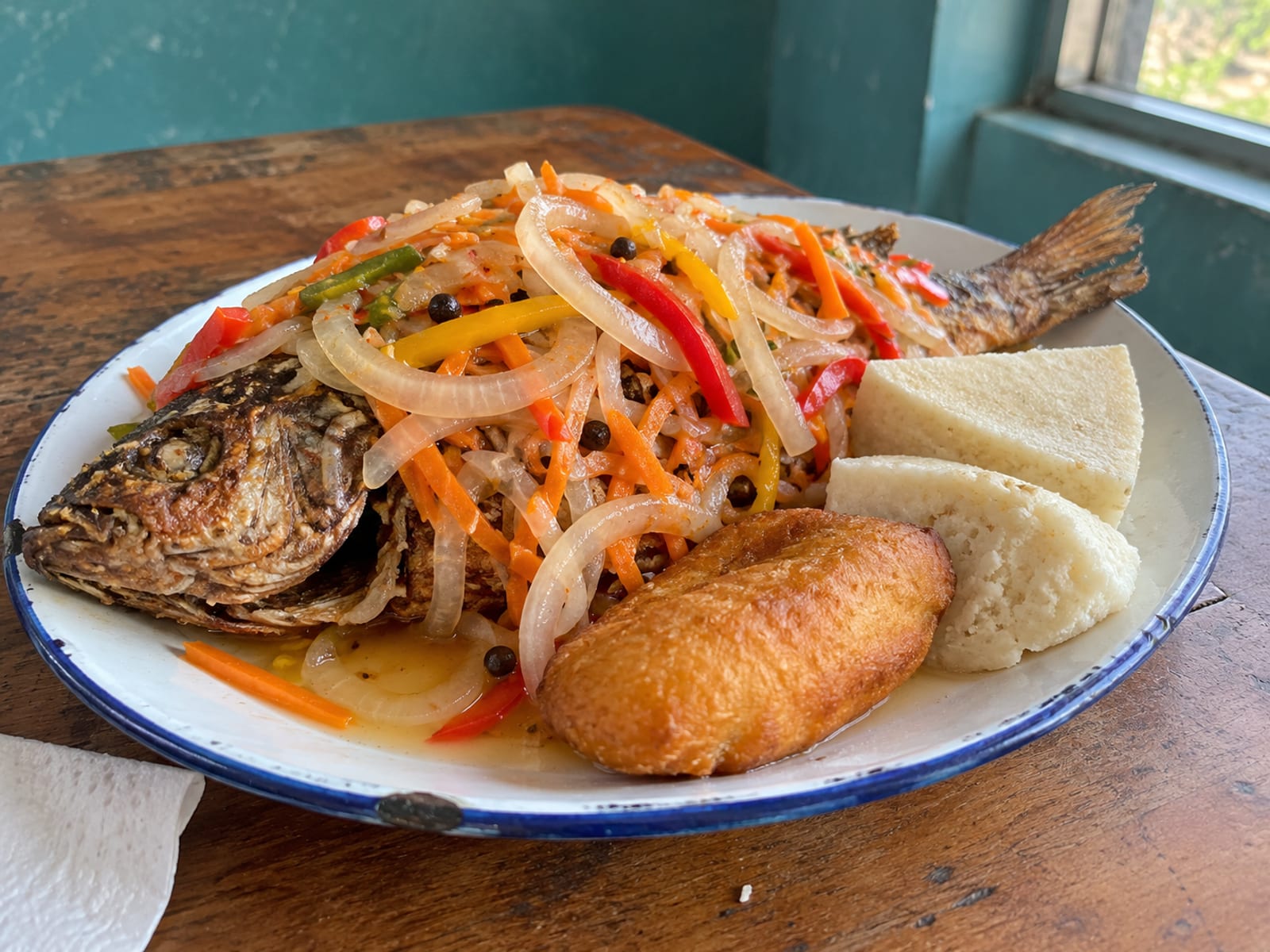 Escovitch fish is a good first order if you have never tried Jamaican fish before.
Brown stew fish is usually fish that has been fried or browned, then simmered in a dark, seasoned gravy with onion, scallion, thyme, peppers and other vegetables. Snapper, kingfish and jack are all suitable choices for it.
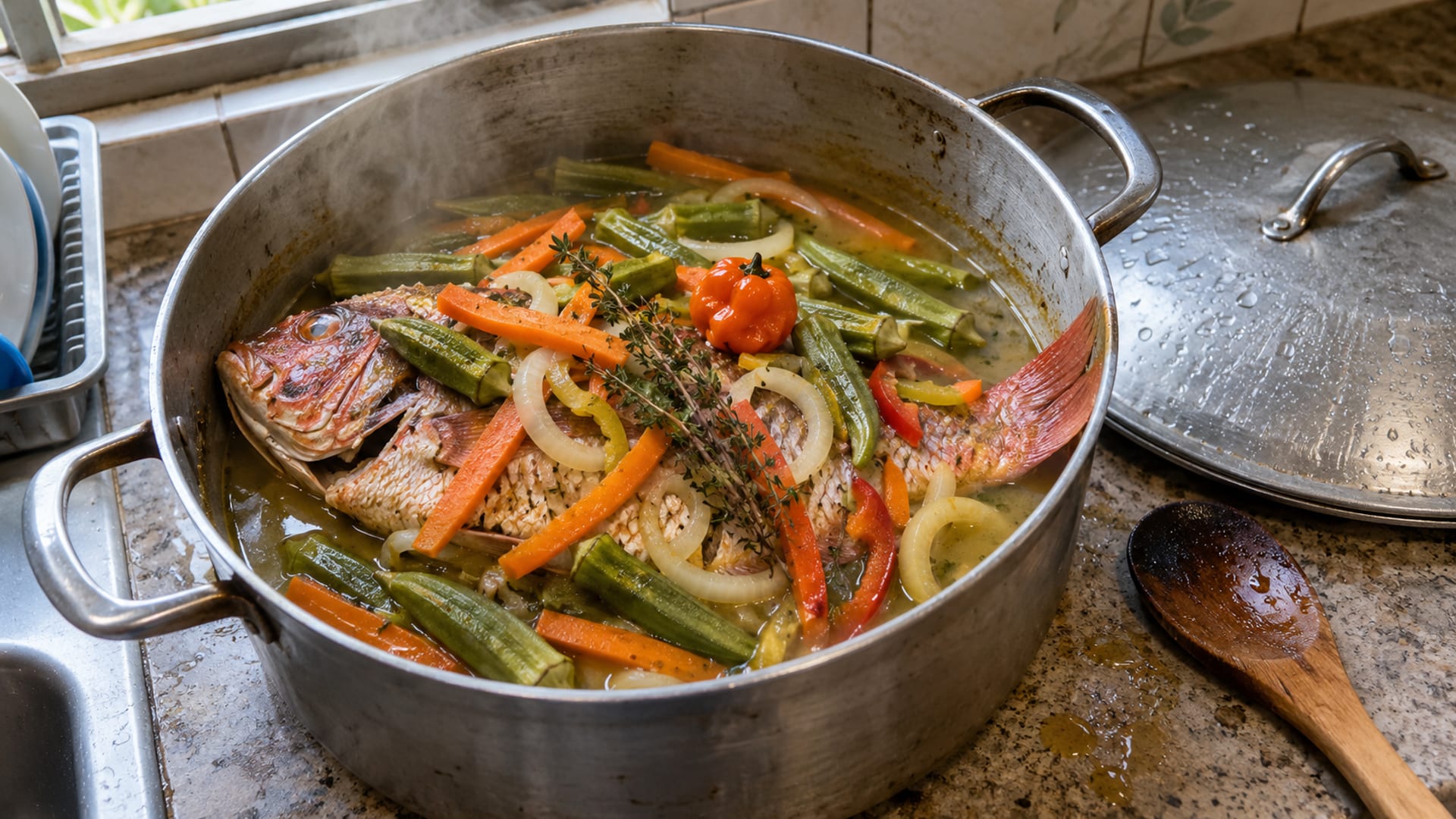
Steamed fish is a whole fish cooked with vegetables and seasonings, commonly okra, carrots, bell peppers and onions. It usually comes with bammy, provisions or water crackers. Steamed fish with okra and bammy is a classic pairing.
Fried fish with festival or bammy is the simple, filling plate you will find at beach cookshops. Bammy is the traditional cassava partner for fried fish, and festival, a lightly sweet fried dough, is the other common side.
Fish tea is a light, seasoned broth. Cooks often build it from fish pieces or a fish back, then add pumpkin, chocho, carrots, Irish potato, scallion, thyme, Scotch bonnet and sometimes spinners, which are small flour dumplings. The Jamaica Gleaner calls it fish water, broth or tea. It works as a starter or a meal, and it is different from steamed fish because the fish cooks in a seasoned broth rather than in a covered pot.
Run down is fish, or saltfish, cooked in coconut milk until the milk reduces to a thick, seasoned sauce. Salt mackerel is the traditional choice, but restaurants also make it with fresh fish. Boiled green banana, yam, dumpling or breadfruit usually come with it.
Jerk fish is fish seasoned with scotch bonnet, thyme and pimento, then cooked over heat, traditionally over pimento wood. It is smoky and hot, so ask how spicy the seasoning is before you order.
You will also see curried fish, cooked in a curry sauce with onion, garlic, thyme, scallion, pepper and sometimes coconut milk. Fried sprat is small whole fish fried until crisp, eaten as a snack, a breakfast or a cheap meal with bammy, festival, bread or rice. Ackee and saltfish is Jamaica's national dish. Salted codfish is soaked to take out the salt, flaked, and sautéed with ackee, onion, tomato, sweet pepper, thyme and Scotch bonnet.
Which fish you will be offered
Common Jamaican fish include snapper, parrot fish, jack, kingfish, grunt, tuna, barracuda and doctor fish. Snapper and parrot fish are among the more expensive species on sale. Red snapper is the clearest widely recognized choice for escovitch, steamed fish and brown stew, and it appears in escovitch and other Jamaican preparations. Availability and price change from place to place, so let the cook tell you what is fresh.
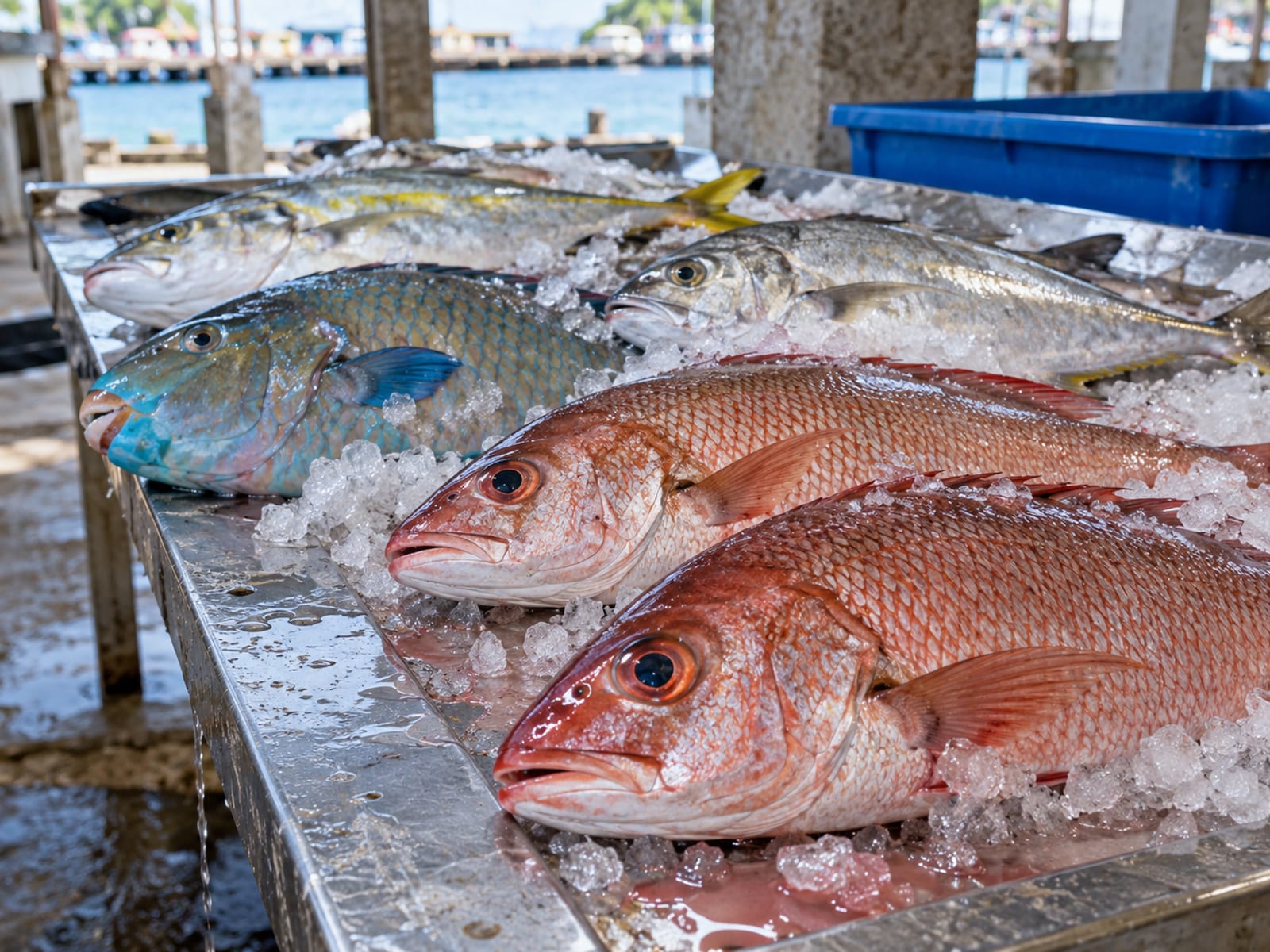 Snapper is the clearest choice for escovitch, steamed fish and brown stew.
Fishers usually sell by the pound at the first sale. The National Fisheries Authority's report for January to March 2025 gives average first-purchase prices of about J$1,114 per pound for snapper, J$1,136 for parrot fish and J$950 for jack. Those are fishers' prices, roughly US$7, US$7 and US$6, and they are not restaurant prices. A plate price covers preparation, sides and the restaurant's own costs, so it is a different number entirely.
What a fish plate costs
Each figure is one menu or one report, not an island average. The Hellshire prices come from Jamaica Star, and the Little Ochie figure comes from an April 2025 Jamaica Observer report.
At Hellshire, customers could pick their fish and agree the price before it was cooked, and prices run by fish size, not by pound.
Prices move with the species, the size, the catch and whether the fish arrives cleaned or cooked. When you order, find out whether the figure is per fish, per pound, per slice or per plate, and whether it includes cleaning, sides and service charge.
If you want raw fish to cook yourself, go to the beach and buy from the vendors. At Old Harbour Bay they can clean the fish for you.
Where to order fish
- Hellshire Beach, St Catherine. Hellshire is a working fishing village near Portmore, with cookshops that sell fried and steamed fish. Fried fish with bammy and festival is the combination to order there. Erosion has cut into the usable shoreline, but the cookshops remain central to the local economy. Find more places in St Catherine.
- Little Ochie, Alligator Pond, St. Elizabeth. Little Ochie prepares fresh-caught seafood to order, and its jerk-roast fish is the dish to try. An April 2025 report said it was open daily from 9 a.m. to 11 p.m. Public transport is limited, so a car, hired driver or taxi is the easiest way to get there. Start with St Elizabeth restaurants and our Little Ochie guide.
- Jack Sprat, Treasure Beach, St Elizabeth. The menu offers grilled, escovitch, steamed, fried, brown stew, curry and jerk fish. It is open daily from 12 p.m. to 9 p.m., with delivery or pickup until 10 p.m. Friday to Sunday, and it publishes a phone and WhatsApp number. Prices are not on the menu, so call for the day's figure. See St Elizabeth restaurants.
- Gloria's Seafood City, Victoria Pier, Ocean Boulevard, Kingston. The website names steamed fish as a speciality. The menu also covers lobster, shrimp, conch, soups and sides, and the restaurant adds a 10 percent service charge to the bill, as of October 2026. Browse Kingston restaurants for more choices.
- Fisher's Kitchen, Kingston. Its current menu lists escovitch red snapper and steamed fish with okra, carrots, bell peppers and onions.
- Old Harbour Bay, St Catherine. This is an active fishing village where vendors sell fish on the beach and clean it for you. Sixty-seven boats worked between Dagga Bay and Pearl Harbour in 2022. It is the better stop for raw fish.
- Whitehouse, St Elizabeth. Whitehouse is a fishing community with its own shoreline beach. After Hurricane Beryl, fishers there received nets, fish-pot wire and deep-sea hooks in 2025. What is on offer depends on the day's catch, so take what the fishers bring in.
Hellshire and Little Ochie mix fishing with cooked meals. Old Harbour Bay and Whitehouse are fishing places first, so they suit buyers who want raw fish or who are happy to work with whatever the day brings.
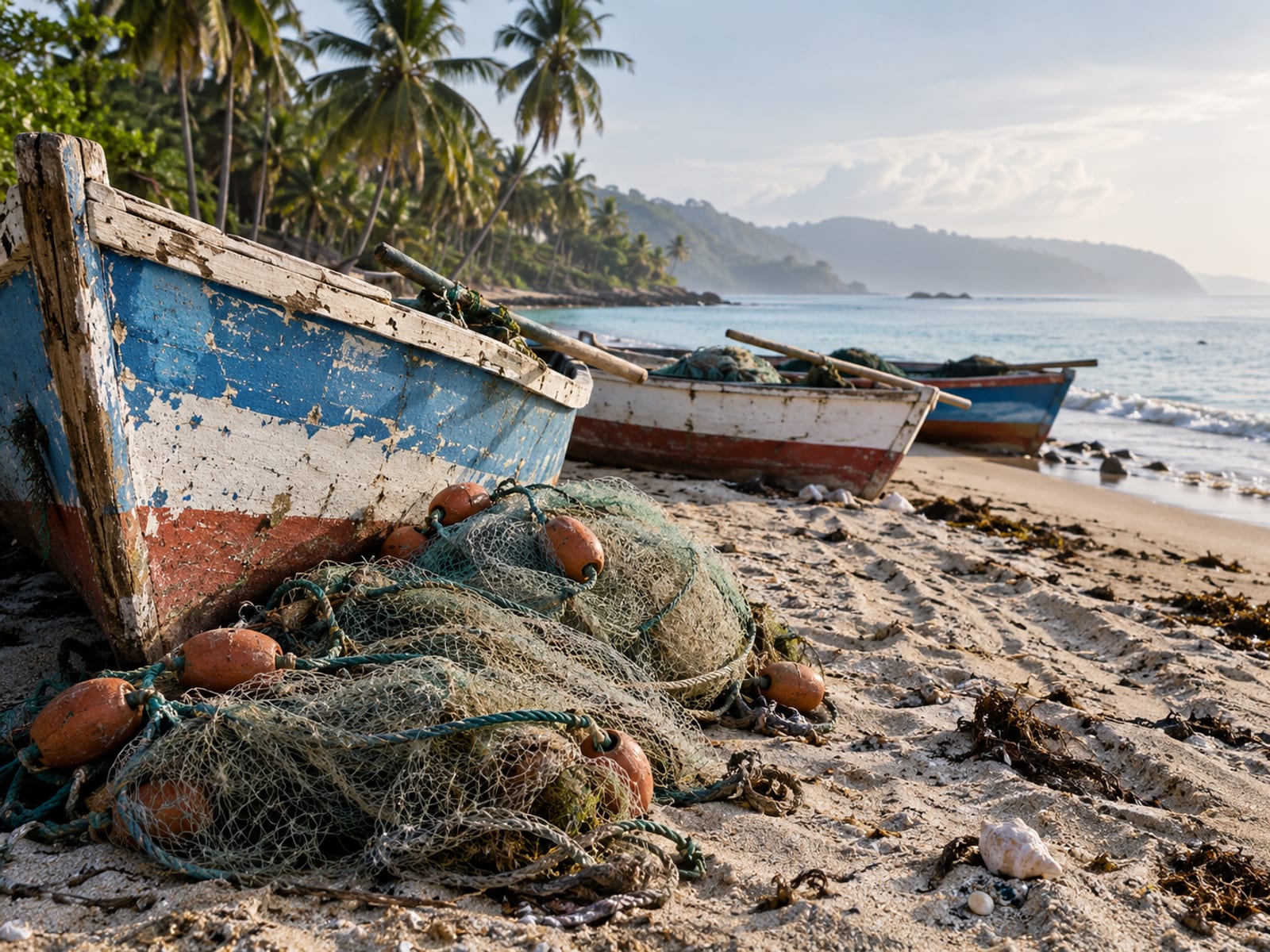 Hellshire and Old Harbour Bay are working fishing places first.
Ordering tips
Name the preparation and the fish together, since the same snapper can be fried, steamed or curried. Ask whether the fish is bone-in before you sit down. Jamaican menus usually mark prices in J$, but some show only a dollar sign, so ask which dollars they mean if you see one.
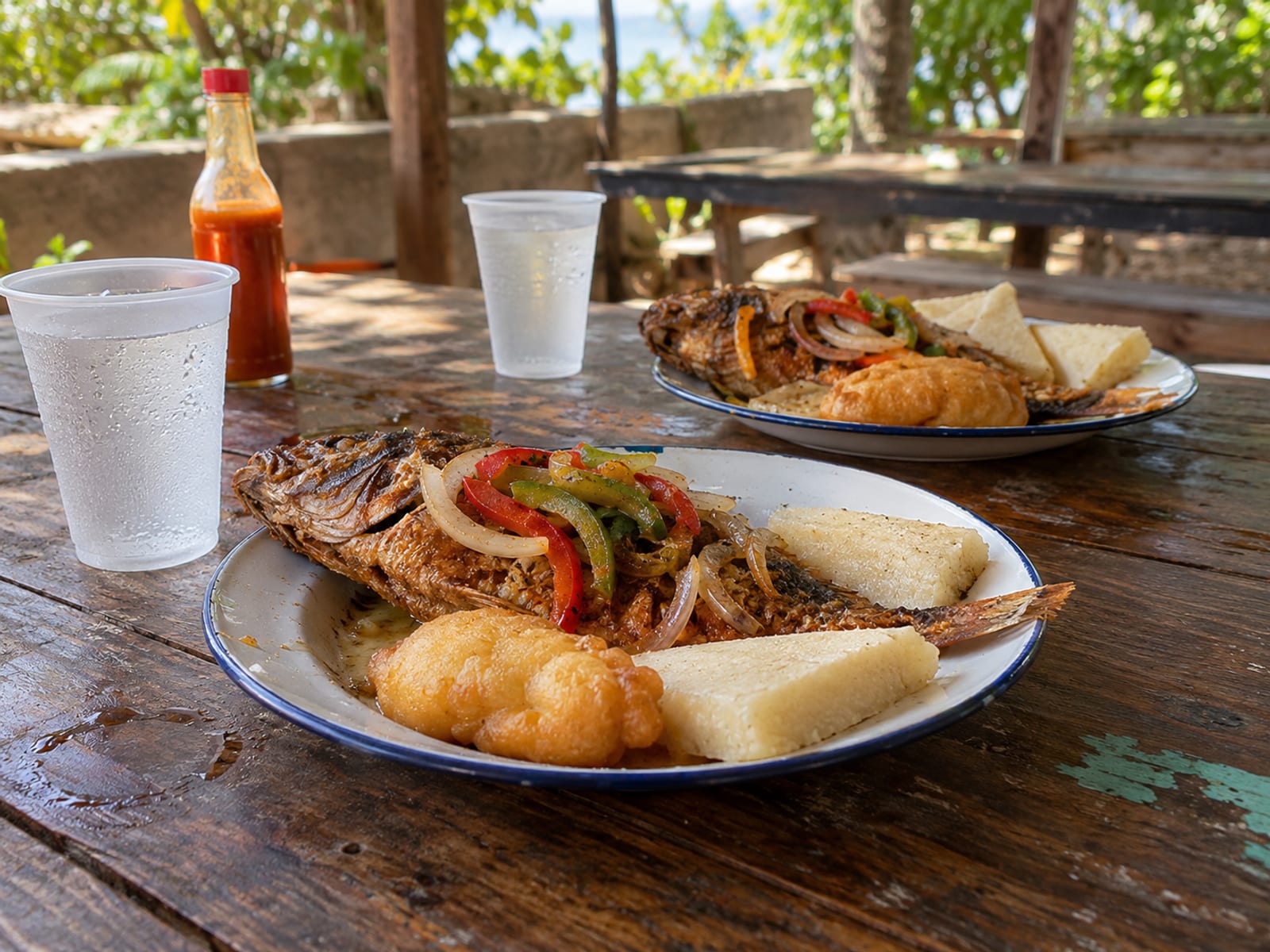 Name the preparation and the fish together when you order.
Carry Jamaican dollars for beach cookshops and fish markets. Payment rules differ from place to place, so check whether cards are taken before you order. Beach and cookshop hours and stock change with the weather, supply and the season, so phone ahead if you are travelling far.
Confirm before you go: these prices come from single menus and fish prices move with the day's catch, so confirm the price, the portion and the final bill before you order.
For more places to eat fish by parish, browse the Weh Fi Nyam restaurant directory. For dated food events across the island, see Jamaica food festivals, dates and what to eat.
Common questions
What is the most popular fish in Jamaica?
No national ranking names one fish as the most popular. Red snapper is the clearest widely recognized option for escovitch, steamed fish and brown stew. Parrot fish, jack and kingfish are also common on menus and in fisheries price reports. Choose by what the cook has fresh that day.
What fish do Jamaicans use for saltfish?
Saltfish usually means salted, dried codfish, which is the fish used in ackee and saltfish. Some kitchens use the word more broadly for any preserved fish, and salt mackerel is the fish in run down. If a menu says saltfish without saying which fish, check with the cook before you order.
How much is fish in Jamaica?
There is no single price. In February 2026, one Hellshire operator priced an approximately eight-inch fish at J$2,500 (about US$16), and Y-Knot in Port Royal had fried red snapper with bammy or festival at J$3,300 (about US$21) as of October 2026. The fishers' first-sale averages for early 2025 were roughly J$950 to J$1,140 per pound for snapper, parrot fish and jack. Those are wholesale figures, not plate prices.
Is fish sold by the pound?
Raw fish at fishing beaches and markets is often priced by weight. Restaurant fish is usually sold differently: a whole fish by size, a slice or fillet as a plate, a meal with sides, or at market price. Find out what the figure covers before you order.
What is jerk fish?
Jerk fish is fish seasoned with scotch bonnet, thyme and pimento, then cooked over heat, traditionally over pimento wood. At Little Ochie, the jerk-roast fish was the featured dish in an April 2025 report. Bone-in fish and spice levels vary, so check both when you order.