

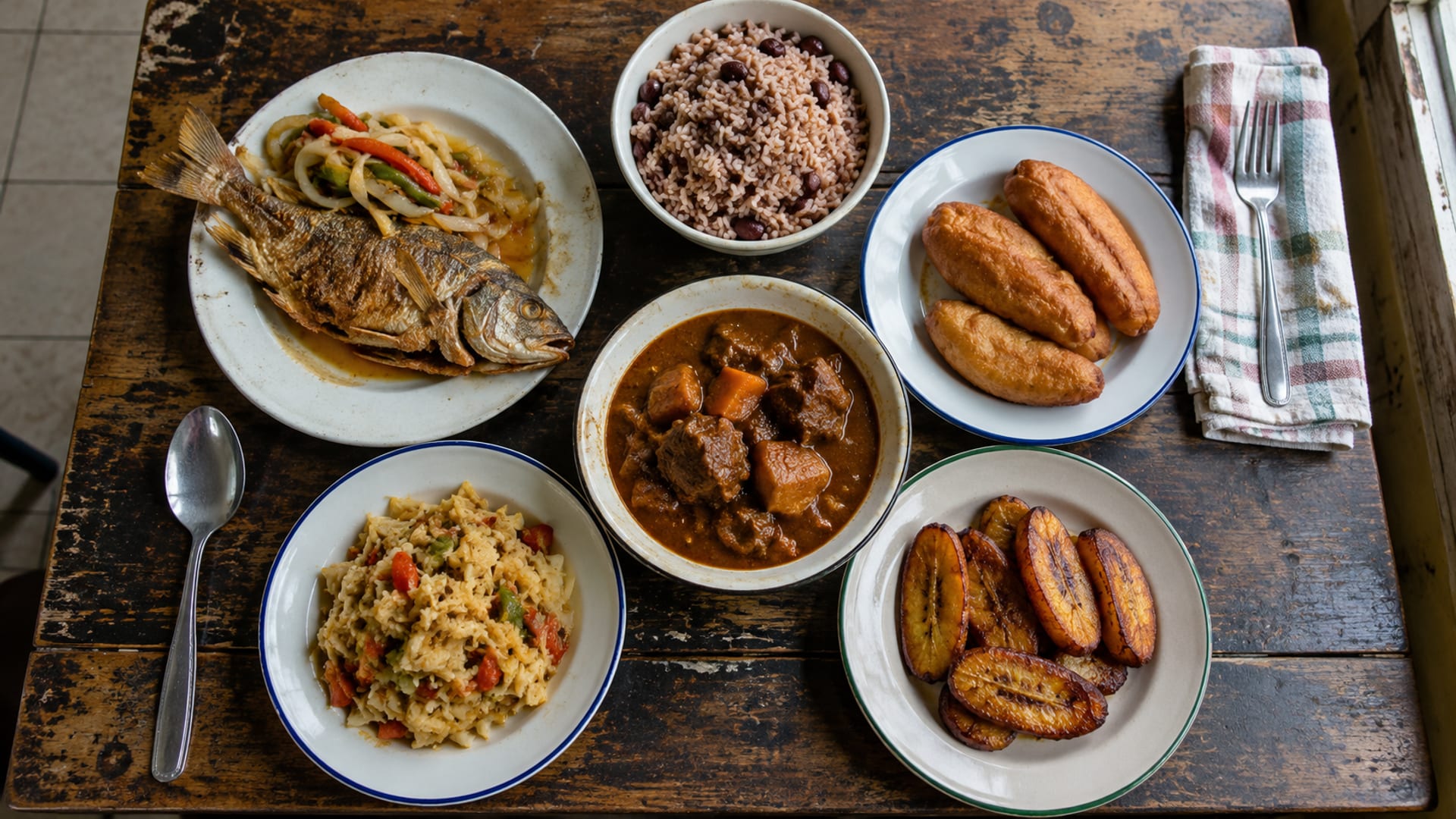
Start with ackee and saltfish. It is Jamaica's national dish, it is the classic breakfast, and you will find it in homes, cookshops and restaurants across the island. The rest of this list moves through the main plates, soups, sides, snacks, sweets and drinks that Jamaicans eat every day. Many of them are foods Visit Jamaica names among the dishes and drinks visitors should try.
The main plates
Most of the dishes in this section are meat or fish with a starch on the side. Many come with rice, peas or ground provisions, so ask what the side is before you order.
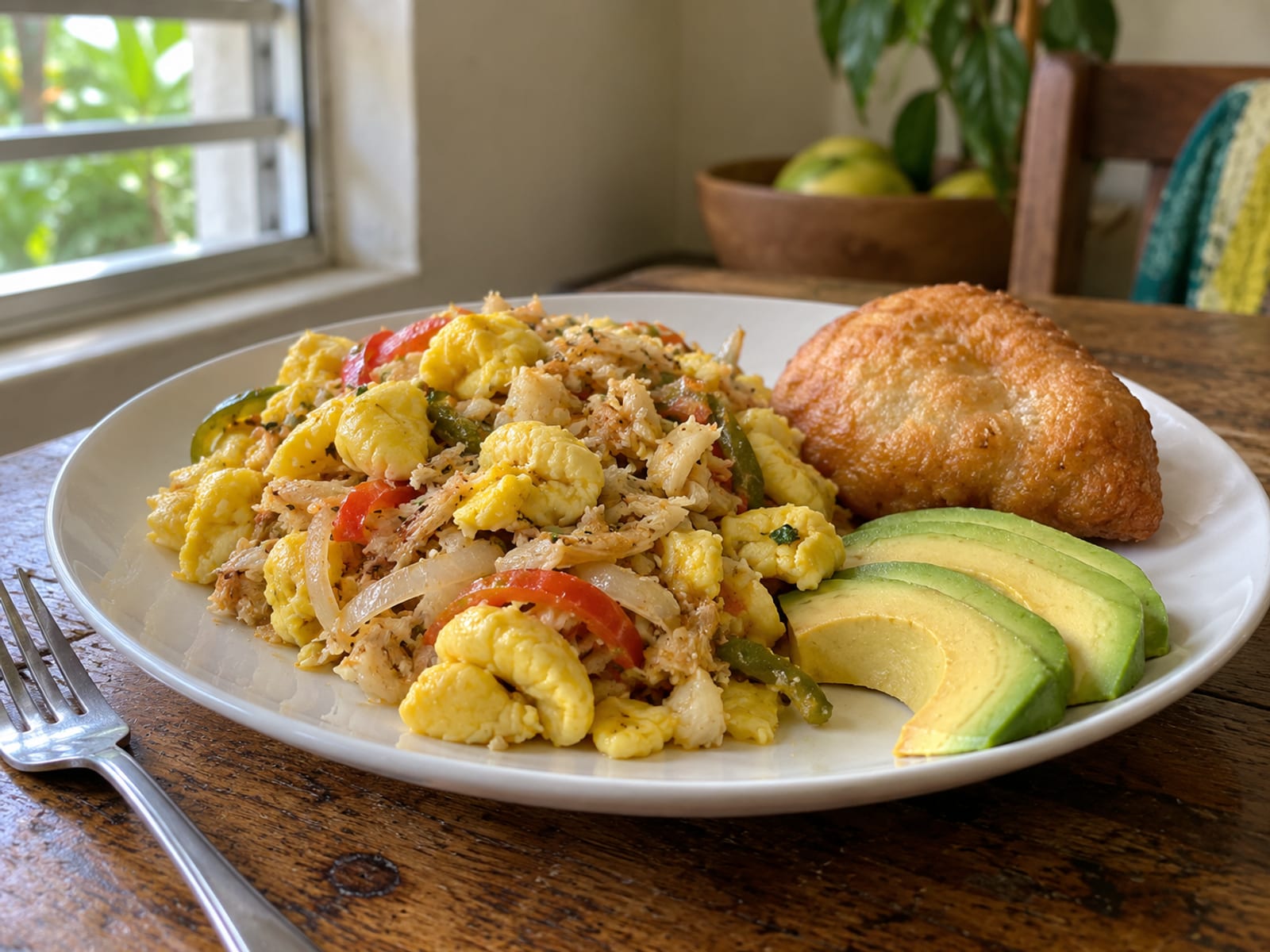 Ackee and saltfish, the national dish, often comes with fried dumpling or avocado.
- Ackee and saltfish. Boiled ackee sautéed with salted cod, onion, tomato, thyme and pepper. It is common at breakfast, in homes, at cookshops and in Jamaican restaurants. It often comes with fried dumpling, boiled green banana, callaloo, plantain, breadfruit or avocado. Ackee has to be fully ripe, opened naturally and cleaned of the seed and red membrane before it is cooked. The Jamaica Information Service warns that badly prepared ackee can contain hypoglycin and cause poisoning, so eat it where the cook is known to prepare it properly.
- Jerk chicken, pork or fish. Meat or fish seasoned with pimento, Scotch bonnet, thyme and other spices, then cooked over smoke, traditionally from pimento wood. You will find it at roadside jerk stands, cookshops and jerk centres. For a parish-by-parish look at where to find it, read our jerk chicken guide.
- Curry goat. Goat simmered with curry spices, onion, garlic and thyme. It is usually served with rice, plain rice or ground provisions at lunch and dinner.
- Oxtail. Beef tail braised until tender, usually served with beans or gravy and rice. It is common at cookshops and restaurants.
- Escovitch fish. Fried fish topped with a sharp pickled dressing of vinegar, onion, carrot, pepper and spices. It is common at seaside food stalls, in homes and in restaurants. The dressing can be very hot, so read the heat section below before you order.
- Brown stew chicken. Seasoned chicken browned, then simmered in a dark gravy with vegetables and aromatics. It is a common meal at homes, cookshops and restaurants.
- Run down. Also called rundown. Fish, usually salted mackerel, simmered in coconut milk with vegetables and seasonings until the coconut milk thickens. It is common in coastal homes and traditional restaurants, and it suits visitors who want to try coconut-based coastal cooking.
- Stew peas. Kidney beans or gungo peas cooked with salted meat, coconut milk, herbs and ground provisions. It is a common home and cookshop meal.
- Fried fish. Whole fish or fillets, seasoned and fried until crisp, often served with festival, bammy, bread or vegetables. It is especially common at seaside stalls and fish markets.
Soups
Jamaican soups range from thick and hearty to light and clear, so pick the one that suits the meal you want.
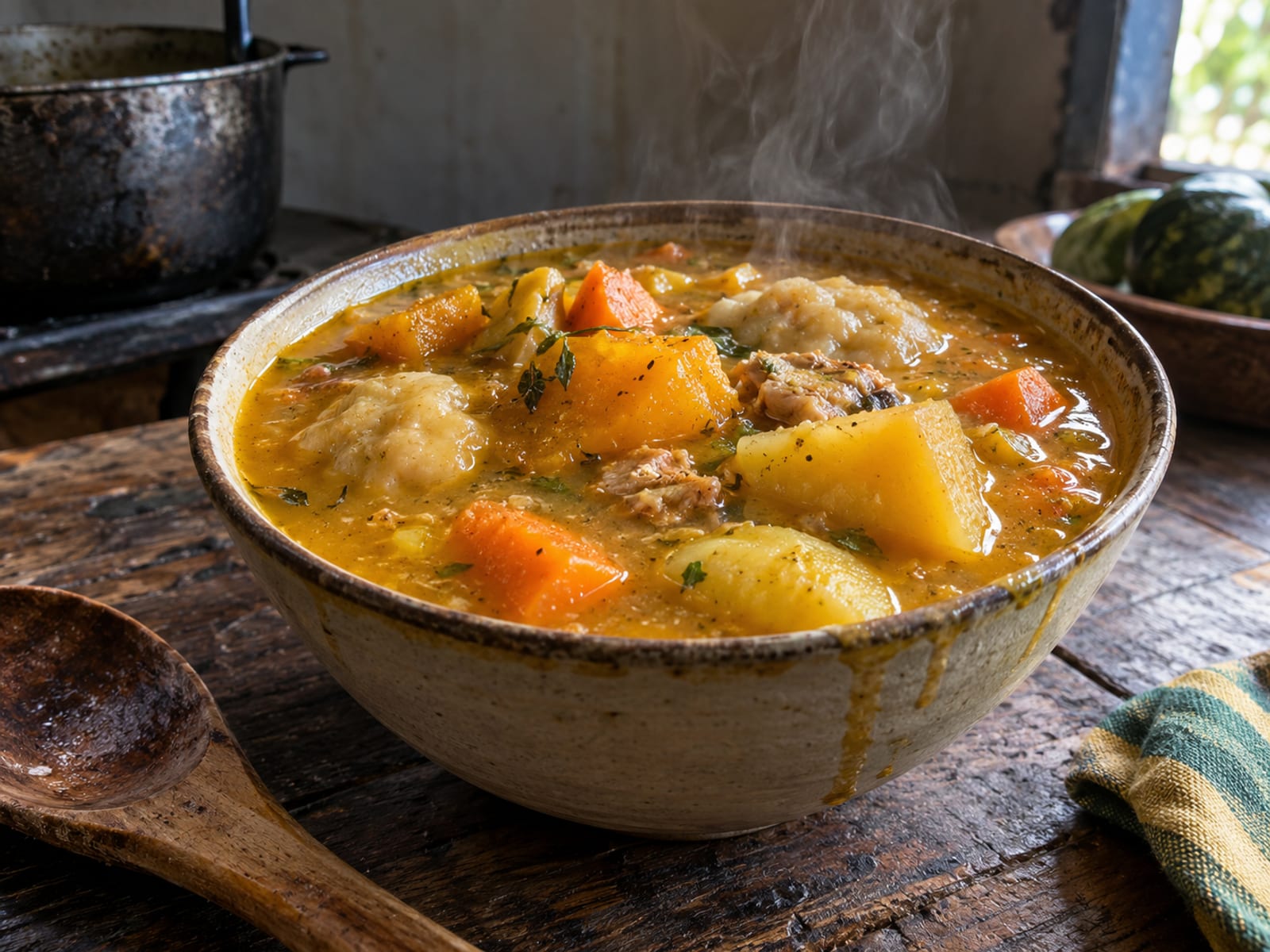 Soups such as fish tea and pepperpot are served hot, often with ground provisions.
- Pepperpot soup. A thick soup of callaloo or other greens, ground provisions, coconut milk and often meat or salted pork. It is usually eaten hot, at home, in cookshops and at soup stalls.
- Mannish water. Goat soup made with goat parts, ground provisions, dumplings, banana and herbs. It is linked with country gatherings, celebrations, weddings and roadside soup sellers.
- Fish tea. A light, seasoned fish soup with fish, pumpkin, chocho, yam, potato, okra and other vegetables. It is common at homes, restaurants and soup stalls.
Sides and snacks
Some of these fill out a plate. Others are small enough to eat on the go. For more of the small ones, see Jamaican snacks and where to buy them.
- Festival. Slightly sweet fried dough made from cornmeal and flour. It is commonly served with jerk or fried fish.
- Bammy. Cassava flatbread, usually fried, toasted or steamed. It is commonly served with fried or escovitch fish.
- Callaloo. Leafy greens cooked with onion, tomato, thyme, garlic and sometimes saltfish. It is served as a breakfast side or with lunch and dinner.
- Rice and peas. Rice cooked with kidney beans or gungo peas, coconut milk and seasonings. It is a standard side for Sunday dinner and goes with jerk and other meat dishes.
- Jamaican patties. Flaky pastry filled with seasoned beef, chicken, fish, vegetables or cheese. Patty shops, bakeries and convenience stores sell them as a snack or a quick meal. Our patty guide covers the big chains and what they charge.
- Pepper shrimp. Small shrimp or crayfish cooked or sold with heavy Scotch bonnet seasoning. It is especially linked to roadside vendors in Middle Quarters, St Elizabeth.
Sweets
Coconut turns up in several Jamaican sweets, and ginger and spices give others their warmth.
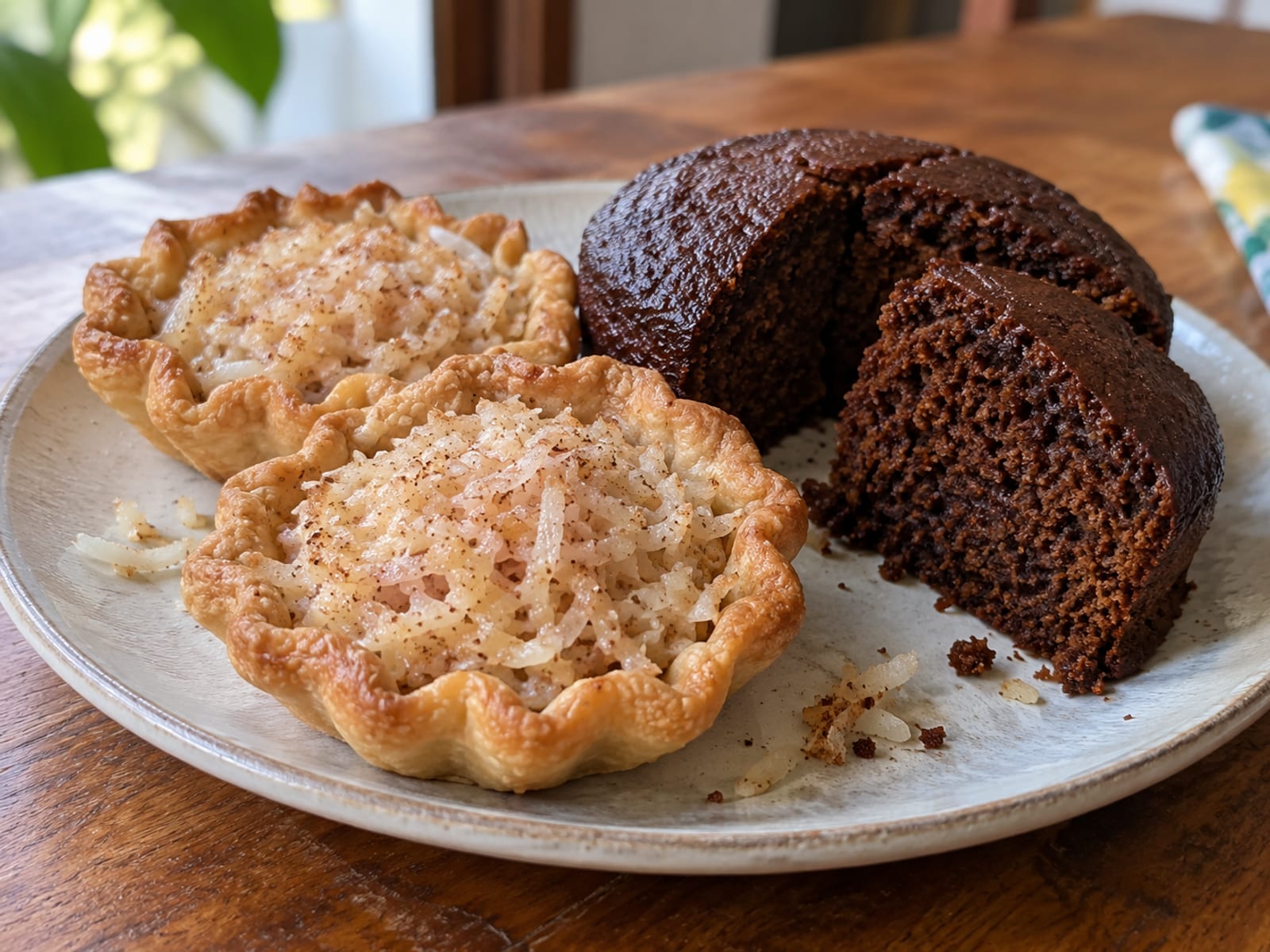 Gizzada, toto and bulla cake are sold at bakeries, markets and vendor stalls.
- Gizzada. A small pastry tart filled with spiced grated coconut. Bakeries, markets and vendors sell it as a sweet snack.
- Toto. A dense coconut cake made with grated coconut, flour, sugar and spices. You will find it at bakeries, in homes and in traditional sweet shops.
- Bulla cake. A flat, dark, spiced cake made with flour, brown sugar, ginger and spices. People often eat it with cheese, butter, pear or tea.
- Sweet potato pudding. Grated sweet potato baked with coconut, spices and sweetener. Bakeries, markets and roadside stalls often sell it.
Drinks
The drinks on this list run from a deep-red hibiscus drink to a coffee grown high in the hills.
- Sorrel. A deep-red drink made from hibiscus calyces, ginger, spices and sugar. It is especially popular around Christmas and at celebrations.
- Irish moss. A thickened seaweed drink, usually blended with milk, sugar and spices, and sometimes with stout or rum. Juice vendors, restaurants and homemade-drink sellers sell it.
- Blue Mountain coffee. A mild, aromatic coffee grown in the Blue Mountains. It is served at cafés, hotels, restaurants and in homes.
Where to find the regional dishes
Some dishes are tied to a particular road, beach or town, so it helps to know where to look.
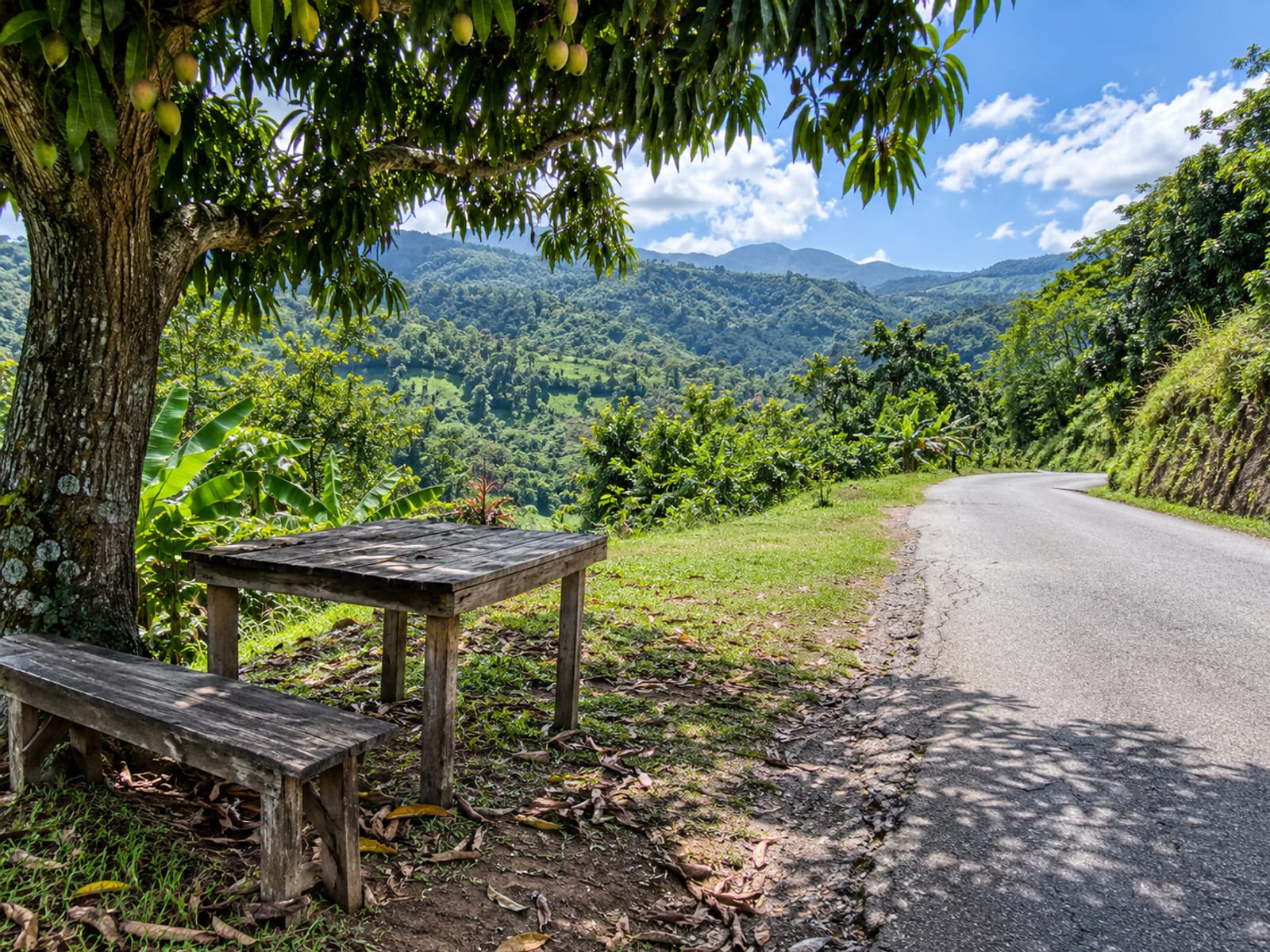 Many Jamaican food stops sit along a particular road, beach or town.
- Middle Quarters, St Elizabeth. Known for bags of spicy pepper shrimp sold by roadside vendors. Visit Jamaica also lists it as a South Coast stop for pepper shrimp. Browse St Elizabeth restaurants for more places nearby.
- Hellshire, St Catherine. Associated with fried fish, festival, bammy and other seafood meals sold around Hellshire Beach and by seafood vendors. Browse St Catherine restaurants for more places nearby.
- Boston, Portland. Associated with jerk, especially jerk pork and jerk chicken. Its cooking tradition is linked to pimento-wood smoke and roadside jerk stands. Browse Portland restaurants for more places nearby.
- Faith's Pen, St Catherine. A roadside stop on the A1 between Kingston and Ocho Rios. Cookshops and vendors there sell jerk, fried fish, roast corn and fresh juice.
- Spur Tree, Manchester. Known for roadside meals such as curried goat, corn soup, fried fish and festival. Browse Manchester restaurants for more places nearby.
- Melrose Hill, Manchester. Visit Jamaica highlights yam and saltfish as a traditional roadside food stop.
- Blue Mountains. Associated with Jamaican Blue Mountain coffee.
- South Coast and Negril. Known for fresh seafood, including lobster, shrimp, snapper, fried fish and bammy.
Confirm before you go: these are food associations, not promises that a vendor is open every day. Roadside food often depends on the day, the weather, the supply and the time you arrive, so ask what is ready before you plan a long drive.
How hot, how big and where to eat it
Three things shape a good meal here: the heat, the portion and the kind of place you choose.
Scotch bonnet is a core flavour, and it can make a dish extremely hot. The dishes to be most careful with are pepper shrimp, jerk, escovitch dressing, soups and sauces. How hot a dish gets depends on the cook and on how much pepper, seed and membrane goes in. If the level is uncertain, ask for mild, or ask for the pepper to be served on the side. Ackee and saltfish, rice and peas, patties, bulla and most desserts are not inherently hot.
Portions vary by venue. A cookshop plate with rice, peas, ground provisions, vegetables and a meat or fish is usually a full meal. A soup cup, a patty, a festival or a bag of pepper shrimp may be a snack instead. Roadside vendors often sell smaller portions, cups and bags, so you can try several dishes in one stop.
Locals eat in homes, cookshops, patty shops, bakeries, markets, roadside stands, fish stalls, jerk centres and restaurants. Each one suits a different kind of stop, and roadside food is often tied to a particular route or community.
Bring Jamaican cash for roadside vendors, cookshops, markets and community food experiences. Visit Jamaica says cash is often preferred for community-based tourism, and that card payment should be arranged in advance. If you avoid pork, goat, seafood or salted meat, or you want a vegetarian plate, ask before you order. Ask about Scotch bonnet, bones, seafood, goat, salted meat, coconut milk and vegetarian preparation.
Common questions
Quick answers to the questions people ask when they plan what to eat.
What are the top 10 foods to eat in Jamaica?
This is a practical first-ten list, not a measured ranking of popularity. Start with ackee and saltfish, jerk, curry goat, oxtail, escovitch fish, a patty, rice and peas, fried fish, run down and the pepper shrimp from Middle Quarters. Visit Jamaica's cuisine pages support most of these as representative Jamaican foods.
What is the national dish of Jamaica?
Ackee and saltfish is Jamaica's national dish. The Jamaica Information Service describes ackee cooked with saltfish or salt pork as one of Jamaica's greatest delicacies. Make sure the ackee is prepared properly, because badly prepared ackee can contain hypoglycin.
What do Jamaicans eat for breakfast?
The traditional breakfast is ackee and saltfish, served with fried dumpling, callaloo, green banana, plantain, breadfruit or avocado. Other common choices include porridge, patties, bread, bun and cheese, and tea or Jamaican coffee. The Jamaica Information Service links ackee and saltfish with a traditional Sunday morning. For more on the morning plates, see our Jamaican breakfast guide.
What is the most eaten food in Jamaica?
Eating depends on the meal, the household, the parish and the budget, so one most-eaten dish is hard to pin down. Ackee and saltfish is the strongest cultural answer because it is the national dish. Jerk, rice and peas, curries, oxtail, patties, soups and fish are also widely represented in everyday Jamaican food.
What is a delicacy in Jamaica?
Ackee and saltfish is widely treated as a delicacy as well as the national dish. Other foods are treasured in particular communities, including pepper shrimp from Middle Quarters, fresh seafood on the South Coast and traditional coconut sweets. These are regional and cultural specialties that sit alongside the national dish.
To find places that serve these dishes, use the restaurant directory and browse by parish. Pick the parish along your route, then ask each cook or vendor what is ready that day.