

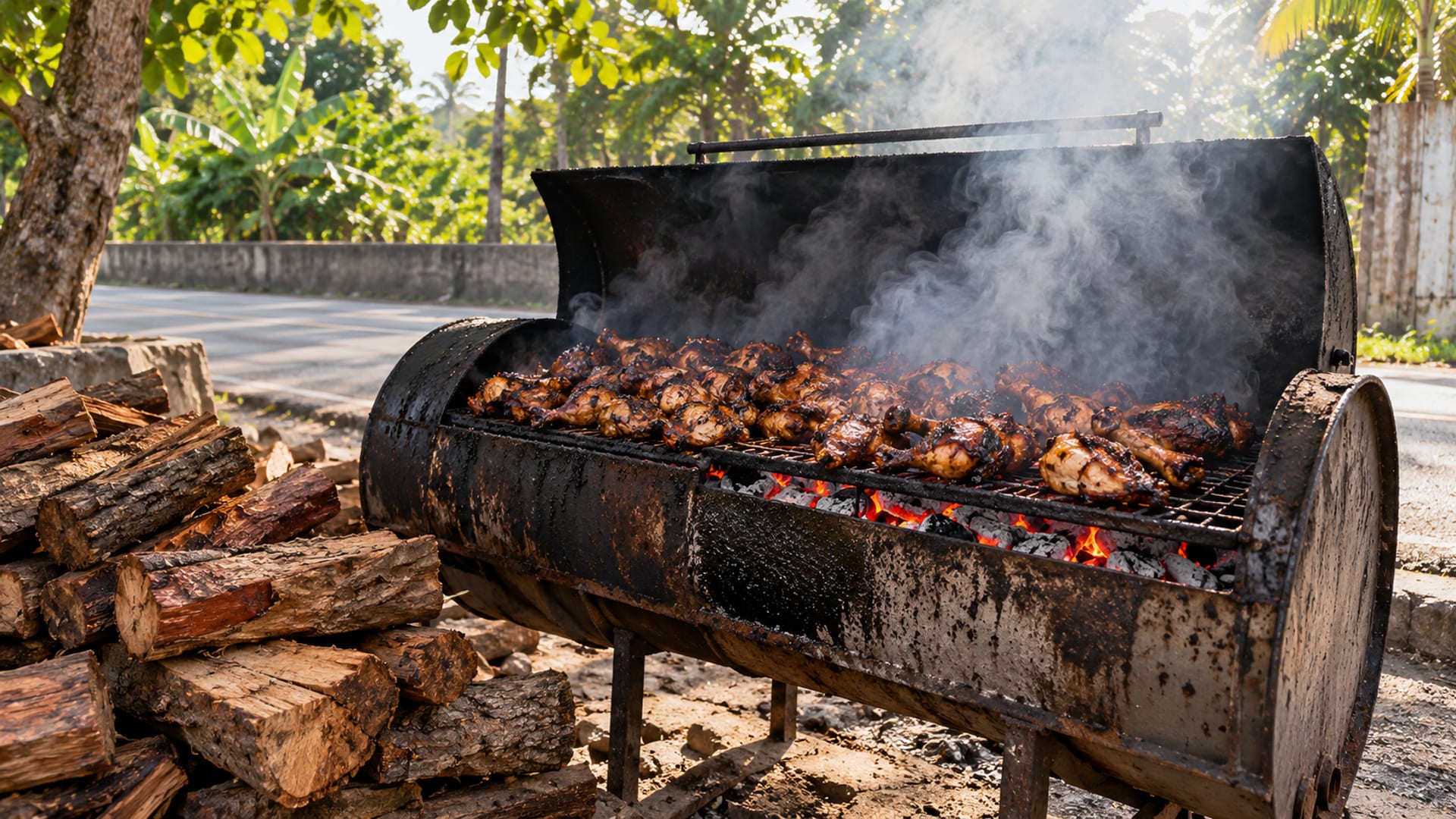
A quarter pound of jerk chicken cost about J$900 to J$1,100 (about US$5.66 to US$6.92) at several jerk spots in a Lonely Planet list dated around April 2025. Treat that as one list from one date, not an island-wide price. One menu is not an island average, and half and whole chicken need their own price from the counter.
Quarter-pound prices at named jerk spots
These are the places with a dated quarter-pound price, from the lowest to the highest.
Frenchman's Cove Beach Bar in Portland lists a jerk chicken item at J$1,800 (about US$11) on its menu dated 17 February 2025. The menu gives no portion size, and it is a beach bar item, so compare it carefully rather than against the quarter-pound list.
Do not multiply the quarter-pound price to estimate a half or whole chicken. A travel listing for Ocho Rios Jerk Centre gives a broad J$850 to J$2,600 (about US$5.35 to about US$16) for quarter, half or whole smoked jerk chicken, without a separate price for each size. Use that as a spread, and ask the counter for the price of each size before you order.
Confirm before you go: these prices come from listings dated around April 2025 and February 2025, and a stall can change its menu or close for the day.
Does the price include sides?
A cookshop plate with rice, peas and ground provisions is usually a full meal, so the sides can change the total a lot. Ask whether the price is meat only or comes with rice, peas, festival, bammy or other sides. Ask whether takeaway is available, and whether a table needs a booking. If you plan to eat in the middle of the day, remember that the busiest hours at some spots fall around lunch, as they do at Sweetwood and the Ocho Rios Jerk Centre.
Why it is called jerk
The commonly cited explanation links jerk to charqui, a Spanish form of a Quechua word for dried or preserved meat. The Jamaica Observer describes charqui as a Taino seasoning and preservation technique. It also says the verb "jerking" was tied to poking holes in meat so the seasoning could get in.
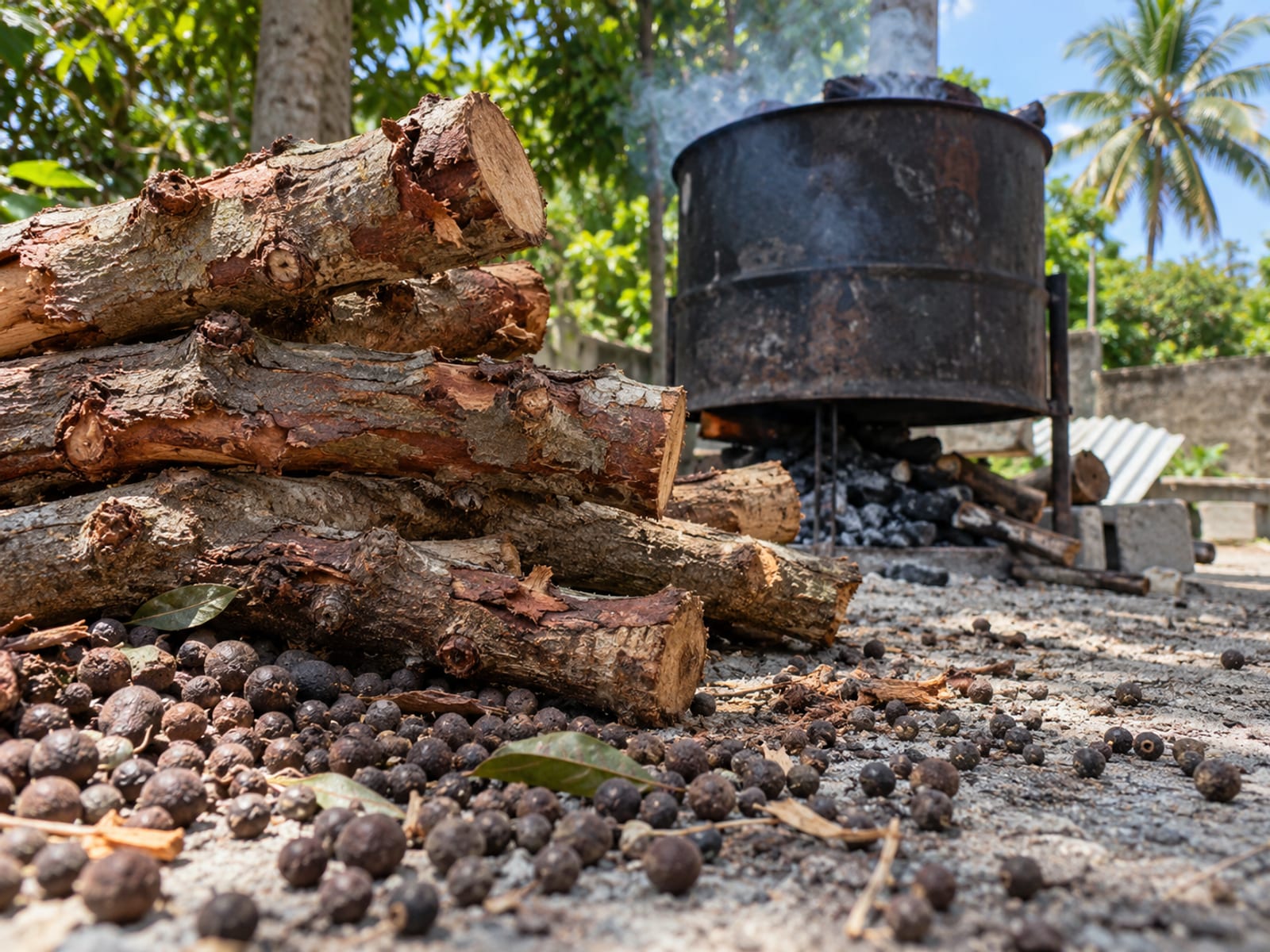 Pimento wood and a smoky drum are tied to the jerk cooking method.
The history is layered rather than the work of one inventor. The Observer credits the Taino with the seasoning and preservation technique, and it describes the Maroons, Africans who escaped enslavement and lived in Jamaica's interior, as the people who developed the method into the form linked to jerk today. It also connects the Maroons' concealed, low-smoke cooking with their need not to give away their location. The Smithsonian describes jerk as an enduring legacy of the fusion of African and Taíno cultures in Jamaica. The National Library of Jamaica traces jerk traditions to African Coromantee hunters and places the home of Boston jerk pork in Portland. A University of Illinois historical article notes that scholars disagree about whether the Taino, Africans or a mix of traditions deserve primary credit.
A careful way to put it is this. Jamaican jerk developed through the meeting of Taino and African food traditions, became strongly associated with Maroon communities, and later grew into the pimento-smoked style sold at jerk centres today. The exact linguistic and cultural path is still debated.
What goes into jerk seasoning
Jerk is both a seasoning and a method, and both shape the taste. The core flavour comes from pimento, which is also called allspice, along with Scotch bonnet pepper, scallion or escallion, thyme, salt and black pepper. Garlic, onion, ginger, nutmeg, brown sugar, vinegar or citrus may also appear, depending on the cook or brand.
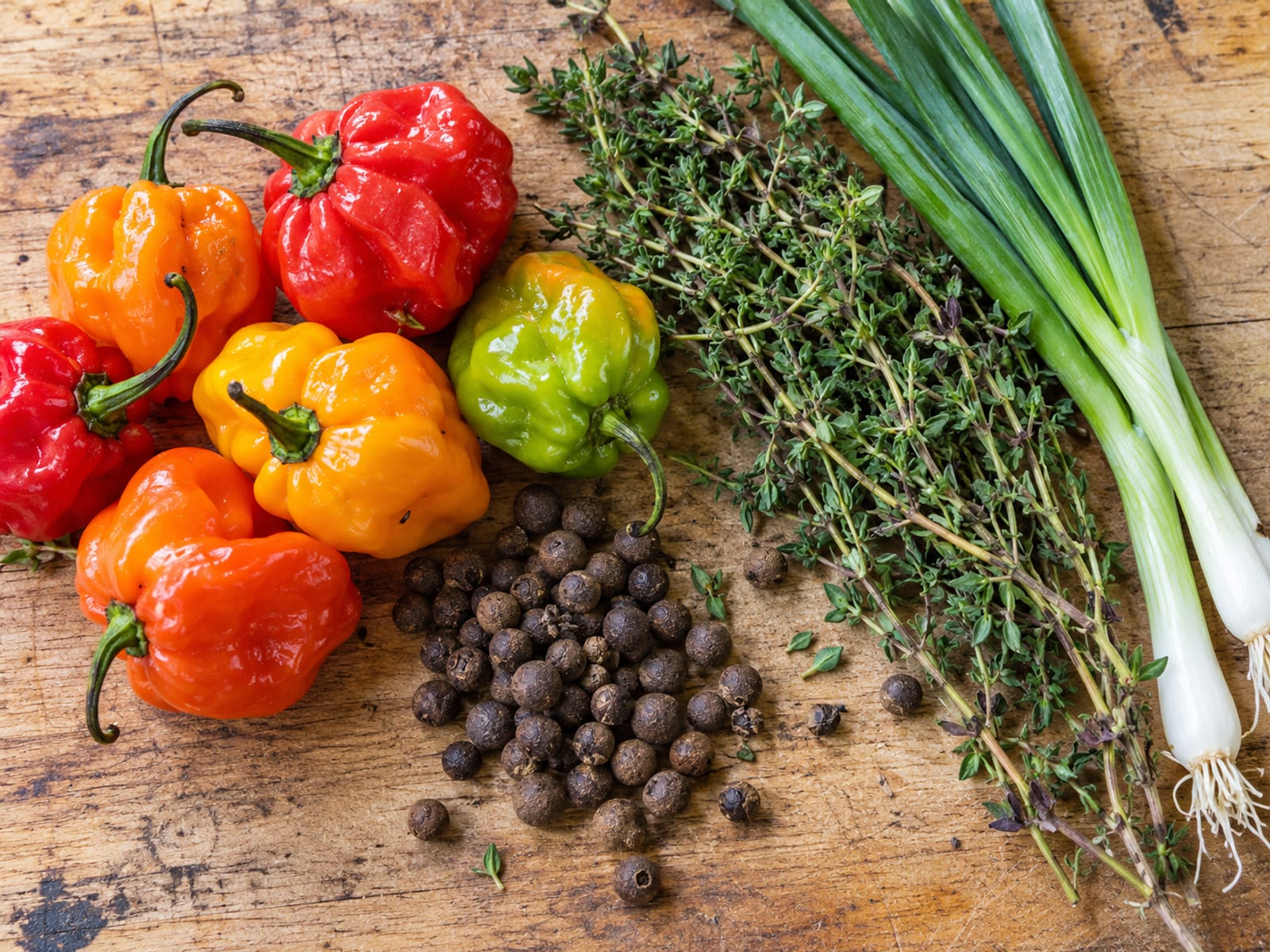 Pimento, Scotch bonnet, scallion and thyme form the core of jerk seasoning.
Traditional jerk is cooked by seasoning or marinating the meat and then cooking it over charcoal or pimento wood. Modern jerk centres may use pimento wood, charcoal grills, converted metal drums or other commercial equipment. Authentic jerk generally combines a seasoning built around pimento, Scotch bonnet, scallion and thyme, with smoky cooking over pimento wood or pimento branches. The taste should be smoky, aromatic, savoury, peppery and warm-spiced. It does not have to be unbearably hot, and a generic grilled chicken with a sweet barbecue sauce should not automatically be called traditional jerk.
Several Jamaican brands sell jerk products you can take home. Walkerswood, based in St Ann, lists Scotch bonnet pepper, escallion, pimento and thyme among its principal flavours, and it sells hot, mild, marinade and barbecue-sauce products. Grace Foods, a major Jamaican food company, lists Scotch bonnet pepper, escallion, pimento, thyme and other spices in its Scotch Bonnet Jerk Seasoning. Busha Browne is another Jamaican sauce and seasoning brand associated with jerk. Brand authenticity should not be reduced to one universal recipe, and a product can be Jamaican-made and commercially produced while still using the traditional flavour framework.
How spicy is jerk chicken?
Jerk chicken is usually spicy, because Scotch bonnet is a defining ingredient. The heat varies by cook, recipe and portion. The pepper brings both chilli heat and a fruity aroma.
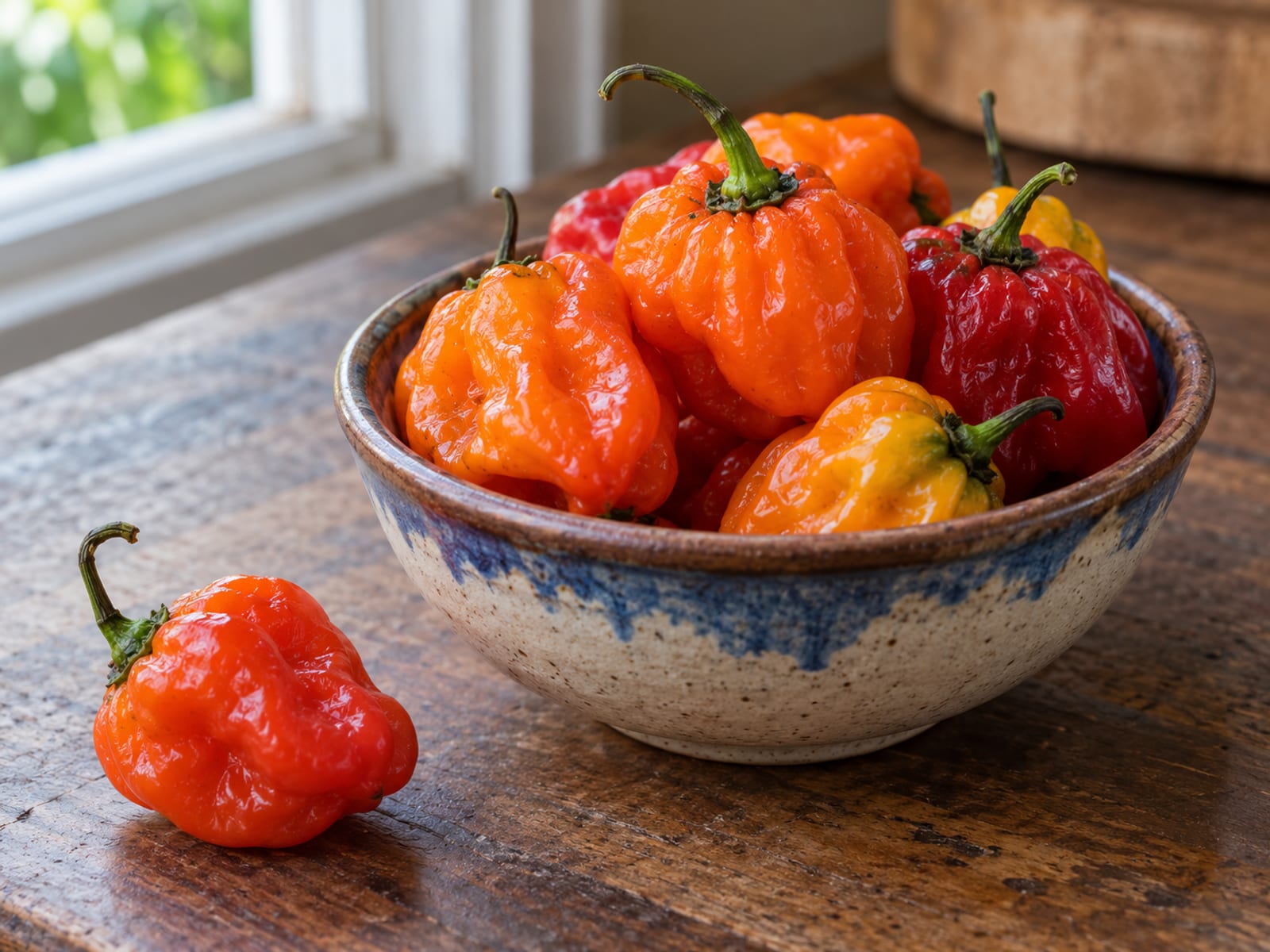 Scotch bonnet is the defining pepper, and the heat varies by cook and recipe.
A hot jerk seasoning can be very hot, while a mild commercial seasoning lowers the chilli without removing the pimento, scallion and thyme profile. Restaurants may also serve pepper sauce on the side, or let you ask for less of it. Ask whether the chicken is mild, medium or hot, and whether extra pepper sauce is added at serving. "Jerk" does not promise one fixed level of heat.
Getting there and paying
Getting there and paying are part of the plan. The Jamaica Tourist Board says Jamaica uses buses, route taxis, chartered taxis and intercity coaches. Route taxis are identifiable by red PPV plates, route information and black-and-white checkered markings.
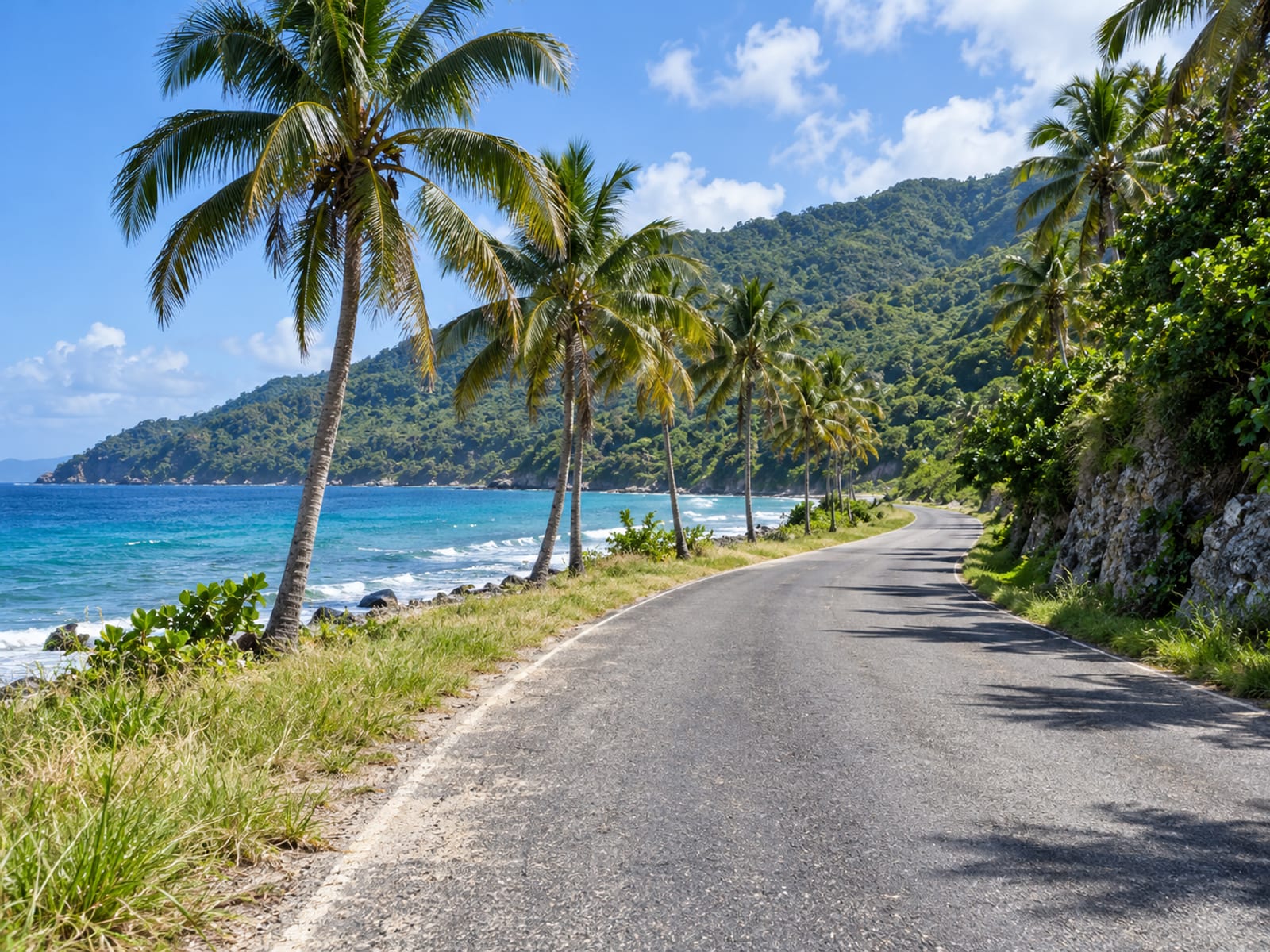 Jerk stops sit along roads like this one, so plan how you will get there.
Jamaican dollars are the local currency. Carry Jamaican cash for roadside stands and small jerk centres unless the business says it takes cards. The Tourist Board also says most Jamaican ATMs accept international cards with Visa, MasterCard, Cirrus or Plus logos. The Tourist Board listing for Scotchies in Drax Hall describes outdoor seating and takeaway.
Common questions
Short answers to the questions that come up about jerk chicken.
How much does jerk chicken cost in Jamaica?
A quarter pound ran about J$900 to J$1,100 (about US$5.66 to US$6.92) at the places in a Lonely Planet list dated around April 2025. Frenchman's Cove's February 2025 menu lists a jerk chicken item at J$1,800 with no portion size. A travel listing gives a broad J$850 to J$2,600 for quarter, half or whole smoked jerk chicken at Ocho Rios Jerk Centre.
Why do Jamaicans call it jerk?
The most commonly cited explanation links the word to charqui, a Spanish term for dried or preserved meat, and to the old practice of piercing meat so seasoning could penetrate. The method grew out of Taino and African food traditions. The Maroons, who lived in Jamaica's mountainous interior, are strongly associated with the style that became jerk.
What is authentic Jamaican jerk chicken?
Authentic jerk combines a seasoning built around pimento, Scotch bonnet, scallion and thyme with smoky cooking, traditionally over pimento wood. The exact ingredient list is not fixed, but the taste should be smoky, aromatic and peppery. A chicken cooked over a plain grill with sweet barbecue sauce does not count as traditional jerk on its own.
What is the most authentic Jamaican jerk seasoning?
Authenticity depends on ingredients, preparation, origin, cooking method and taste, so no single seasoning wins the title. Walkerswood and Grace Foods are the strongest widely available Jamaican options, and both list Scotch bonnet, escallion, pimento and thyme among their main ingredients. For the closest flavour to a jerk-centre meal, look for those four ingredients and cook the chicken over smoky heat.
Is jerk chicken spicy?
Usually, yes, because Scotch bonnet is a defining ingredient. The heat changes with the cook, the recipe and the portion, so the word "jerk" does not promise one level. Ask for mild, medium or hot, and ask whether extra pepper sauce goes on at serving.
To find jerk near your route, browse the restaurant directory by parish, and ask about cash, takeaway and sides when you order. For the parish-by-parish picture, read our jerk chicken guide. For full meal prices, see how much food costs in Jamaica.