


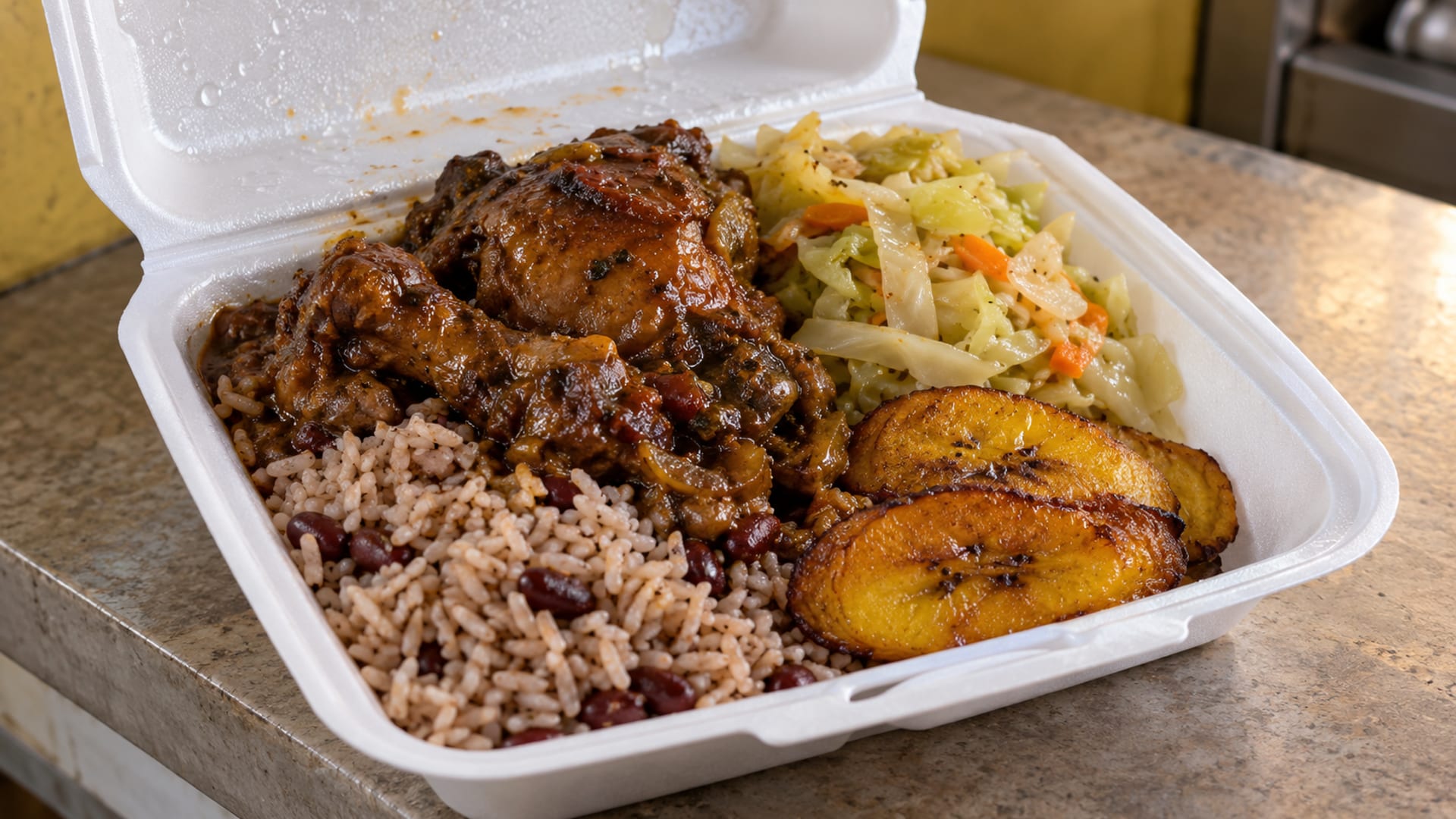
A cookshop and a sit-down restaurant both feed people in Jamaica, but they work differently. A cookshop is usually a small counter-service kitchen with a short daily menu. You choose a main and sides, get a boxed meal and pay at the counter. A sit-down restaurant seats you, brings a menu and a server, and bills you after the meal.
The kinds of places to eat in Jamaica
Jamaica has more kinds of places to eat than a single menu board suggests.
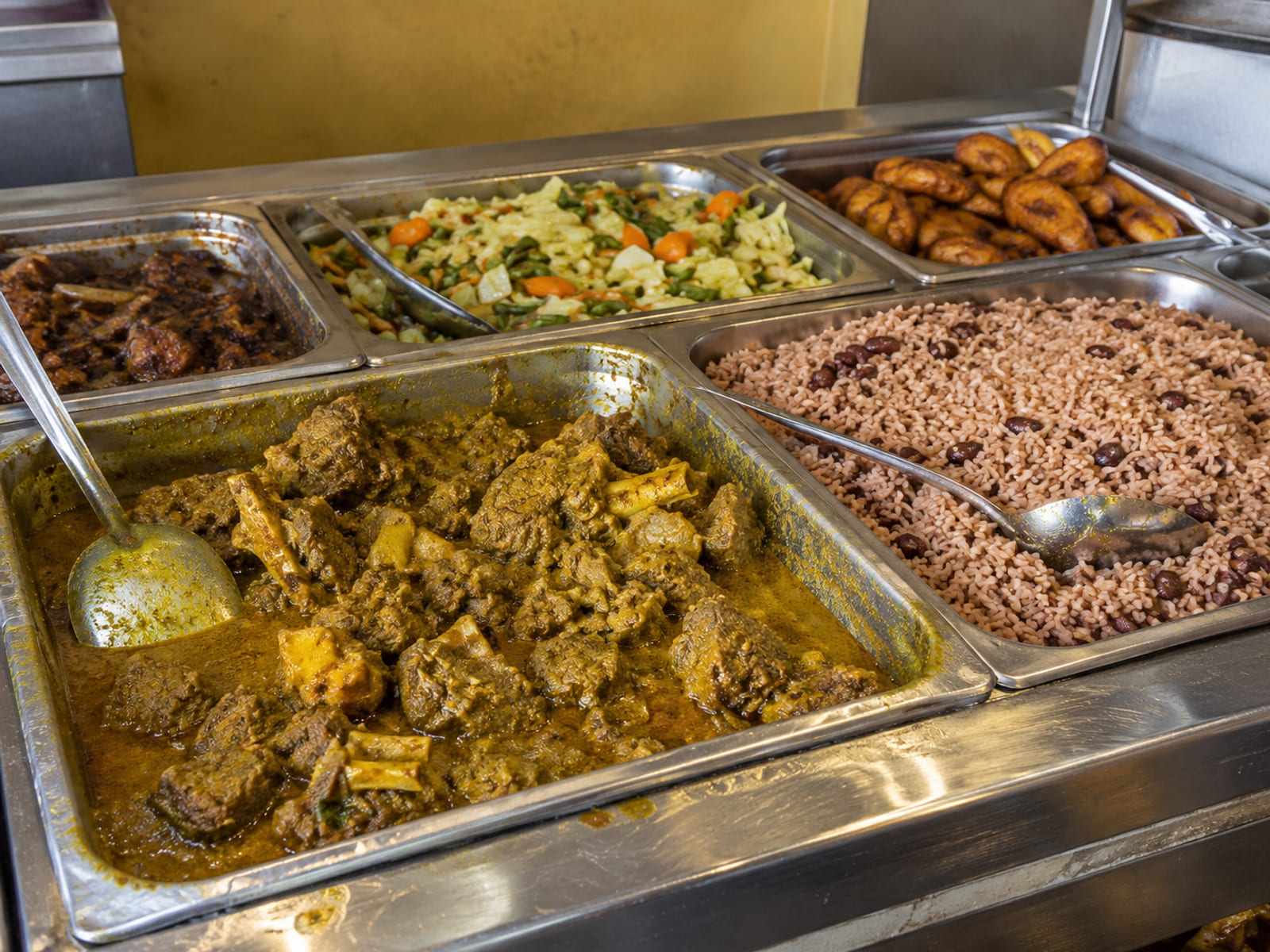 A cookshop counter usually shows a short daily menu served from steam trays.
- Cookshop: A small kitchen, often with a short daily menu served from steam trays. Typical dishes are curry goat, stew chicken, oxtail, rice and peas, vegetables, plantain and ground provisions. Lunch is the busiest period. Portions are often described as small or large, half or full, and they are generally generous.
- Jerk centre or jerk pan: Chicken, pork, fish or sausage cooked over pimento wood or charcoal, chopped to order and served with festival, bread, bammy or rice. Roadside vendors may have no printed menu, and payment usually goes straight to the vendor. Our guide to jerk chicken prices in Jamaica explains where the name comes from as well.
- Patty shop: A quick-service bakery or counter selling Jamaican patties, usually beef, chicken, vegetable or cheese, sometimes with coco bread and a drink. You order by number and pay at the counter. Visit Jamaica calls the patty a Jamaican staple and a fast meal or snack.
- Food court: Several vendors share one location. You order and pay at each stall, then eat in shared seating. Payment methods and opening hours can differ from one stall to the next.
- Bar and grill: A drinking and dining venue with table or counter service, grilled food, sides and cocktails. Some take reservations, takeout or delivery.
- Sit-down restaurant: You are seated, given a menu, served by a server, and you pay after the meal. The food comes plated, though takeaway may be available. Service charges can appear on the bill, especially in tourist areas.
- Hotel restaurant: Food served inside a hotel or resort, often with printed menus, table service and reservations. The property sets its own prices, dress rules, service charges and payment methods.
- Roadside stand: A small or temporary vendor selling jerk chicken, roasted corn, fruit, soup, fish, festival or drinks. You order from the vendor and pay right away, and food-safety rules still apply.
A cookshop or roadside vendor is usually faster and more informal than a sit-down or hotel restaurant. Faster does not mean instant, though. A dish cooked to order can still need time.
Box food: what you get and how big it is
Box food is a takeaway meal packed in a foam or plastic container. It usually has one main protein or stew, a starch and one or more vegetable sides. You will see combinations like these:
- Fried, jerk, brown-stew or curry chicken with rice and peas and salad.
- Oxtail, curry goat, stew peas, fish, cow foot or tripe with rice, vegetables or ground provisions.
- Ackee and saltfish with provisions, plantain or another side.
- Jerk chicken or pork with festival, bread, bammy or rice.
"Small," "large," "half" and "full" are portion labels, not measurements. There is no island-wide standard for their size. A small portion may be enough for one person, while a large or full portion can hold more meat, more sides or enough food for two lighter eaters.
For a sense of what a menu can hold, the Forestry Department's 2026 food-court menu offered jerk, stew and fried chicken, brown-stew pork, escovitch fish, and curried beef and vegetables.
Greetings, cash and tipping
Greeting comes first. Say good morning, good afternoon or good evening before you ask for food, especially at a small shop, bar or roadside stand. It is a useful courtesy in those places. Then order clearly, and say the quantity, the meat, the sides and whether the food is for takeaway.
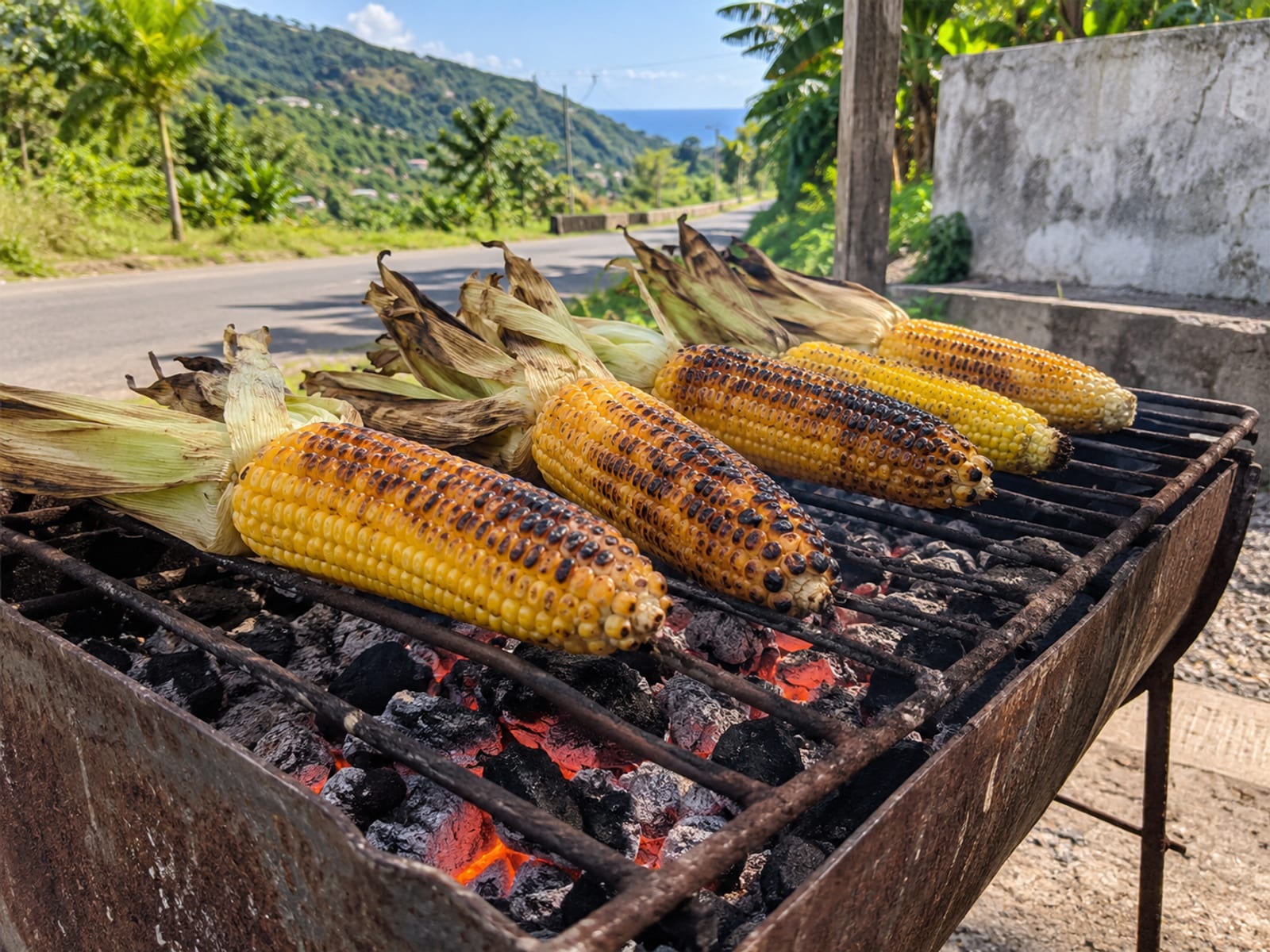 Roast corn is a typical roadside stand food, paid for on the spot.
Carry Jamaican dollars in smaller denominations. Cash is especially useful at roadside stands, jerk centres, markets, cookshops and food courts, and card acceptance depends on the business. Y-Knot Bar & Grill in Port Royal, which is part of Kingston, accepts cash or card and is open Wednesday to Sunday, 10 a.m. to 10 p.m. Confirm those hours before you go, since they can change.
Roast corn is a typical roadside stand food, paid for on the spot.
Carry Jamaican dollars in smaller denominations. Cash is especially useful at roadside stands, jerk centres, markets, cookshops and food courts, and card acceptance depends on the business. Y-Knot Bar & Grill in Port Royal, which is part of Kingston, accepts cash or card and is open Wednesday to Sunday, 10 a.m. to 10 p.m. Confirm those hours before you go, since they can change.
Tipping depends on where you are eating.
A 2018 visitor guide from the Negril Chamber of Commerce gives the 10% to 15% figure for restaurants.
A tip you add yourself is not the same as a service charge already on the bill, so read the total before you pay. For what a day of meals adds up to, see how much money for food in Jamaica per day. For the full guidance, see our tipping and eating out guide for visitors.
Food safety: what the rules mean at the counter
A cookshop is still a food business, so it has to follow public-health rules. The Jamaica Information Service said in 2022 that people preparing food in food-handling establishments need a food-handler's permit before they start work. A food establishment also applies to the parish Medical Officer of Health for a licence to operate and is inspected.
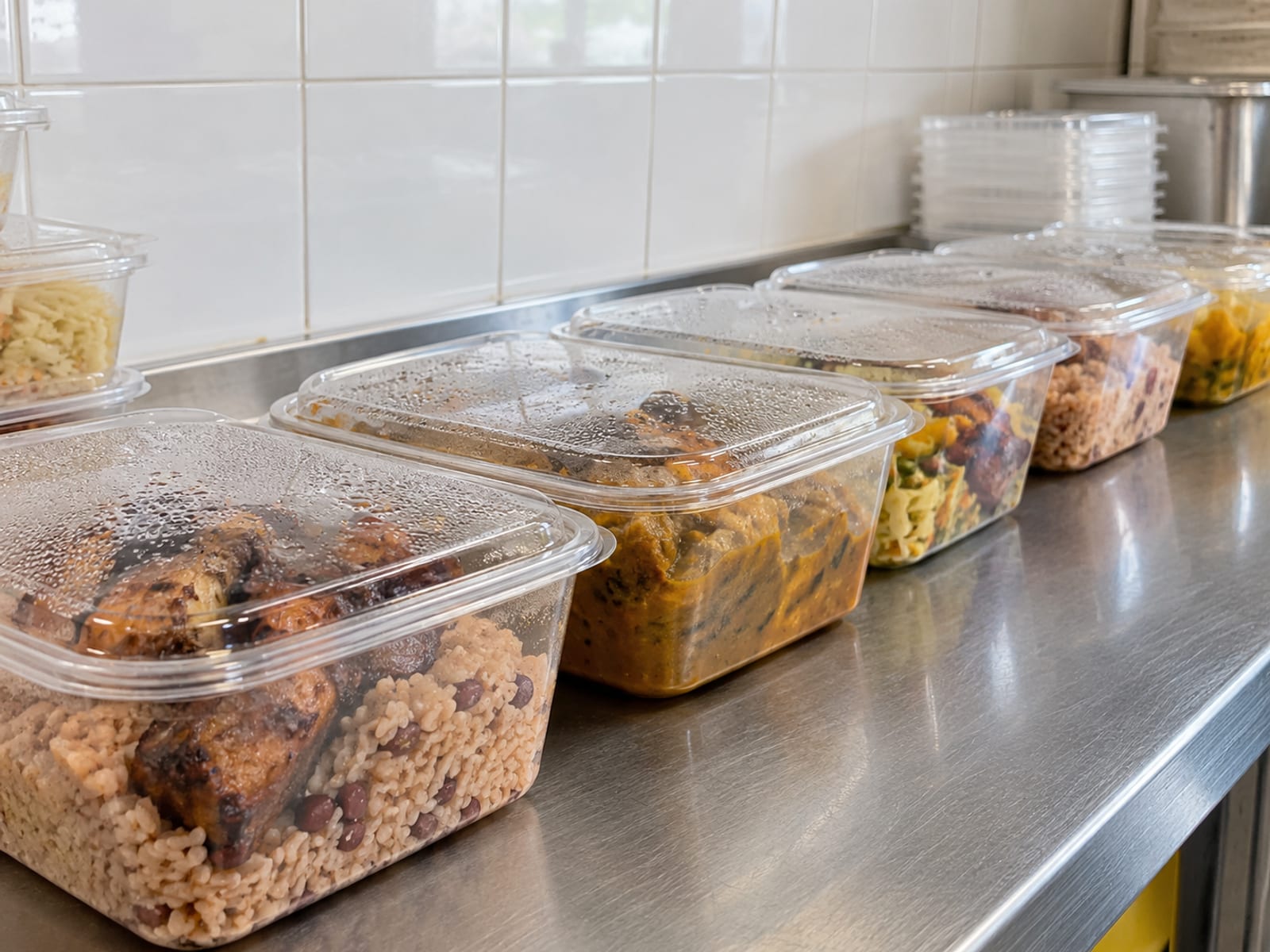 Food sold in open areas must be protected in a clean, sanitary container.
Street food has its own rule. Food sold in an open area must be protected from animals, flies and dust in a clean, sanitary container. Look for that clean, covered container when you pick a roadside stop.
Food sold in open areas must be protected in a clean, sanitary container.
Street food has its own rule. Food sold in an open area must be protected from animals, flies and dust in a clean, sanitary container. Look for that clean, covered container when you pick a roadside stop.
When each kind of place is busiest
Lunch is the busiest period for cookshops, and many are strongest at breakfast and lunch. They can sell out or close before a visitor's usual dinner time, so plan a midday stop if that is when you are hungry. Jerk pans and jerk centres often get busier later in the day and into the evening. Sit-down restaurants and hotel restaurants publish their own dinner hours. Check the venue's current hours, and find out when the kitchen stops taking orders.
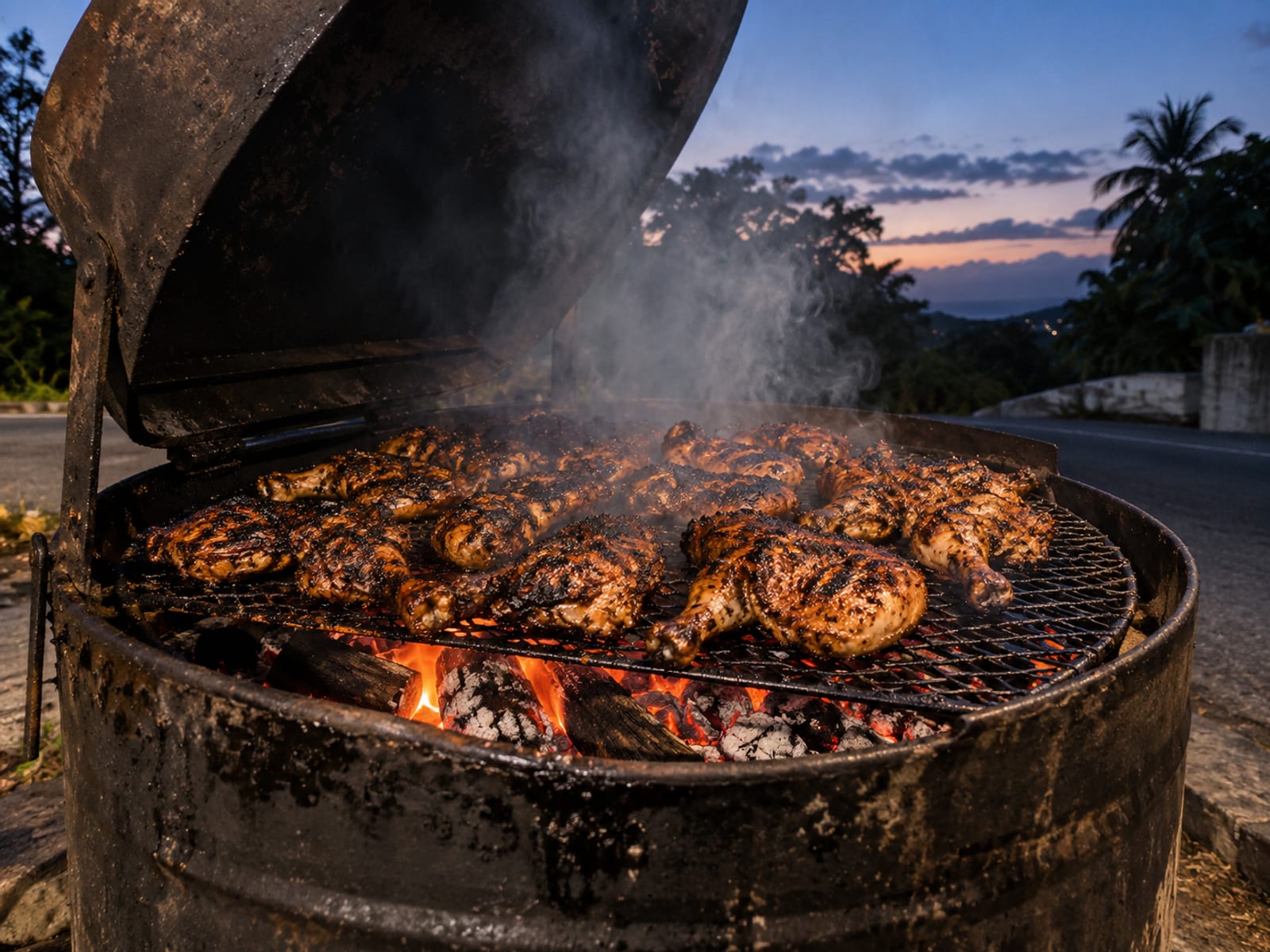 Jerk pans and jerk centres often get busier later in the day and into the evening.
Etiquette and practical details
- Greet the person serving before you order.
- Say the quantity you want, and be clear about the meat and the sides.
- Find out what is ready before you assume every menu item is available.
- Be patient when food is cooked to order.
- Carry cash for roadside vendors, jerk centres, cookshops and markets.
- Get permission before you photograph people, vendors or food preparation areas.
- Check whether a service charge is already on a restaurant bill.
- Leave food, serving utensils and condiments alone unless you are told to use them.
- Tell the cook how much hot pepper you want before it goes on, since Scotch bonnet is hot.
- At a casual food stop, follow the queue and do not block the counter while you decide.
- At a sit-down restaurant, wait for the group's food before you start, when that is practical.
- Dress for the venue. A beachside cookshop and a hotel dining room set different expectations.
- Find out whether the venue takes card, reservations, takeaway or outside food and drink.
These are practical conventions, not rules every Jamaican venue applies the same way. Restaurants, hotels, bars, markets and roadside stands each have their own service style.
Before you go, find out
- The parish, town or neighbourhood, and a landmark nearby.
- The address or road, and whether a taxi or a private car is easier. Get directions from the business when the spot is informal or roadside.
- The opening hours, which can change with the weekday, the holiday, the season and what food is ready that day.
- What the price covers, and whether it includes the sides, a drink or a service charge.
- Whether the place takes cash, card, online payment or a mix.
- Whether you order at a counter, choose from a tray, read a printed menu or wait for the food to be cooked.
- Whether there is seating, and whether the food is boxed, takeaway or delivered.
Finding a place by parish
To find a cookshop, jerk centre, patty shop or restaurant near you, start with the restaurant directory and choose the parish you will be in.
Common questions
What is a cookshop in Jamaica?
A cookshop is a small food business that cooks meals, often from a short menu or steam table, and sells them over a counter. It is commonly used for breakfast or lunch, and it is especially linked with takeaway box food. The term does not mean one fixed format, so each cookshop sets its own menu, service and payment arrangements.
What is box food?
Box food is a takeaway meal packed in a disposable container, usually with one main protein or stew, a starch and vegetables or another side. "Small" and "large" are local labels with no island-wide standard, so ask what the size includes. A large box may hold more meat or more sides.
Do you tip at a cookshop?
Usually not. A straightforward counter purchase at a cookshop, patty shop or roadside stand does not normally need a tip, though you can offer one for exceptional service or delivery. In a sit-down restaurant, bar and grill or hotel restaurant, check the bill for a service charge before you add anything.
What are the etiquette rules for eating in Jamaica?
Greet the person serving before you order, and say what you want, including the quantity, the meat, the sides and whether it is for takeaway. Carry cash, be patient with food cooked to order, and follow the queue at a counter. These are common courtesies rather than rules every venue applies in the same way.
What time is dinner in Jamaica?
There is no single national dinner time. Dinner depends on work, school, household routine, parish and the type of venue, and rural households may eat after 5 p.m. Cookshops are strongest at breakfast and lunch, while jerk pans often get busier in the evening, so check each venue's current hours.