


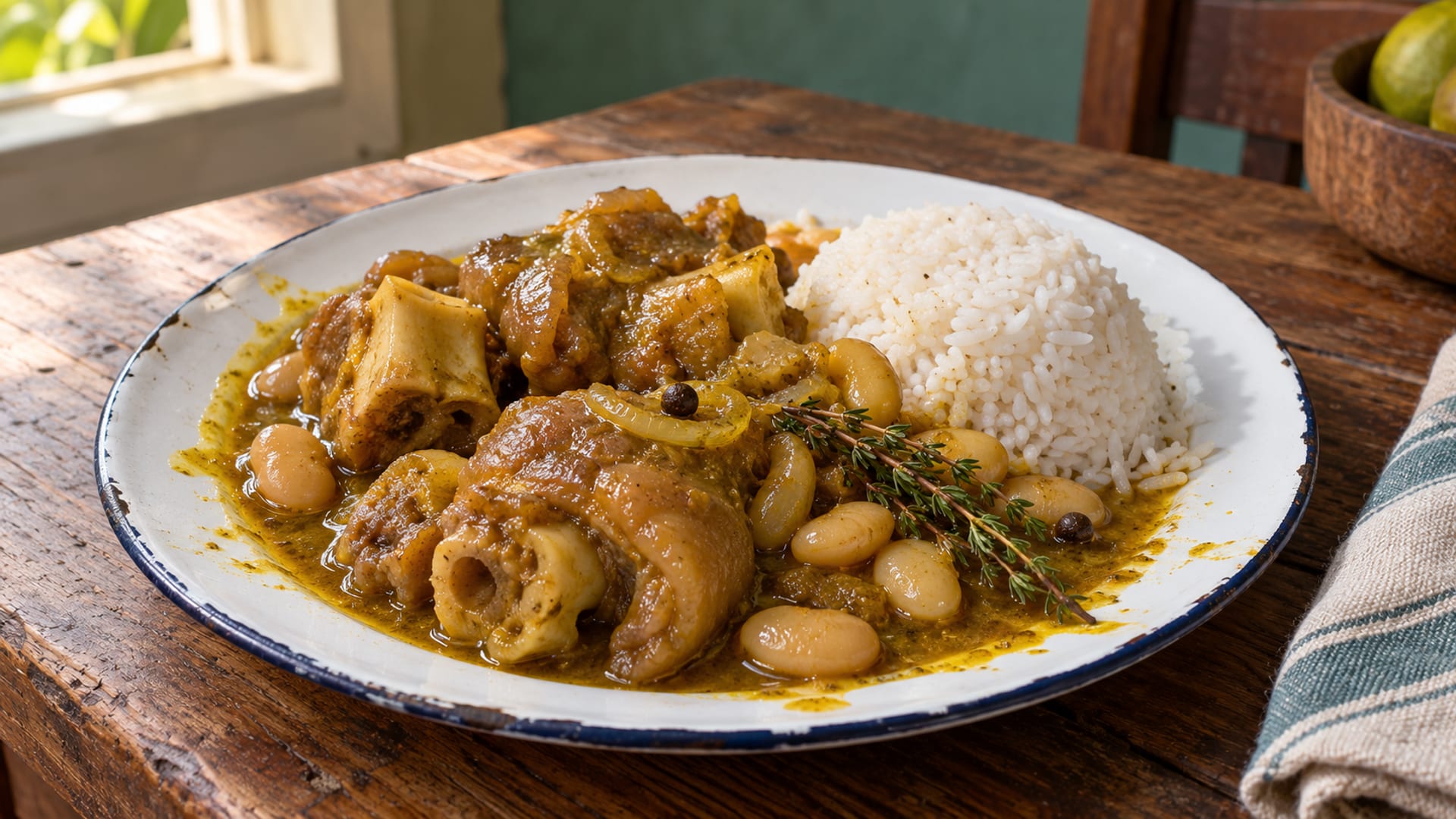
Cow foot, also called cow heel, is the foot and lower leg of cattle, cooked slowly until the skin, tendons and connective tissue turn soft and gelatinous. In Jamaica it turns up curried, stewed with beans or made into soup. For a plate now, Mama Chu Chu Restaurant on Molynes Road in Kingston serves curry cow foot in two sizes, and Potwah Diner & Bar in Half-Way-Tree serves cow foot and beans. Because the dish needs long cooking, many kitchens serve it only on certain days, so check the day first.
What the dish is
Cow foot is cooked a few main ways. Cow foot and beans, sometimes called cow foot and butter beans, is stewed or curried with broad, butter or lima beans and served with rice, rice and peas, boiled provisions or dumplings. Cow foot soup is made with the foot, vegetables, ground provisions and dumplings. The Jamaica Observer has described cow skin soup, chicken foot soup and beef soup as familiar Jamaican varieties, and cow foot soup sits in that same family of hearty bowls. The cut is mostly bone, skin, tendon and some attached meat, so people eat it for its rich gravy and texture rather than for big pieces of lean beef.
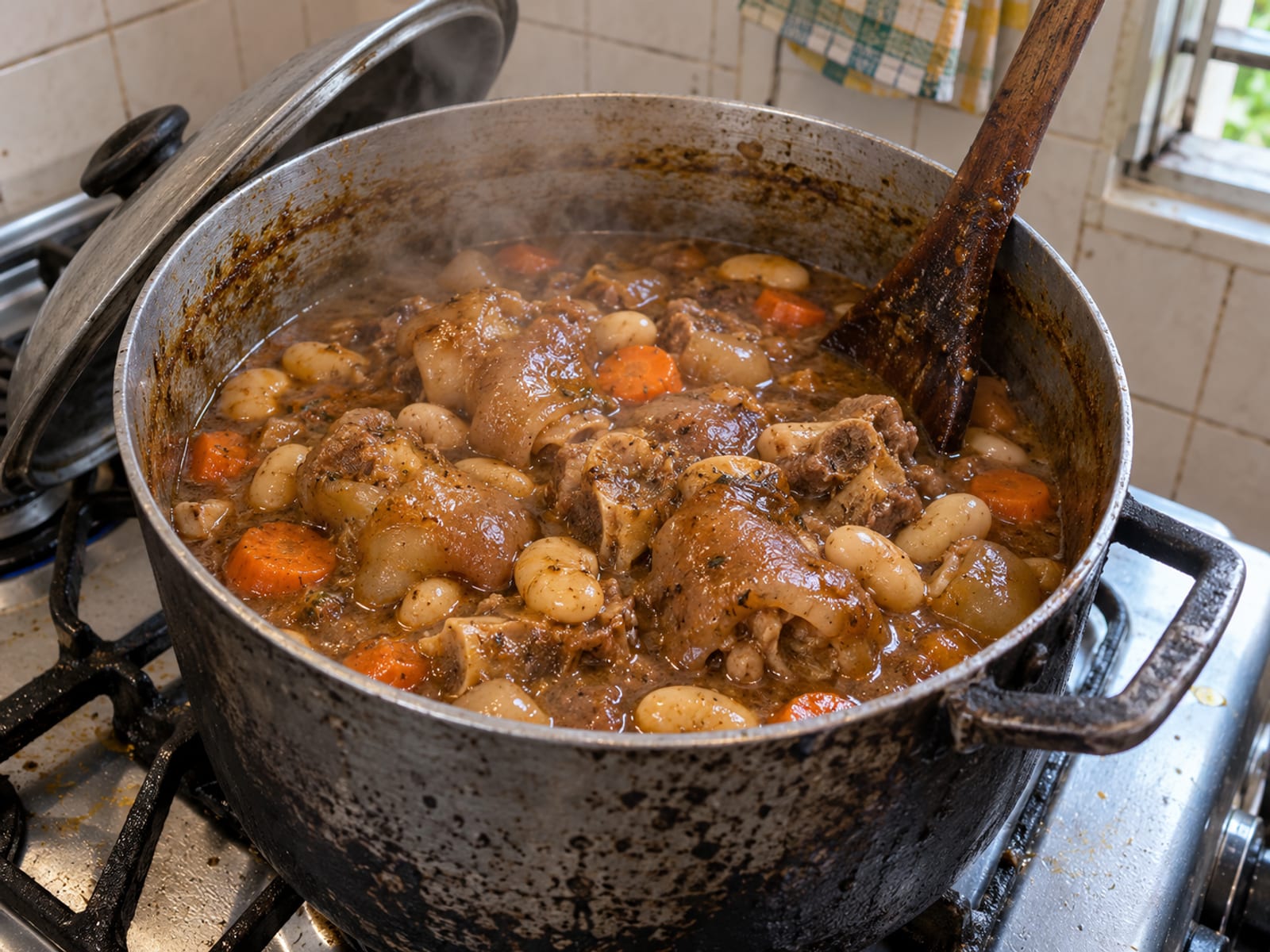 Cow foot and beans cooks slowly until the gravy turns thick and glossy.
Where the dish comes from
Cow foot belongs to Jamaica's tradition of cooking "fifth quarter" cuts such as feet, head, tail and tripe. Cynthia Nelson wrote in Stabroek News in 2023 that these cuts were historically left to enslaved people and later became important ingredients in Caribbean cooking. Jamaica's culinary tradition turned those long-cooking cuts into rich, filling dishes. Jamaica's Culinary Heritage project lists cow foot among foods associated with Spanish influence on Jamaican cuisine, so its story has more than one strand.
Why it is cooked this way
Cow foot is often linked to thrift and whole-animal cooking, and it is part of Jamaica's nose-to-tail food tradition. The Guardian's 2012 feature on eating feet links cow foot stew to the foodways that developed under slavery, and it presents that as one account rather than the only one. The Gleaner placed cow foot and beans within Jamaica's blended culinary history in a 2009 piece. For many families it is simply familiar home food. The long cooking that makes the dish tender also makes it work well in stews, bean dishes and soups.
What it tastes like
Cow foot tastes of deep, savoury beef, but the texture is what sets it apart. Long cooking softens the skin and connective tissue until they turn springy and gelatinous, and the gravy becomes thick and glossy as the collagen breaks down into gelatin.
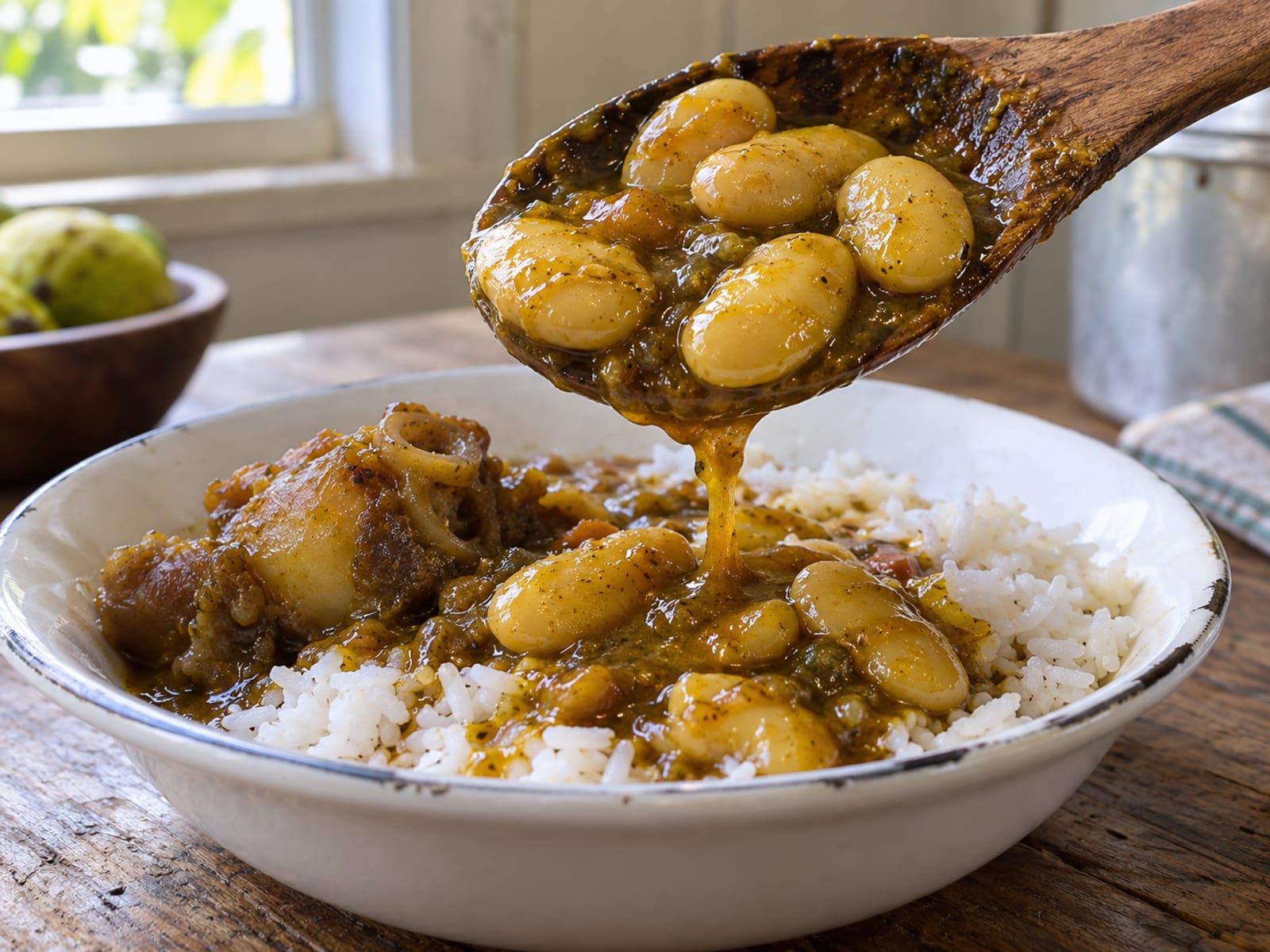 Butter beans add a soft, creamy contrast to the gravy.
Typical seasoning includes thyme, scallion, garlic, pimento, onion, browning, curry spices and Scotch bonnet pepper. Butter beans add a soft, creamy contrast. Cow foot soup is usually lighter than the stew, with a seasoned broth, dumplings and ground provisions.
If you prefer lean, firm meat, the texture may surprise you. If you already enjoy oxtail, stew peas or tripe, it will feel familiar.
On the plate
A plate of cow foot usually comes with rice, rice and peas, boiled provisions or dumplings. The thick gravy coats the rice, which is why a starch is the usual partner. In the stewed version, the butter beans cook in the same rich sauce and add a soft, creamy contrast.
Where to get it in Kingston
Mama Chu Chu Restaurant is at Shop 2, Heritage Plaza, 14½ Molynes Road, in Kingston. It serves curry cow foot in two sizes. The restaurant is open Monday to Saturday, 6 a.m. to 10 p.m., and closed on Sundays. Its phone number is +1 (876) 206-1220, and it offers WhatsApp contact too. The menu describes some dishes as daily items and others as made to order, so message the kitchen first if cow foot is the reason for your trip.
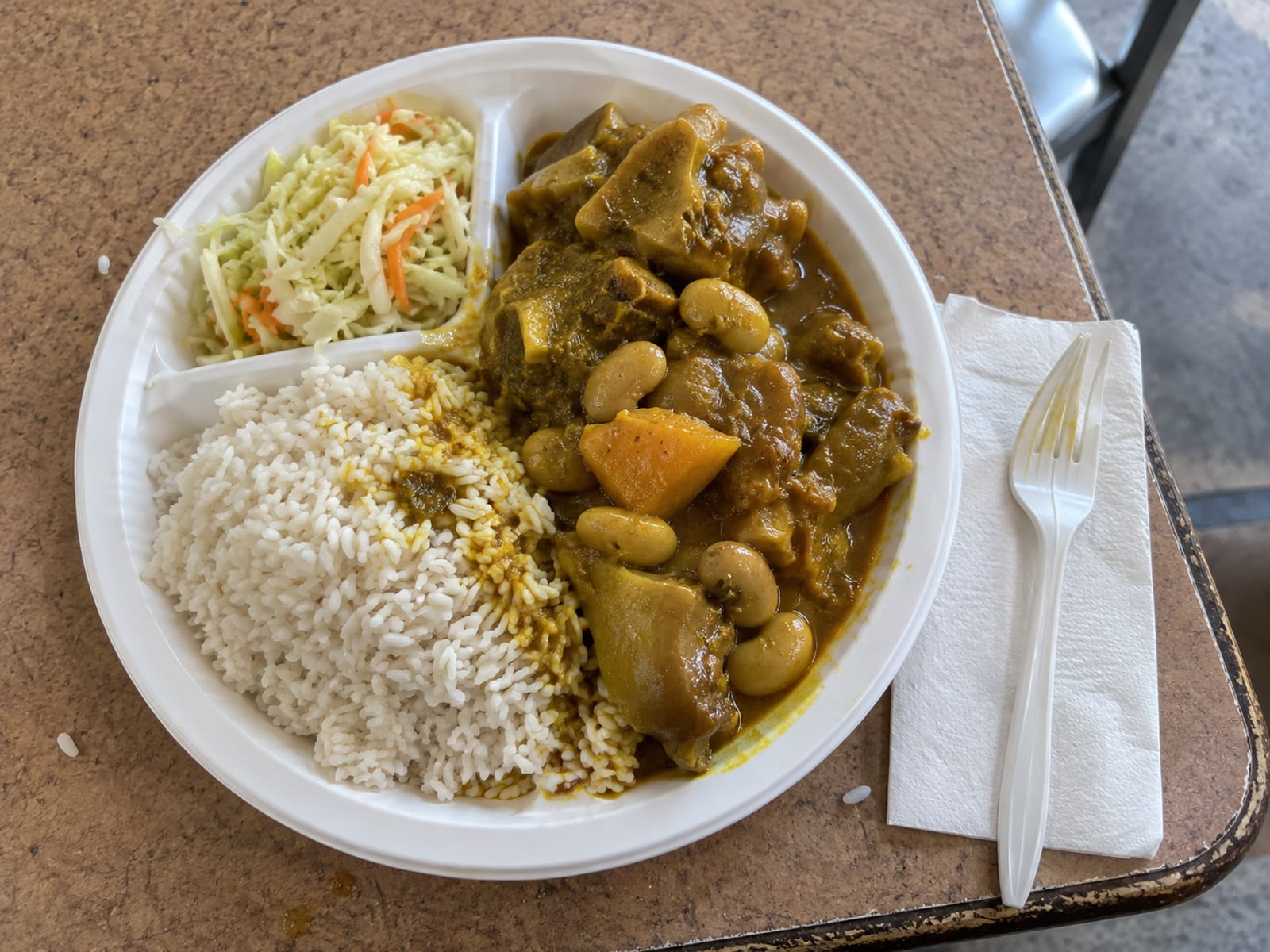 A lunch plate of cow foot is usually built around rice and gravy.
Potwah Diner & Bar, at 8 Hillview Avenue in Kingston 10, serves Cow Foot & Beans. Lunch runs Monday to Saturday from 9:30 a.m. to 5 p.m., and Sunday service runs from 10 a.m. to 6 p.m.
WGL Wholesale, which describes itself as a warehouse rather than a supermarket, sells local cow foot by the kilogram at J$1,215.64 (about US$7.60) on a product page from October 2026 that says prices can change. If you plan to cook it at home, check the cut, the weight and the price with the seller before you buy.
Confirm before you go: cow foot is a slow-cooked dish that may be offered only on certain days or sell out, so confirm the day's cow foot and its price before you travel.
What it costs
Cow foot can be a more economical alternative to oxtail. At Mama Chu Chu the curry cow foot costs less than the oxtail on the same menu. The price depends on the kitchen, the portion, the preparation and whether rice or other sides come with it, and the figures come from individual menus, so treat them as local benchmarks rather than an island average. Ask whether rice, rice and peas, dumplings or vegetables are included in the price.
For more on oxtail itself, see Where to Get Oxtail in Jamaica.
Is it healthy?
Cow foot is rich in skin, tendon and connective tissue, so it is not like a lean beef steak. Much of the edible part is skin, tendon and gelatin rather than muscle. The nutrition of any serving depends on how much skin, attached meat, fat, oil, beans, gravy and salt it holds, and restaurant dishes do not carry standard nutrition information. Cow foot soup with dumplings and ground provisions has a different mix of calories and carbohydrates than a stew served with rice. If those details matter to you, ask about the portion size and how much oil goes into the pot.
Soup and street stops
Catering businesses also sell cow foot, alongside restaurants, cookshops and soup vendors. Cow foot soup is the other common form, and you will find soup at cookshops, market vendors and soup sellers. Soup menus rotate by weekday and can sell out early, so check on the day.
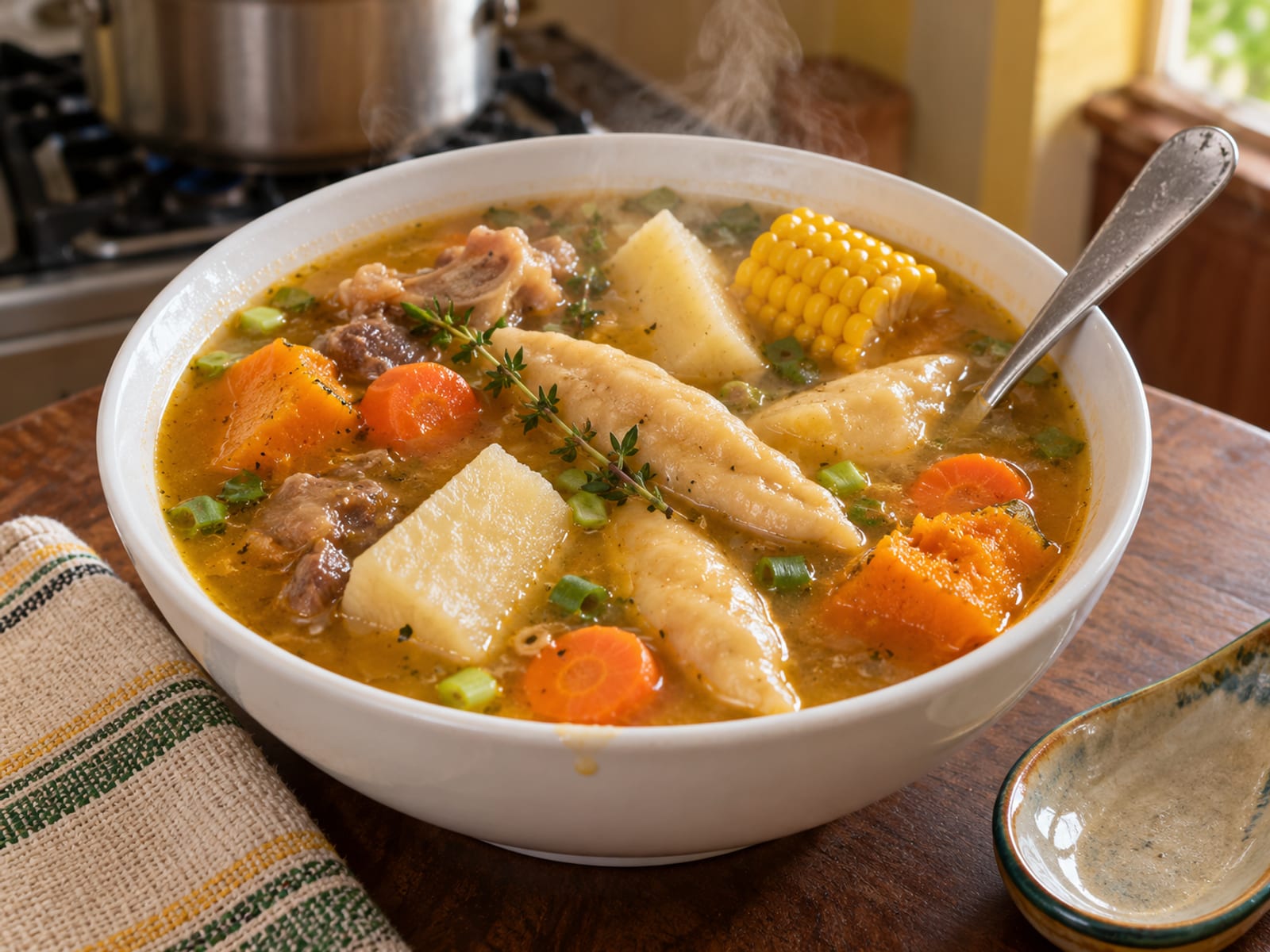 Jamaican soups come with dumplings and ground provisions in the bowl.
On menus, the dish may appear under several names, so use any of them at the counter.
For the wider world of Jamaican soups, read Saturday Soup in Jamaica: What It Is and Where to Get a Bowl.
Find more places in the restaurant directory.
Common questions
Cow foot is an unfamiliar menu item for many visitors, so a few questions come up first.
What is Jamaican cow foot?
Cow foot, also called cow heel, is the foot and lower leg of cattle. It is cooked slowly until the skin and tendons turn tender and gelatinous, then stewed or curried with beans, or made into soup.
What does cow foot taste like?
It tastes of deep, savoury beef, but the texture is what people remember. The skin and connective tissue turn springy and soft, and the gravy becomes thick and glossy.
Is cow foot cheap?
It can be. Mama Chu Chu's curry cow foot costs J$1,300 or J$1,500 (about US$8 or US$9) as of October 2026, while the oxtail on the same menu costs J$2,500 or J$3,000. That is one kitchen's menu, so treat it as a benchmark rather than an island price.
Is cow foot healthy?
It is rich in skin, tendon and gelatin, so it is not like a lean steak. The nutrition of a serving depends on the skin, meat, fat, oil, beans, gravy and salt in the portion.
Where can I buy cow foot in Jamaica?
Mama Chu Chu on Molynes Road and Potwah Diner & Bar in Half-Way-Tree both serve cow foot in Kingston. Raw cow foot is sold by the kilogram by WGL Wholesale, a warehouse. Cow foot may be a daily special, so check the day before you travel.