


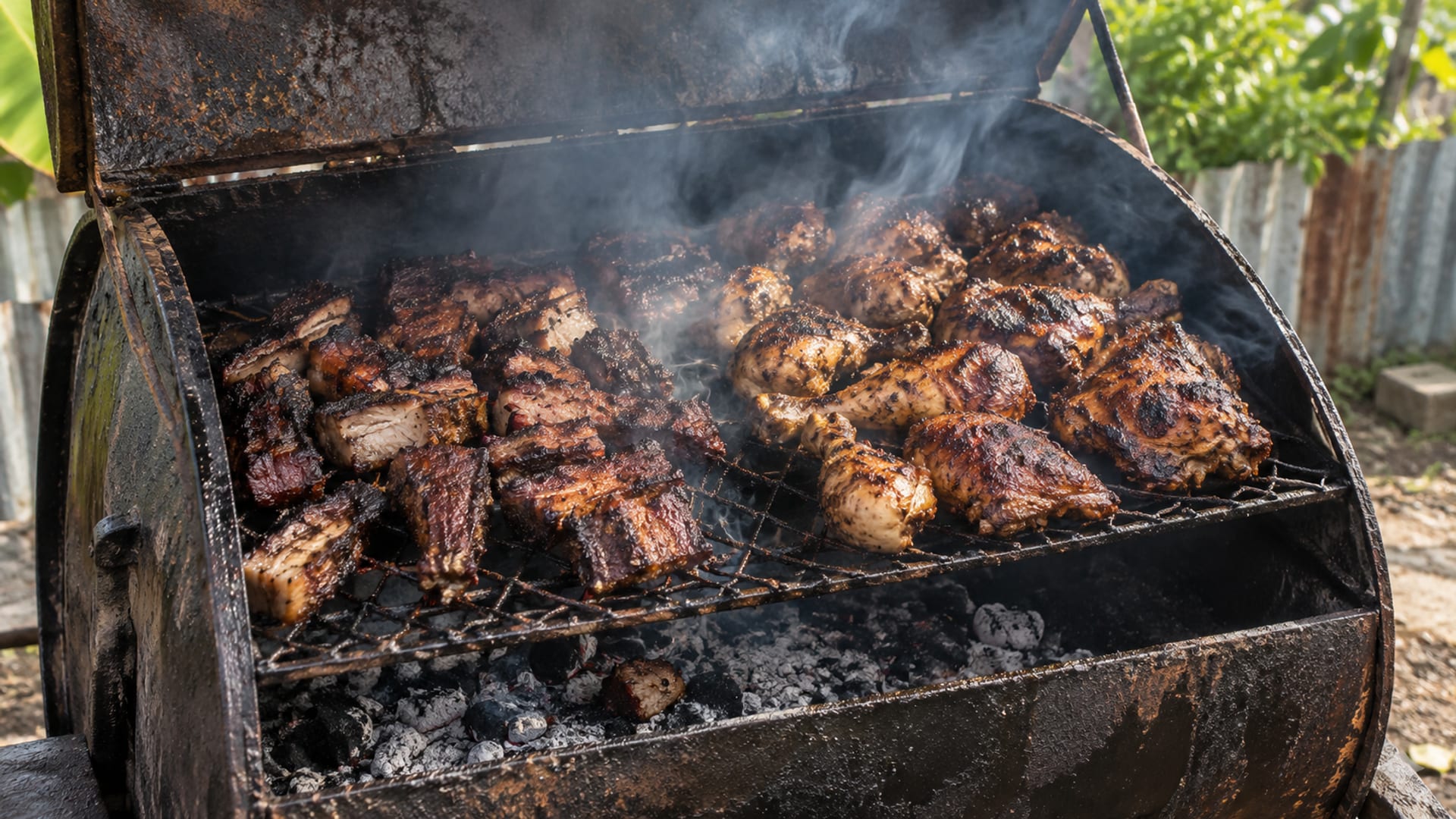
Order pork if you want a deeper, fattier and more smoky plate. Order chicken if you want a lighter meal, a quicker cook and a portion you can size up easily, usually as a quarter, half or whole bird. Both meats get the same seasoning and the same slow fire, so the choice comes down to the meat itself and how much you want to eat.
How the two are cooked
Jerk is a cooking method, not only a sauce. Meat is dry-rubbed or marinated with pimento, Scotch bonnet pepper, scallion, thyme, garlic and other seasonings, then cooked slowly over wood, traditionally pimento wood. Pork and chicken get the same treatment, but they do not behave the same way over the fire.
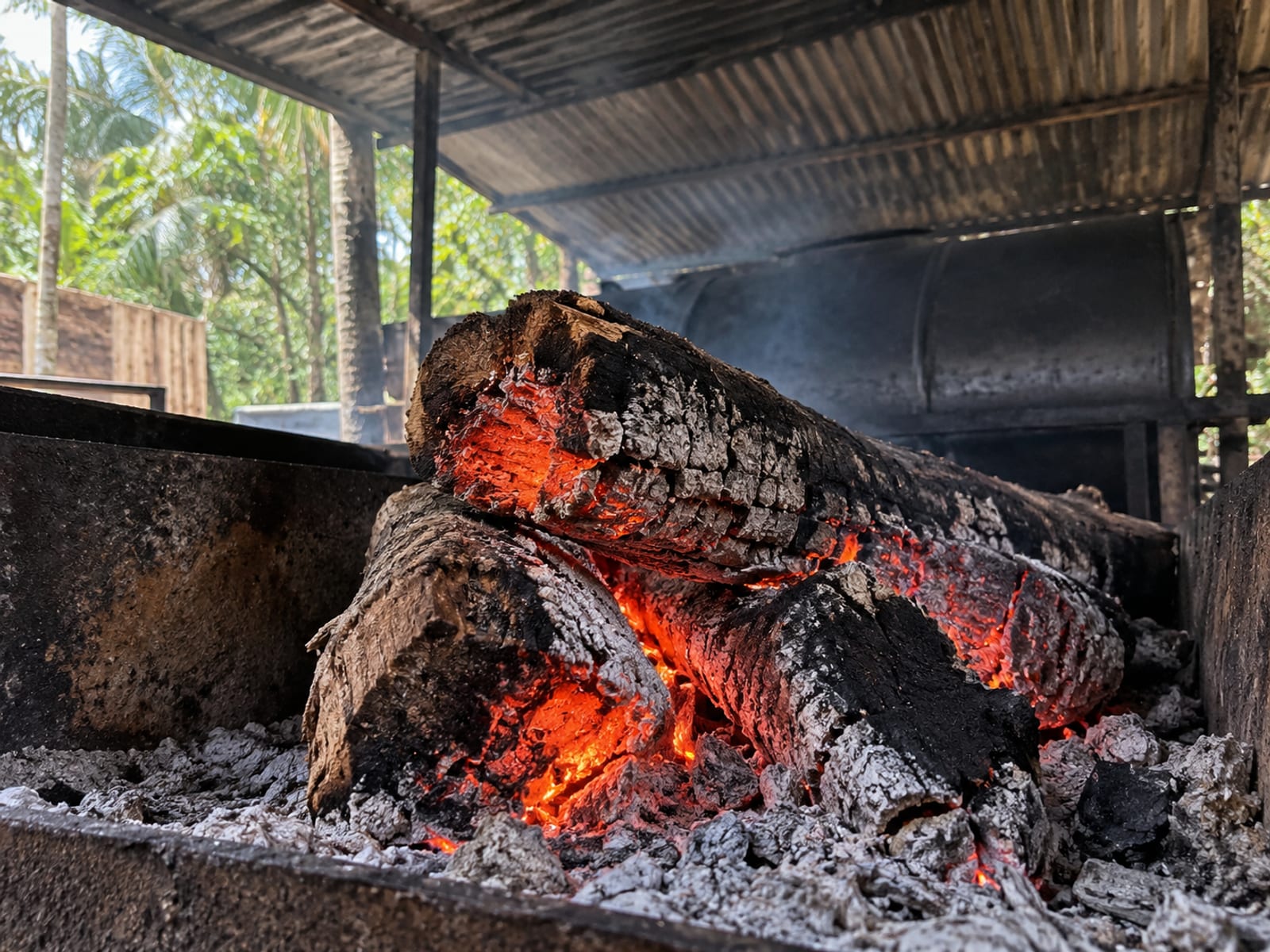 Jerk is cooked slowly over wood, traditionally pimento wood.
Pork is usually cut into thick chunks or slabs. Its size and density mean it takes longer, and it is commonly described as taking several hours. It develops a deep smoke ring, a firmer texture and a richer, fattier flavour. Chicken cooks faster and is commonly sold as a quarter, half or whole bird. It is usually juicier and lighter than pork, with crisp skin and a clear contrast between smoky skin and tender meat.
Pork is also the richer eating. It commonly carries more fat, so it can taste richer and more succulent than chicken. A well-cooked piece should be tender inside, with browned or darkened edges and a strong smoke flavour.
No cooking time is fixed. The time depends on the cut, the pit and the fuel, so the wait at a busy counter can be longer than the time you expect.
Pork: the older, heavier style
Jerk pork is the older commercial style, and it is strongly tied to Boston Bay in Portland and to the Maroon food history that Smithsonian Magazine traces behind jerk. The Maroons preserved and cooked wild pork in covered pits, and later over pimento wood. Boston Bay is still the clearest pork-first destination. A 2025 Jamaica Star report describes about eight jerk shops in the Boston area and names Mickey's Jerk Centre and Gurley and Aston Boston Jerk Centre. At Mickey's, pork sells before chicken, and the thick pork cuts are cooked over pimento, sweetwood and wild coffee branches, which give the meat its smoke. One vendor in the area raises and butchers its own pigs. For a fuller tour of the area, read Boston Bay jerk and where jerk began.
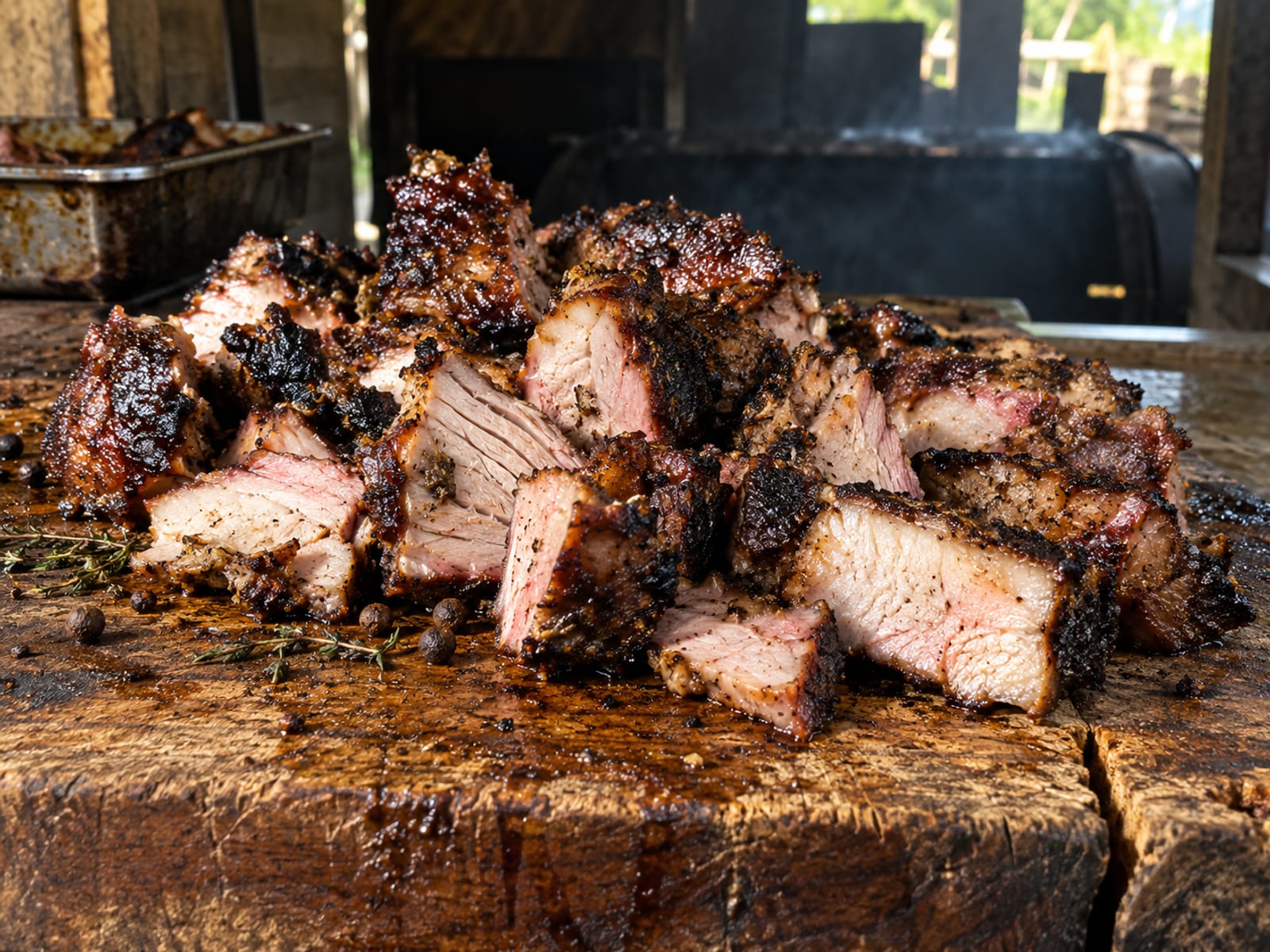 Pork is usually cut into thick chunks or slabs.
Montego Bay has a pork name too. The Pork Pit is identified in a 2023 destination guide to Montego Bay as a well-known jerk restaurant. Confirm its current hours, menu and prices before you go, because they change. For chicken spots there, see where to get jerk chicken in Montego Bay.
Chicken: the quicker, lighter choice
Chicken is the easier order if you are feeding one person, a family or a group that wants clear portions. Scotchies is a multi-location jerk brand that serves chicken, pork and other jerk meats. Lonely Planet's 2025 guide lists Scotchies jerk chicken from J$950 (about US$6) for a quarter portion, which gives you one dated price to compare against. If you would rather have chicken without the smoke, see brown stew chicken and where to eat it.
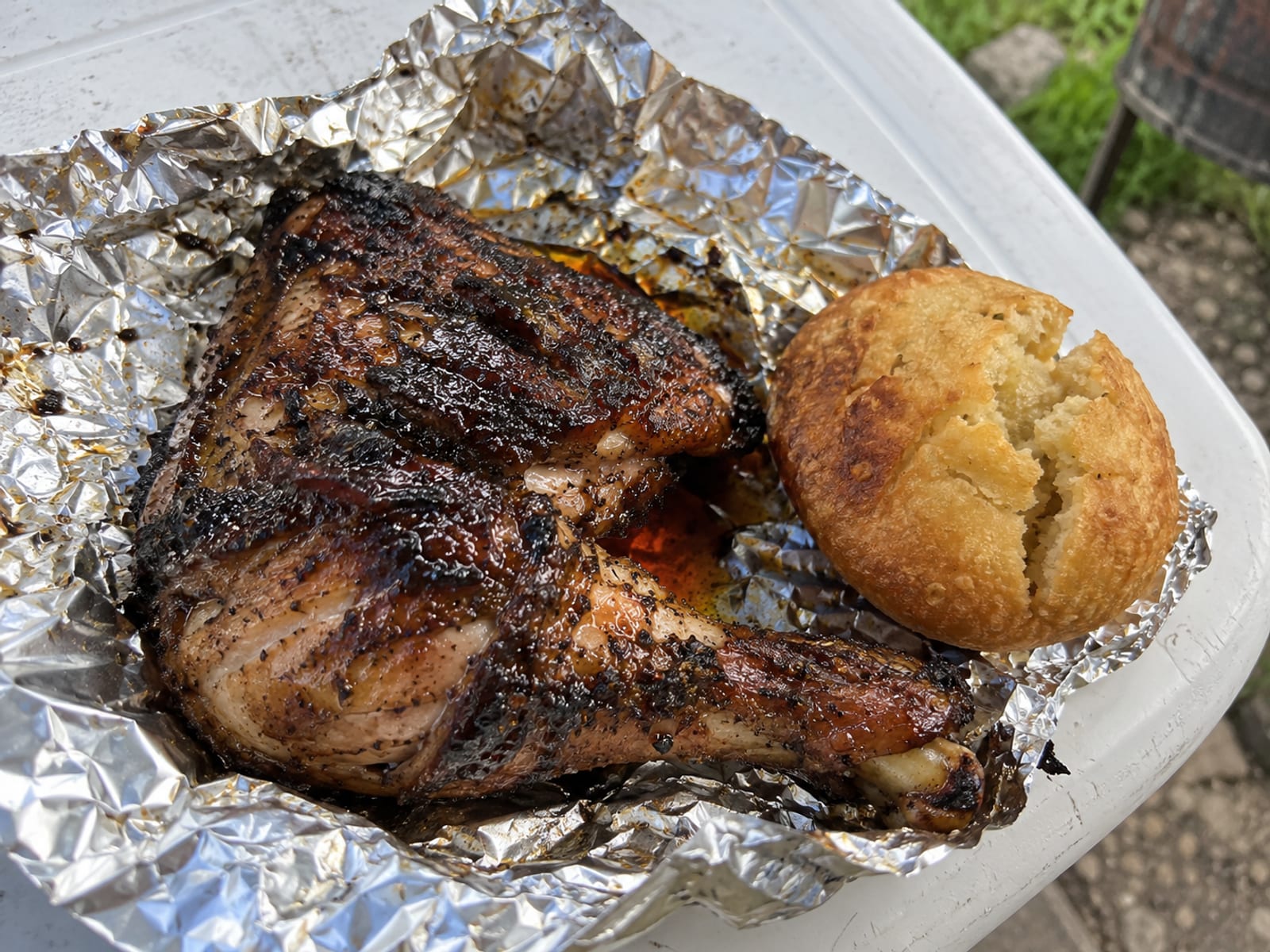 Chicken is commonly sold as a quarter, half or whole bird.
Scotchies has locations at Coral Gardens, Main Street Rose Hall and Fairview in Montego Bay, at Drax Hall near Ocho Rios, and at Falmouth Pier in Trelawny. Lines can form on weekends and public holidays, lunchtime can be busy, and no reservation is needed. Plan extra time on weekends and public holidays.
When you order chicken, say which portion you want. The price changes with the size of the piece, so a quarter, a half and a whole bird each have their own figure.
Other places to look
Walkerswood, in St. Ann, is a recognised jerk area and a food-producing community, and it is best thought of as a community of jerk vendors rather than one fixed restaurant. A 2026 Jamaica Observer report on the Walkerswood Jerk Festival counted 12 jerk vendors among 30 local vendors. That shows an active jerk community. Treat it as a gathering of stalls, not a single counter with a daily menu.
The old road has a jerk stop too. Faith's Pen is a long-known roadside food stop between Moneague and Mount Diablo, where jerk chicken and jerk pork are the strongest documented specialities, though its stalls come and go.
Prices, portions and sides
Prices vary by place, and a single menu price is not an island average. Mama Chu Chu in Kingston is a restaurant rather than a jerk centre, so treat its menu as a dated Kingston reference, not as the price at Scotchies, Boston Bay or The Pork Pit. For more Kingston jerk spots and prices, see where to get jerk chicken in Kingston.
Pork can be sold by weight, so get the price per pound before you order, and know what you are paying for. The Scotchies figure covers only a quarter, so check the board for half and whole prices.
Documented accompaniments include festival, roast breadfruit, roast yam, bammy, hard dough bread, fried dumplings and plantain. The 2022 Jamaica Gleaner report on the Boston Jerk Festival named jerk pork, jerk chicken, rice and peas, roast breadfruit, fried plantain, bammy and festival. Scotchies coverage names roast yam, festival and bammy, so those three turn up at more than one jerk spot. Roast breadfruit gives a soft, starchy contrast to smoky meat, and hard dough bread suits a simpler, sandwich-style meal.
Carry Jamaican cash, because card payment is not something to assume at a jerk centre.
Heat, smoke and the wait
Heat varies by vendor and by sauce. If you are not sure how much pepper you can take, ask for the sauce on the side. Scotch bonnet brings the heat, with a fruity pepper flavour, while pimento wood brings a warm, allspice-like smoke. Scallion, thyme, garlic and ginger add the herbal, savoury notes that sit under both smoke and heat.
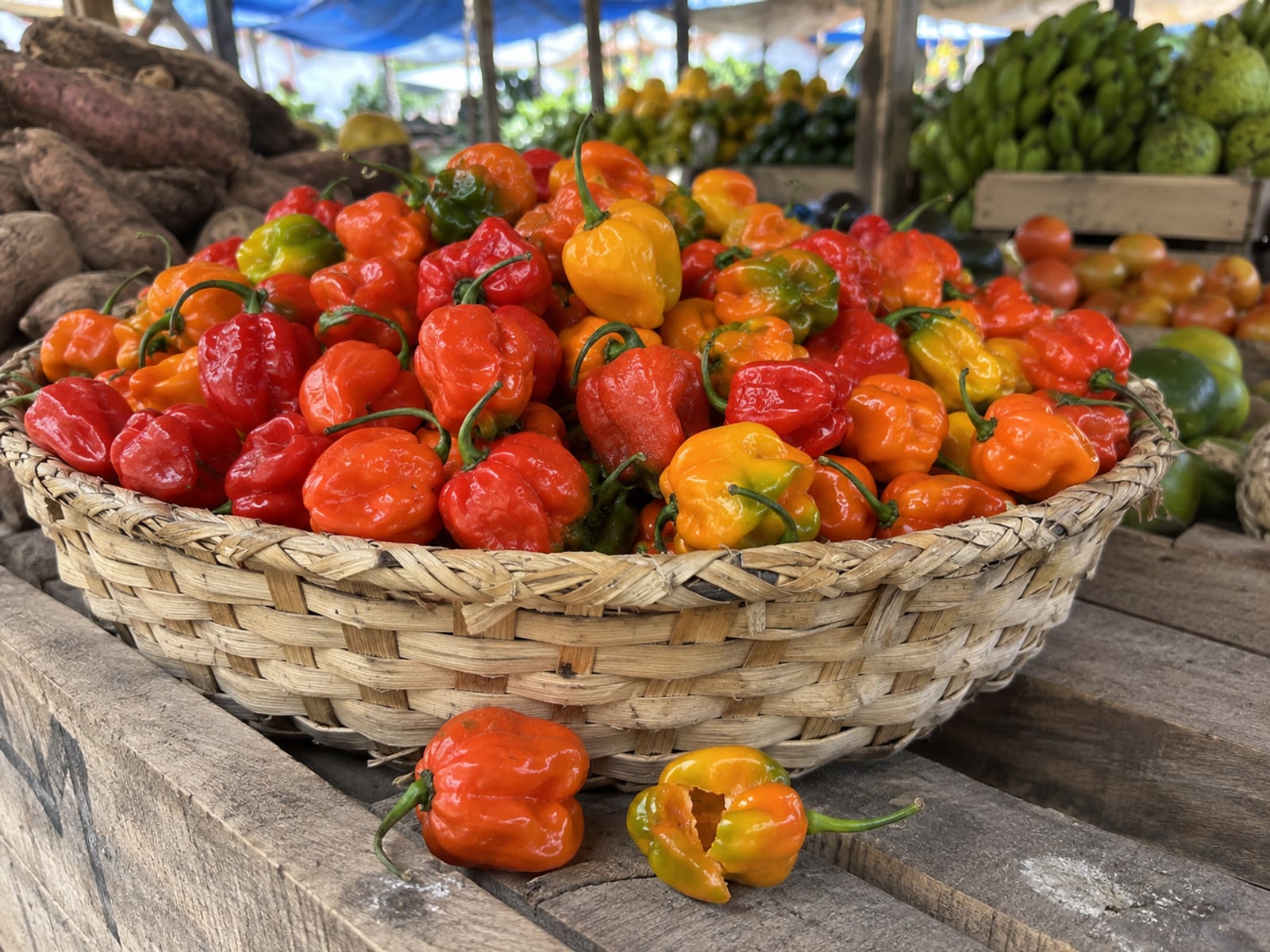 Scotch bonnet brings the heat; ask for the sauce on the side if you are unsure.
Plan for a wait at lunch and on weekends, when the counter is busiest.
Which one to order
Pick pork for a heavier, deeper and more intensely smoky meal, and for the richer taste that comes with the fat. Pick chicken for a lighter plate, a quicker cook and a clear choice of portion size. The choice is simple: pork for depth, chicken for lightness and predictable serving sizes.
If you are sharing, order one of each and compare them side by side. The difference in fat and smoke is easiest to judge that way.
A quick check before you order
For places to eat in other parishes, use the restaurant directory, which is organised by parish.
Common questions
What is the difference between jerk pork and jerk chicken?
Both use the jerk method, with seasoning such as pimento, Scotch bonnet, scallion and thyme, followed by slow cooking over wood or another smoky fire. Pork is usually cut into thick pieces or slabs and is denser, richer and often fattier. Chicken cooks faster, comes as a quarter, half or whole bird and has a lighter texture.
What does jerk pork taste like?
Jerk pork is smoky, spicy, aromatic and savoury. Pimento wood gives it a warm, allspice-like smoke, and Scotch bonnet adds heat with a fruity pepper flavour. A well-cooked piece is tender inside, with browned or darkened edges.
What part of the pig is used for jerk pork?
Jerk pork is usually sold as chopped pieces or thick slabs rather than as one named cut. The exact cut varies by vendor and can include shoulder, belly or loin. If the cut matters to you, ask whether the serving is lean, fatty or mixed.
What do you eat with jerk pork?
Festival, a slightly sweet fried dumpling, is one of the most familiar partners. Roast breadfruit adds a soft, starchy contrast, and bammy, made from cassava, has a firm, mild texture. Roast yam, fried plantain and rice and peas also appear with jerk, and the 2022 Boston Jerk Festival coverage names rice and peas alongside jerk pork.
Why do Jamaicans call it jerk?
Jerk names the seasoning, the marinade and the cooking method. One widely cited explanation, which Smithsonian Magazine repeats, links the word to charqui, a Spanish term for dried or preserved meat, but its exact origin is still debated. The method draws on Taíno cooking, African seasoning traditions and Maroon foodways, so the name points to a long history of preserving meat.