


If you want ackee and saltfish the way it is usually served, eat it at breakfast. In Kingston, Sonia's Homestyle at 17 Central Avenue serves it on a breakfast menu that runs from 7:30 to 10:30 a.m., and Mama Chu Chu, also in Kingston, lists it on its current menu. Outside the capital, Visit Jamaica's December 2024 guide names The Pelican Grill on Gloucester Avenue in Montego Bay, Miss T's Kitchen on Main Street in Ocho Rios, and Pushcart and Miss Lily's in Negril.
Ackee is Jamaica's national fruit, and ackee and saltfish is the national dish. The cook mixes the soft yellow arils with salted cod that has been desalted, which means soaked to draw out most of the salt, then onions, tomatoes, peppers and seasoning. It is commonly served at breakfast with fried dumplings and boiled green banana, and yam or sweet potato are common alongside. Read the side options on the menu before you order, because breadfruit, festival (a sweet fried dough), bammy (a cassava flatbread), fried plantain, hard-dough bread and callaloo (a leafy green) are all traditional partners too.
Where to eat it in Kingston
Sonia's Homestyle Cooking and Natural Juices sits at 17 Central Avenue. Visit Jamaica's December 2024 guide names it, and its current menu lists ackee and saltfish as a breakfast meal from J$1,400 (about US$9) as of October 2026. The breakfast period runs from 7:30 to 10:30 a.m., so if you arrive after 10:30 a.m. you will be outside it. Plan an early start. Confirm before you go: the plate price, because the same menu also shows a J$1,500 starting price, and the breakfast hours on the day you plan to visit.
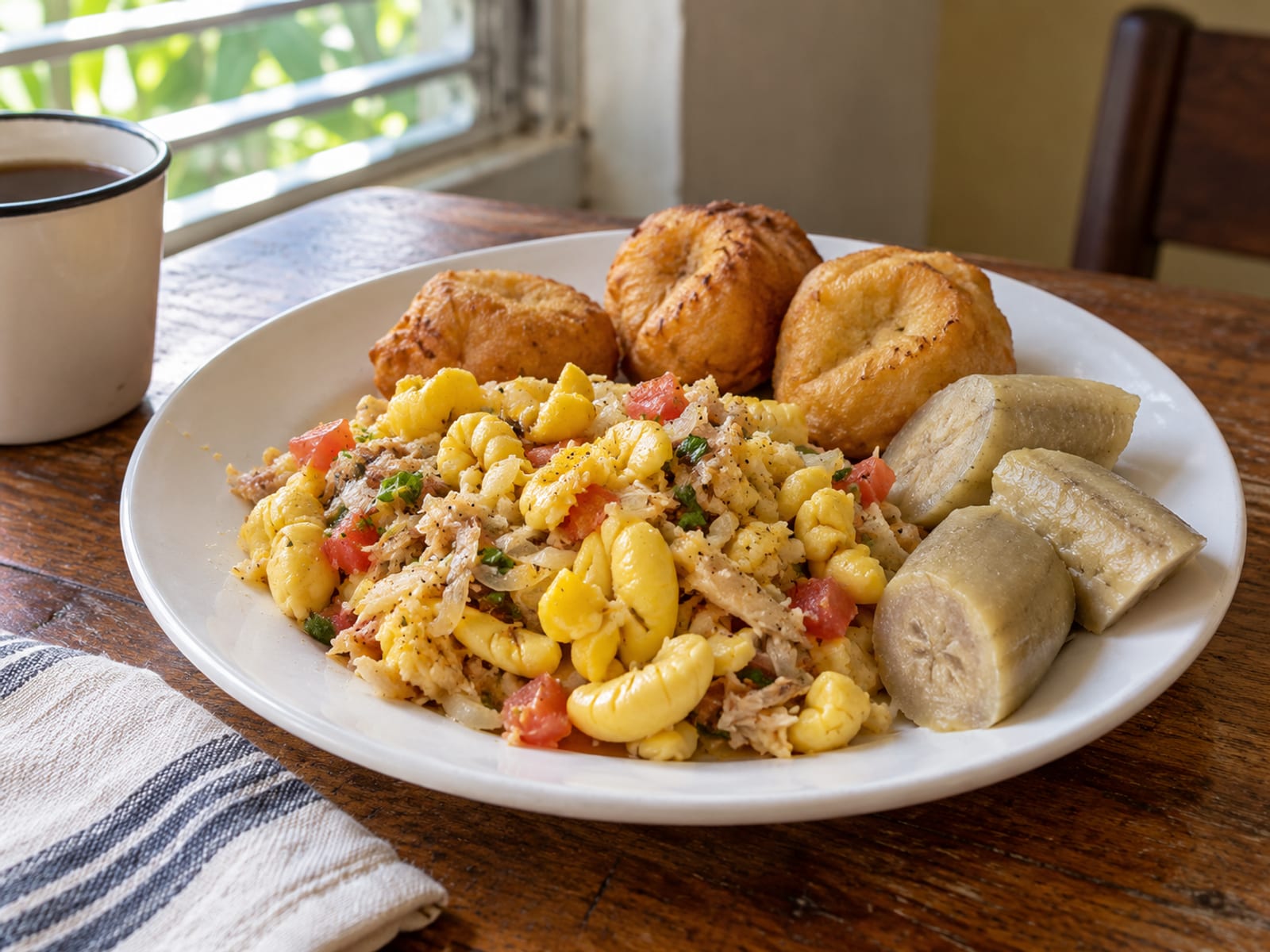 Breakfast is when ackee and saltfish is usually served in Kingston.
Mama Chu Chu, also in Kingston, lists ackee and saltfish at J$1,000 (about US$6) on its current menu as of October 2026. Its published hours run Monday to Saturday, 6 a.m. to 10 p.m., so plan your visit for a weekday or a Saturday. Those hours are longer than Sonia's breakfast window, which gives you more room in the day. If you want more choices in the capital, browse the Kingston restaurant listings.
For a fuller picture of the morning meal, the Jamaican Breakfast guide covers what locals eat at breakfast and where to get it.
Montego Bay and Ocho Rios
The Pelican Grill sits on Gloucester Avenue, the main stretch of Montego Bay's Hip Strip, and is a place to try ackee and saltfish. If you would rather eat in a hotel setting, Roots Rock Restaurant at the S Hotel in St James served an ackee and saltfish bruschetta, which the Jamaica Observer wrote about in April 2023 and the Jamaica Gleaner covered in June 2023.
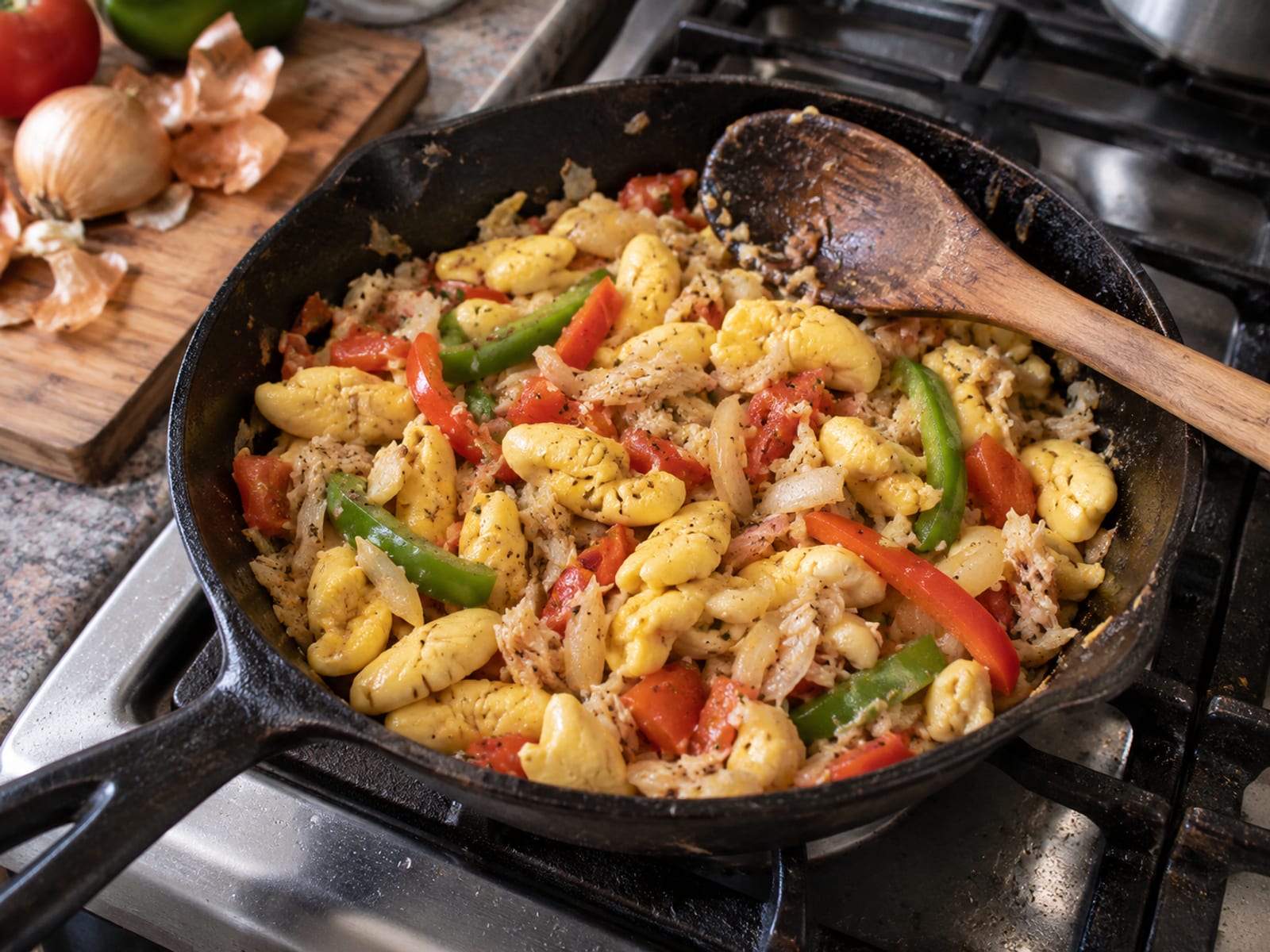 Ackee and saltfish is cooked with onions, tomatoes, peppers and seasoning.
Miss T's Kitchen at 65 Main Street, Ocho Rios, has ackee dishes and saltfish preparations on its menu. One of the ackee plates is curried ackee on crispy bammy, and it is a place to try the national dish. For more places in the parish, see the St Ann restaurant listings.
To reach any of these places, use the street address with a licensed taxi, hotel transport or a map application. Small cookshops and market vendors may have limited parking, so a taxi can be the easier way to reach them. If you are coming off a ship, see where to eat near Falmouth cruise port. If you are choosing between towns for the whole trip, read Negril vs Montego Bay vs Ocho Rios: Which Is Best for Food? before you book.
Negril and the resort kitchens
Miss Lily's on Norman Manley Boulevard serves ackee and saltfish on its current Negril menu, with steamed callaloo, festival, sweet plantain and banana bread on the side. Pushcart on West End Road is another Negril place to try the dish.
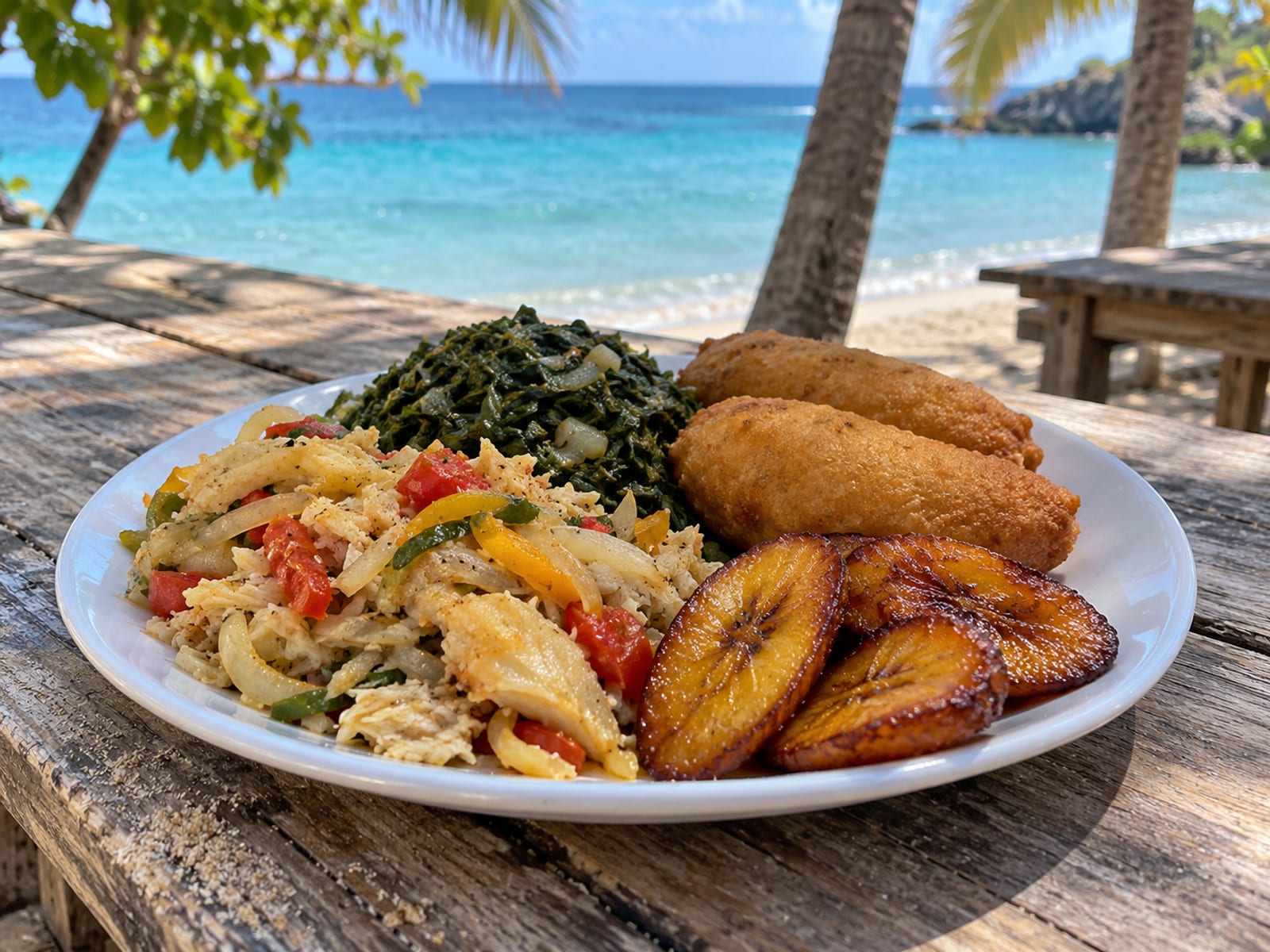 Callaloo, festival and sweet plantain are the sides Miss Lily's lists with the dish.
If you are staying at a resort, Blue Skies Beach Resort in Negril also lists ackee and saltfish, served with fried or boiled dumplings, green banana and yam. Resort menus can cost more than a local breakfast spot. For a wider view of eating beyond your resort, read Eating Outside Your All-Inclusive: Local Food Near Negril, MoBay and Ochi Resorts. You can also browse the Westmoreland restaurant listings for more Negril places.
What it costs, plate by plate
Prices depend on the kind of place you choose, so compare like with like. Sonia's and Mama Chu Chu both price the dish in Jamaican dollars, and those local plate prices are the fair comparison for a breakfast spot.
Hotel prices are a different story. The Jamaica Pegasus in New Kingston lists ackee and saltfish at US$17 on its 2025 room-service menu. That price is in US dollars and carries General Consumption Tax (GCT), a service charge and a delivery charge on top. At those prices, the hotel plate costs close to double Sonia's breakfast plate. Ask whether the restaurant takes cards, Jamaican cash or US dollars before you order, and keep some Jamaican cash for a smaller spot.
Some Jamaican restaurants add a service charge or gratuity to the bill, so read the bill before you add a tip. A service charge already on the bill is not the same as a tip you choose to leave. Keep that in mind when you compare a local plate with a resort plate.
Why ackee costs more lately
Ackee prices rose in 2024. The Jamaica Gleaner reported in September 2024 that Hurricane Beryl struck at the start of the ackee season and destroyed the July and August crop. Local distribution quadrupled because the tourism industry was buying more ackee than usual. A case of 24 cans sold for about US$120. Demand from hotels, local consumers and export markets all competed for a smaller supply.
That case price is a wholesale figure from a processor. It is not what you pay for a plate or a pound at a restaurant or market. A broader produce price spike followed the same storm in July 2024, when other crops were damaged too.
How ackee has to be prepared
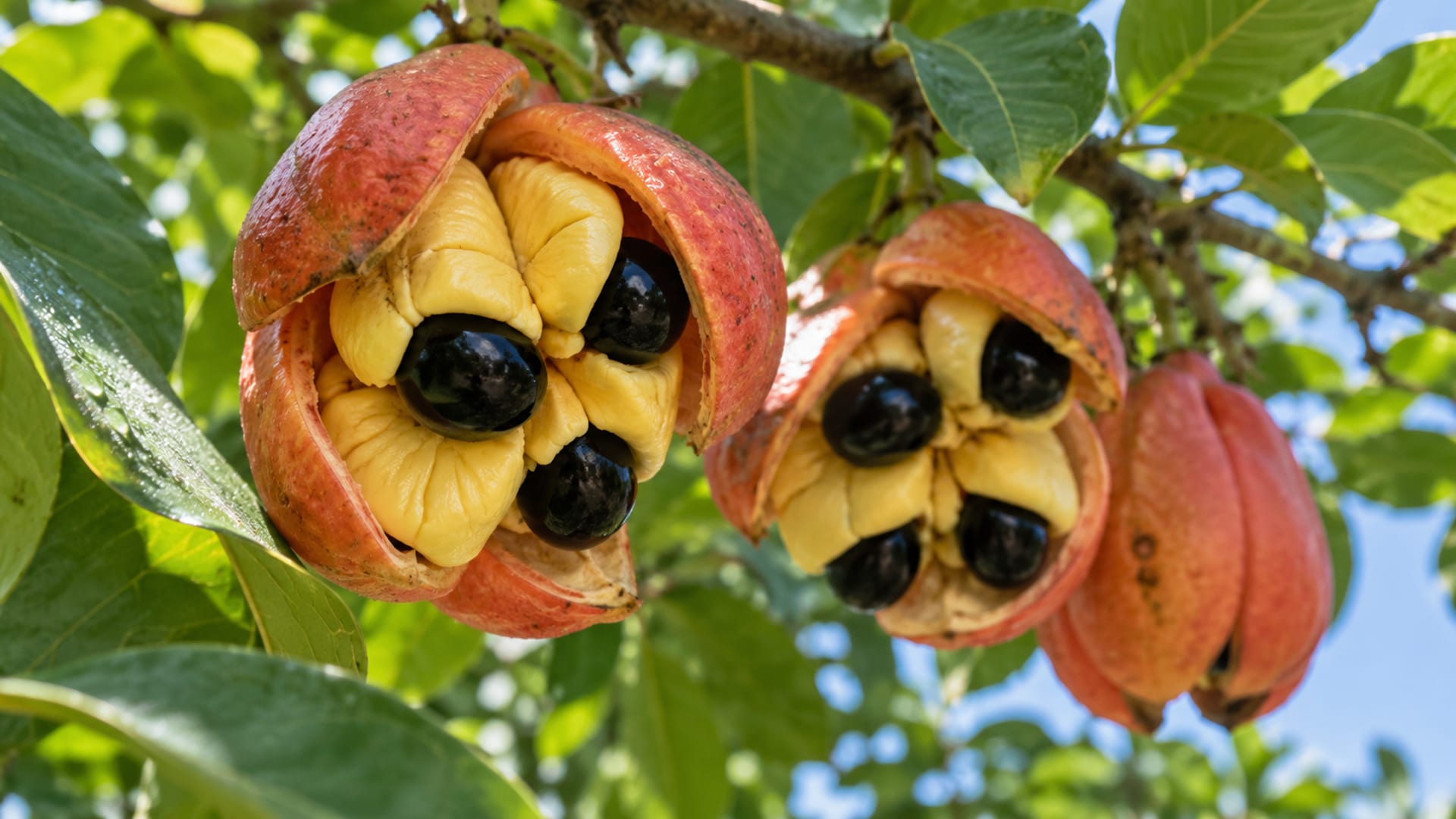
Ackee has to ripen and open naturally on the tree. The edible part is the yellow aril. It must be separated from the seed and the pink membrane, washed and then cooked. Unripe ackee, and the seeds and rind, contain hypoglycin toxins, which is why the fruit cannot be treated like an ordinary fruit.
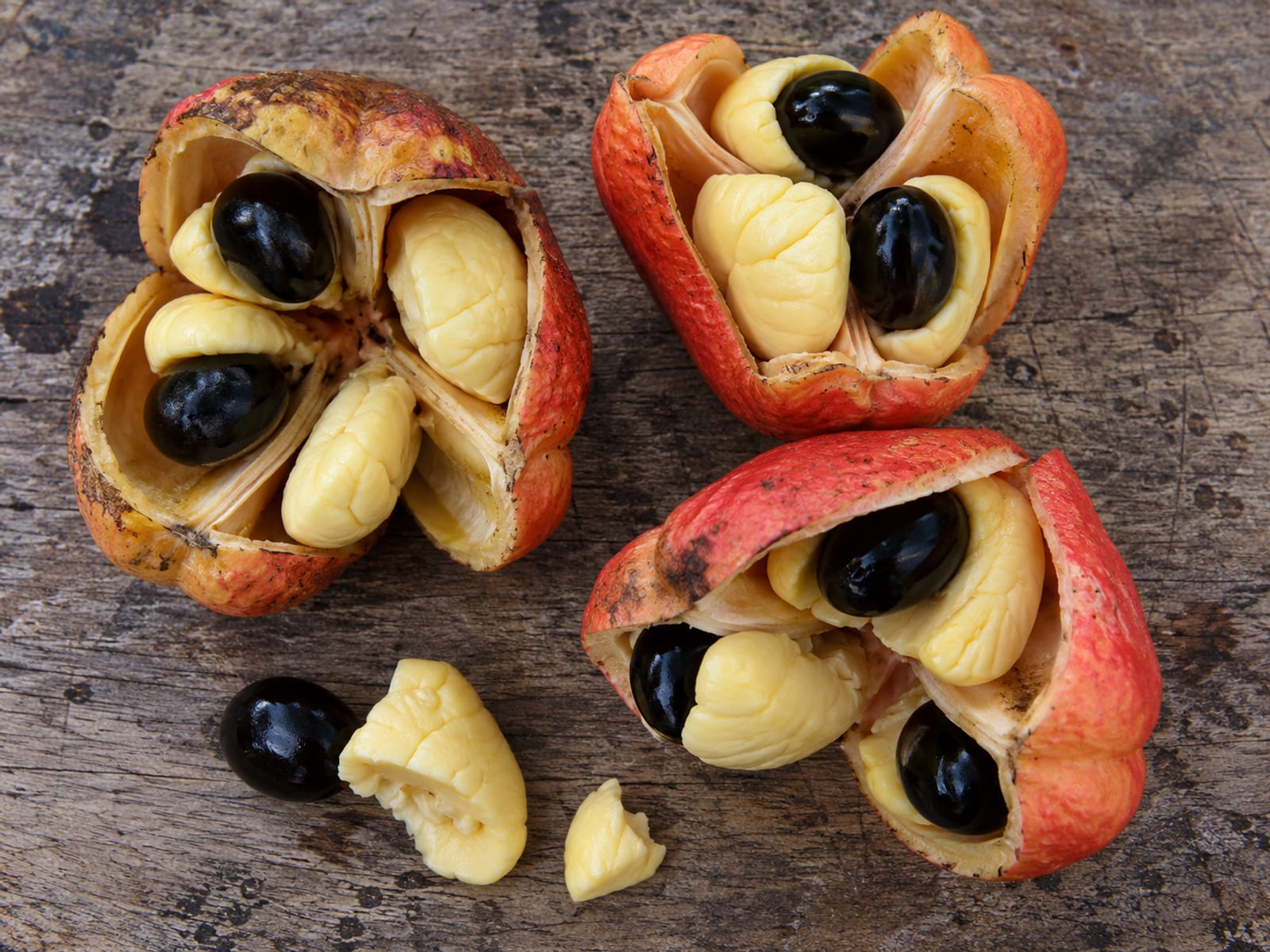 Only ackee that has opened naturally on the tree is safe to use.
The Jamaican Ministry of Health's 2016 advice is simple. Use only fruit that has opened naturally, remove the seed and membrane, cook the arils thoroughly and discard the cooking water. Symptoms of poisoning can include vomiting, abdominal pain, dizziness, diarrhoea and sweating. If you ever feel those symptoms after eating ackee, get medical help quickly.
If you buy ackee to cook yourself, choose fruit that has opened naturally on the tree, and follow the same steps at home. For visitors, the safest choice is ackee prepared by a reliable restaurant or a properly processed canned product. To learn how the fruit grows and where to buy it, read Jamaican Fruits to Try: Guinep, Otaheite Apple, Ackee and Where to Buy Them.
Common questions
What do Jamaicans eat with ackee and saltfish?
Fried dumplings and boiled green banana are the most common partners at breakfast. Yam, sweet potato, roast or fried breadfruit, festival, bammy, fried plantain, hard-dough bread and callaloo are other traditional sides. Breakfast plates often lean on dumplings or boiled food, while festival, bammy and breadfruit give you a different starch.
Why is ackee so expensive now?
The short answer is a short crop. Hurricane Beryl damaged the 2024 ackee harvest, which cut supply for processors, while demand from tourism and local buyers rose. Prices follow the crop, so expect them to move from season to season.
How much for a pound of saltfish in Jamaica?
The Jamaica Star reported the only dated market example: J$200 for a quarter-pound in Maverley, St Andrew, on May 24, 2024. At that rate a pound works out to J$800 (about US$5). Prices vary by seller, quality and location, so treat that figure as a snapshot. The seller described a quarter-pound as a normal household buy, because it can feed a family when it is cooked with vegetables, beans or ackee. Ask the market vendor for today's price before you buy.
Why is ackee illegal in the US?
The restriction covers unripe ackee, which carries hypoglycin A, and the same toxin is found in the seed and rind. Fully ripe, properly processed ackee can be imported, and canned or frozen products from processors with suitable safety controls are permitted. The FDA assesses ackee processors before it accepts their products for import, and it can refuse products that may carry unsafe toxin levels. For what travellers can carry home, read the customs guide, Can You Bring Jamaican Food Home?
Why can't you eat ackee raw?
Unripe ackee can contain enough hypoglycin A to cause severe low blood sugar, vomiting, abdominal pain, drowsiness, convulsions, coma and death. Cooking does not make unripe ackee safe, because the toxin survives heat. The seed and rind also contain the toxin, so they must come out before the arils go into the pan. Eat only fruit that opened on the tree, and choose a reliable restaurant or a properly processed canned product if you are unsure.
Find more places to eat by parish in our restaurant directory.