


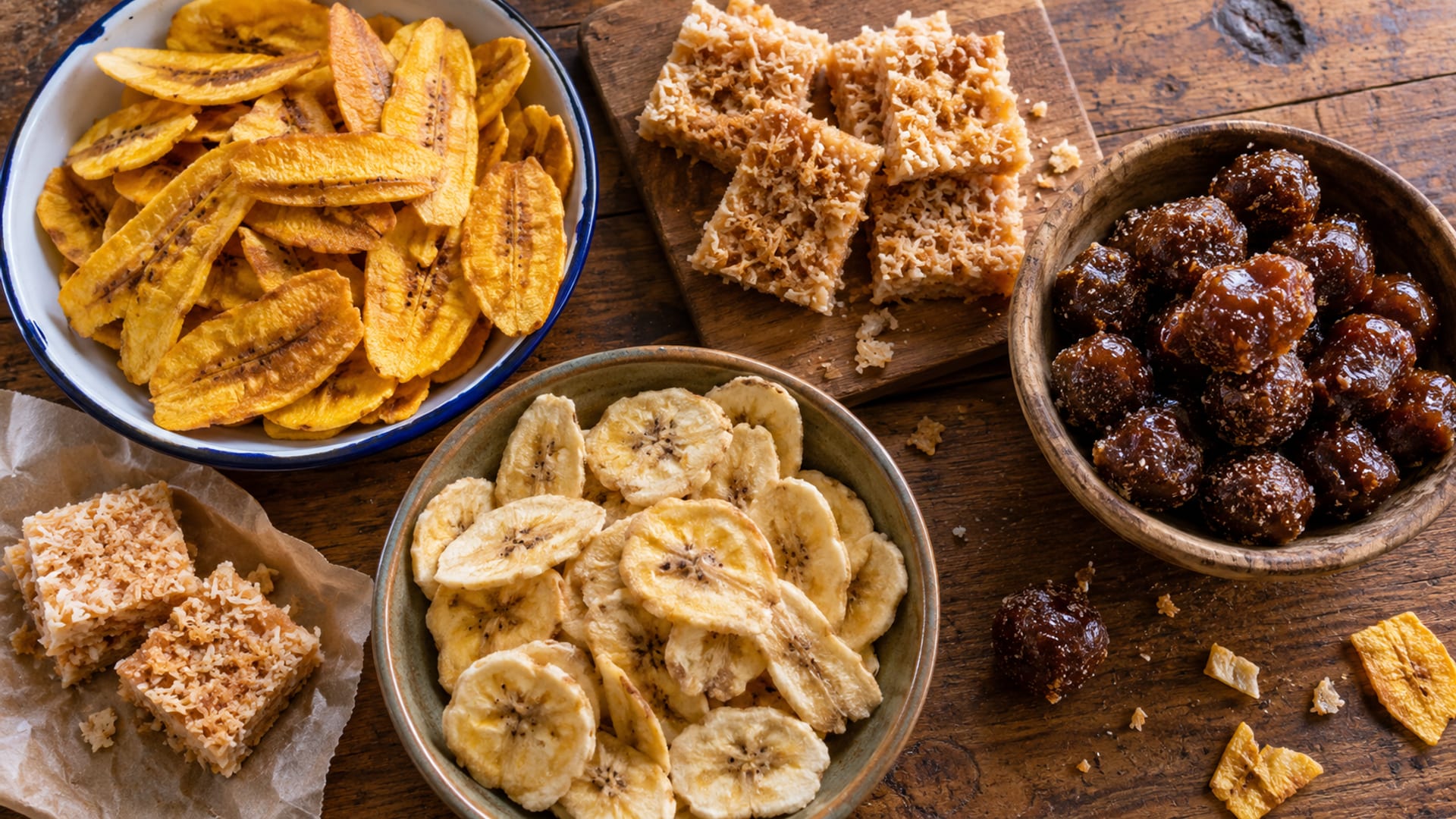
Jamaicans snack on sweet things like gizzada, grater cake, coconut drops, tamarind balls and bulla, and on savoury things like patties, bun and cheese, bammy, plantain chips and banana chips. You can buy most of them at supermarkets, bakeries, corner shops and markets, and many also turn up at gas stations, roadside stands and airport shops. If you are packing snacks for a trip, the sealed, dry ones travel best.
The sweets Jamaica is known for
Jamaica is known for coconut and fruit sweets more than for one signature candy. Grater cake is shredded coconut cooked with sugar, and it is usually coloured pink and white. Coconut drops are chopped or grated coconut cooked with sugar and ginger until firm. Tamarind balls are tamarind pulp rolled in sugar. They are tart and sugary, and they can be chewy or firm depending on how they are made. You will find them in supermarkets and gas stations, in flavours such as coffee and ginger.
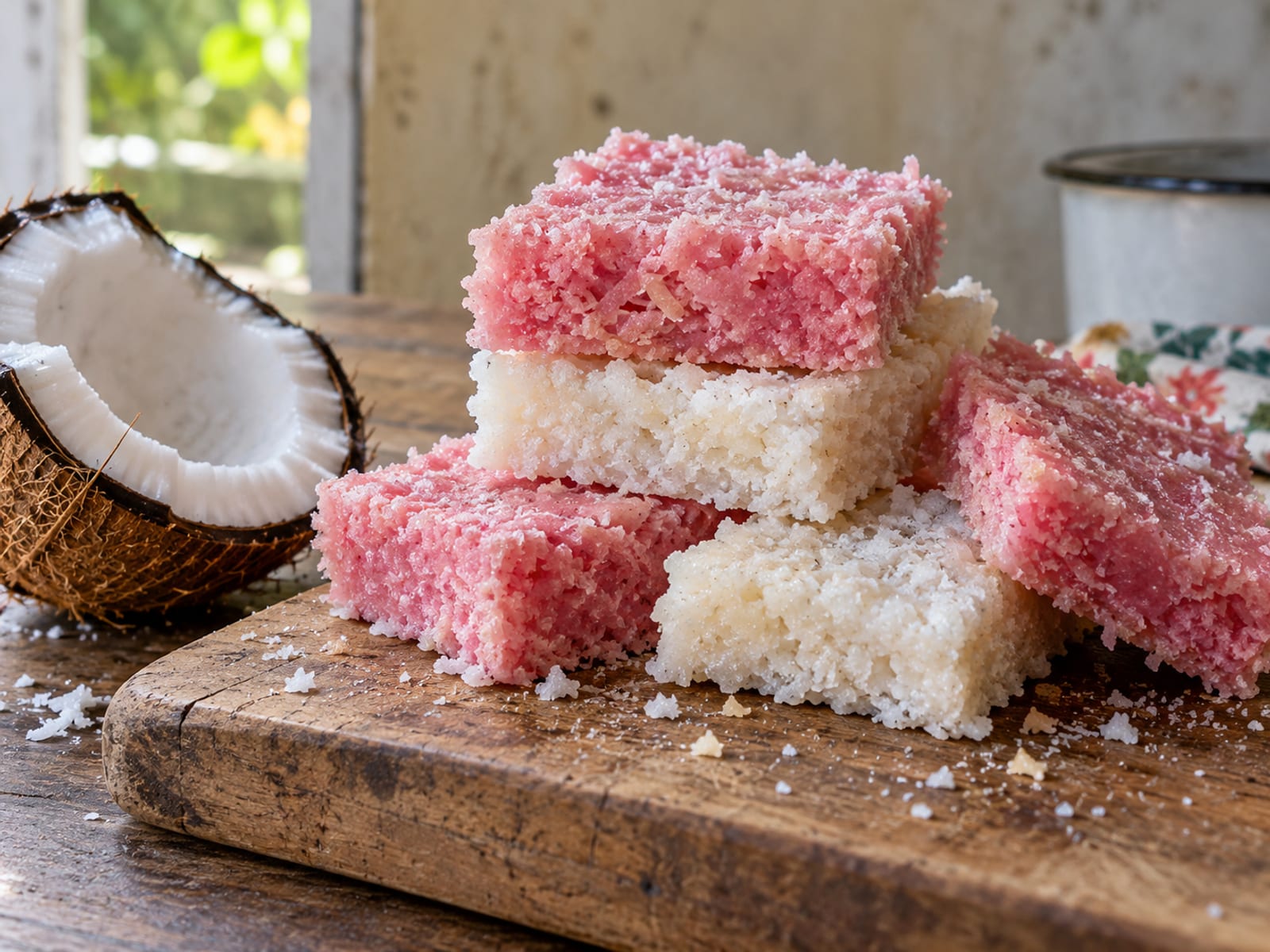 Grater cake is shredded coconut cooked with sugar and coloured pink and white.
Peanut drops are a firm sweet made from peanuts and cooked sugar or syrup, and peanut cake is a close relative. Gizzada works differently. It is a crimped pastry shell filled with sweetened, spiced coconut, and some people call it "pinch-me-round." Visit Jamaica also names Busta, a hard sweet made from coconut and wet sugar. Local makers produce variations too, including cranberry gizzada, peanut cakes, sesame grater cakes and coconut drops, so one sweet can come in several versions.
Grater cake is shredded coconut cooked with sugar and coloured pink and white.
Peanut drops are a firm sweet made from peanuts and cooked sugar or syrup, and peanut cake is a close relative. Gizzada works differently. It is a crimped pastry shell filled with sweetened, spiced coconut, and some people call it "pinch-me-round." Visit Jamaica also names Busta, a hard sweet made from coconut and wet sugar. Local makers produce variations too, including cranberry gizzada, peanut cakes, sesame grater cakes and coconut drops, so one sweet can come in several versions.
For a first purchase, try grater cake and tamarind balls side by side. Grater cake is sweet and coconut-forward, while tamarind balls bring the tart, sugary contrast.
Savoury snacks and finger foods
Patties are Jamaica's best-known snack, as Rough Guides puts it. Bun and cheese is a sweet spice bun eaten with slices of processed cheese. It is a daily snack staple, with especially strong Easter associations, and it is portable enough to eat on the move. Meatloaf and callaloo loaf are other popular savoury choices.
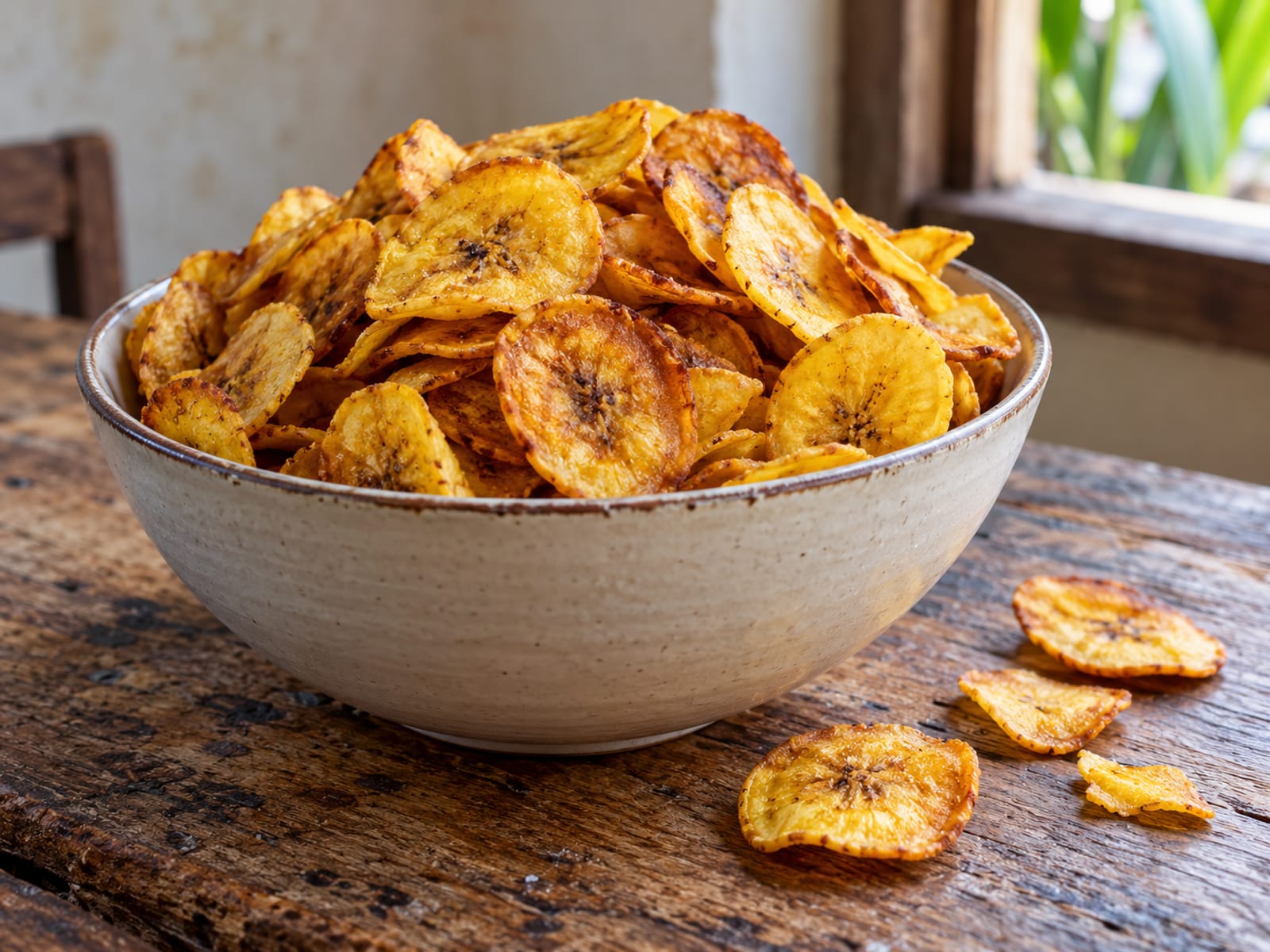 Plantain chips are thin fried slices, commonly sold salted or seasoned.
Bammy is a flat cassava cake, usually fried or baked. It is commonly served with fish, but it can also be eaten as a snack on its own.
Plantain chips are thin fried slices, commonly sold salted or seasoned.
Bammy is a flat cassava cake, usually fried or baked. It is commonly served with fish, but it can also be eaten as a snack on its own.
Plantain chips are thin fried slices of green or ripe plantain, commonly sold salted or seasoned. Banana chips are fried or baked slices of banana, and St Mary's and Day Oh are two Jamaican brands you may come across. Excelsior crackers are Jamaican water or cream crackers, eaten alone or with cheese, butter or other savoury toppings. Cheez Trix, a packaged cheese-flavoured snack, is still a favourite with many Jamaicans.
Roadside snacks follow their own pattern. Roast corn, roast breadfruit, saltfish with roast yam, festival, fried plantain, saltfish fritters, stamp and go and pepper shrimp all turn up at roadside vending areas. They are tied to particular stops and vendors rather than to one national chain, so the snack changes with the stop. Our Middle Quarters pepper shrimp guide covers one of them in more detail. The same stops sell fresh fruit, and Jamaican fruits to try and where to buy them names what is in season.
Our Jamaican patties guide covers the big patty brands and why the pastry is yellow, if the patty is the snack you are most curious about.
Where to buy Jamaican snacks
Jamaican snacks are sold through supermarkets, bakeries, corner shops, markets, gas stations, roadside vendors and airport shops. Each place suits a different job. Supermarkets are the easiest place to find sealed packs, while bakeries and pastry shops are where you will find the fresh sweets such as gizzada, coconut drops and bulla.
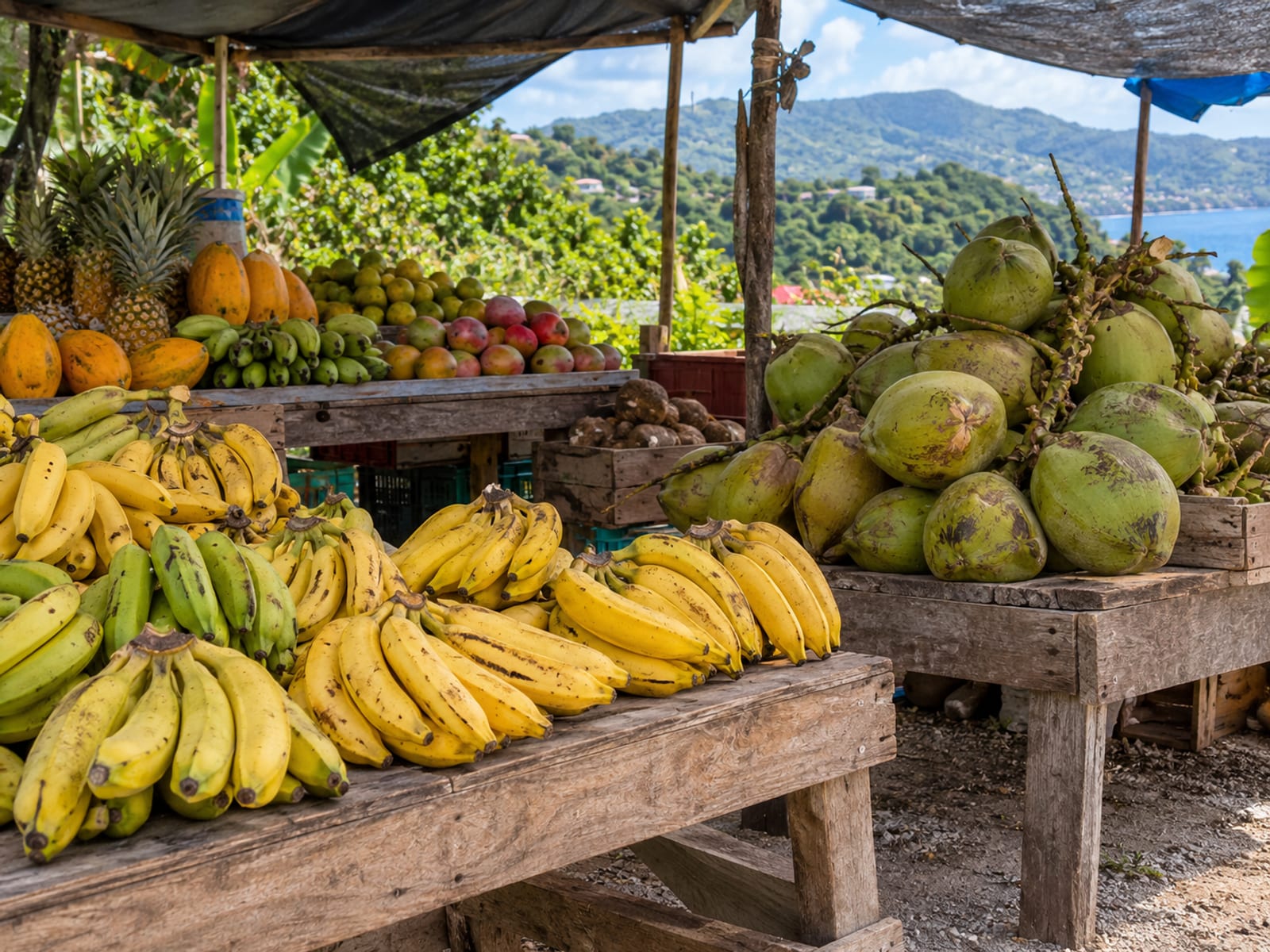 Markets and roadside stands sell snacks and fresh fruit alongside supermarkets and bakeries.
Loshusan Supermarket is a good example of the supermarket route.
Conversions use about J$159 to US$1, the Bank of Jamaica rate on 13 October 2026. The shop has locations in Barbican, in the Barbican shopping complex, and in New Kingston, Kingston. It is open 9 a.m. to 8 p.m. Monday to Saturday and 10 a.m. to 4 p.m. on Sunday. Confirm hours, prices and stock with the shop before you go, because they change by location and date.
Markets and roadside stands are a different story. Jamaica's designated markets are regulated vending locations, and municipal corporations set up designated vending zones that include markets. The Jamaica Information Service says food sold in open areas or on roads must be protected from animals, flies and dust in a clean, sanitary container. Prices at these places can be cash only, or they may not be posted at all, so ask the vendor before you order.
Jamaican and Caribbean grocery stores abroad sell packaged bulla, gizzada, coconut drops, crackers, bun and cheese products and Jamaican chips. What is on the shelf depends on the city and the importer, so check your local store first. If a hot patty is what you miss, see Juici Patties in the US and every city it has opened in.
Some snacks are seasonal. Easter bun and seasonal tamarind balls are two examples, so if you are planning around a holiday, plan around the season too. For fresh or unsealed items, ask how long the product stays safe and whether it needs refrigeration.
Taking snacks home or abroad
Start with the packing rule. The best choices are commercially packaged, sealed, dry snacks with labels and a reasonable shelf life. That means factory-sealed banana chips, plantain chips, cassava chips and breadfruit chips, packaged Excelsior crackers and other dry crackers, and sealed tamarind balls, grater cake, coconut drops and peanut sweets. Packaged bulla and commercially sealed bakery snacks also travel well. Sealed bammy can work too, if the package gives storage instructions and the destination country allows it.
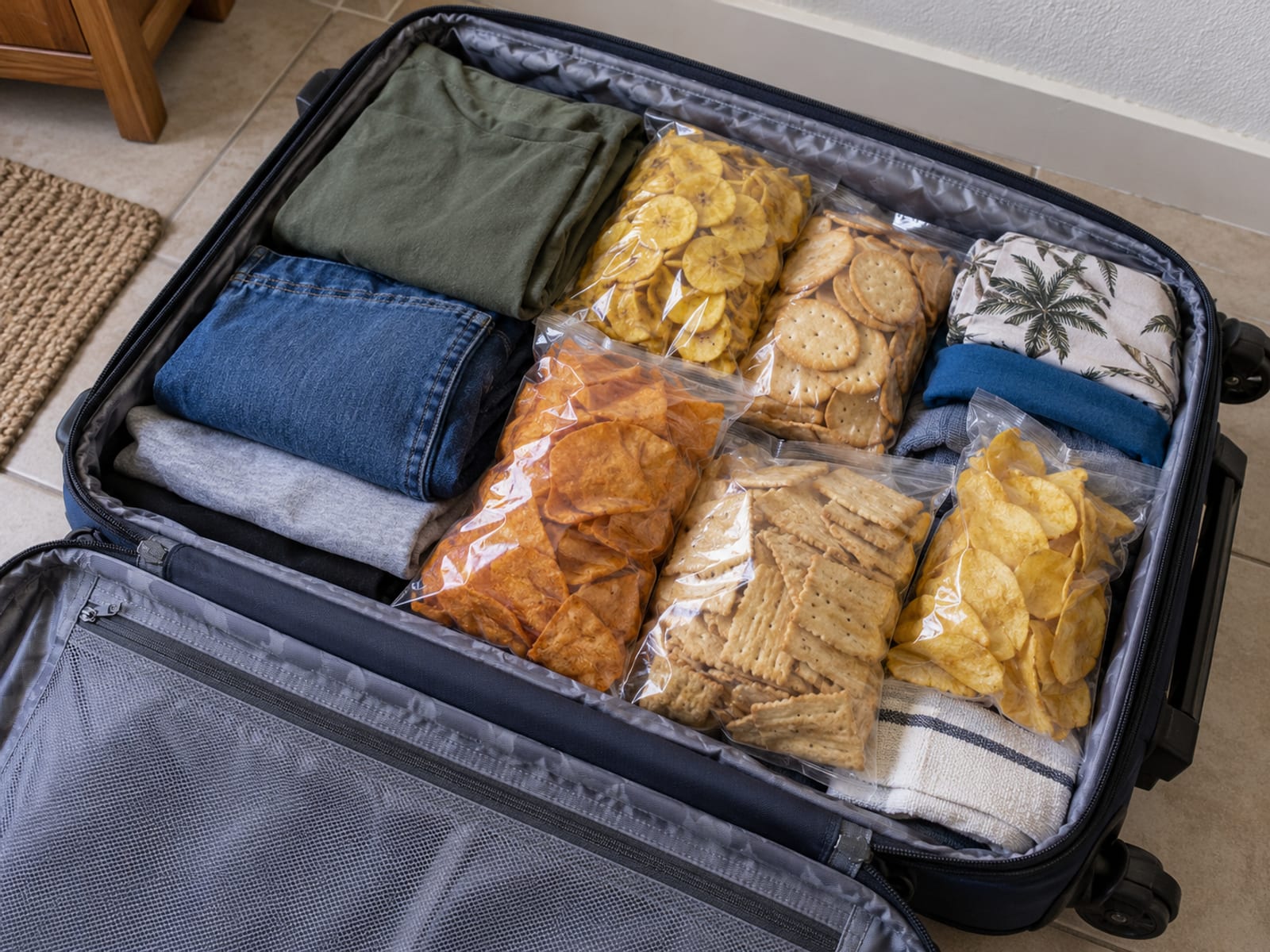 Sealed, dry snacks with labels are the ones that travel best.
Fresh bakery items such as gizzada, coconut drops and bulla can soften, crumble or spoil on a long trip, so they are a gamble in a suitcase. Cheese and bun combinations may run into dairy or food-import rules in the country you are flying to.
Sealed, dry snacks with labels are the ones that travel best.
Fresh bakery items such as gizzada, coconut drops and bulla can soften, crumble or spoil on a long trip, so they are a gamble in a suitcase. Cheese and bun combinations may run into dairy or food-import rules in the country you are flying to.
If you are bringing snacks into Jamaica, the Ministry of Agriculture says commercially labelled baked goods, chocolate, candies, cereals, biscuits, crackers, cookies and other processed snacks can enter for personal use without a veterinary import permit, subject to inspection. The limit is up to 45 kg per person. The products should be commercially packaged, sealed, labelled and free of meat, and travellers must declare food and animal products on the customs form. Requirements can change with disease-control conditions.
Whether you can take snacks out of Jamaica depends on the rules of the country you are flying to, and those rules differ from one country to the next. Keep snacks in their original packaging, keep the ingredient labels, and declare food when the form asks. Our guide to bringing Jamaican food home through US, UK and Canadian customs covers the rules for those three countries.
Find a shop near you
To find a bakery, corner shop or cookshop near where you are staying, start with the restaurant directory and choose your parish. If you are in Kingston, the Kingston parish page is the place to begin.
Common questions
What do Jamaicans like to snack on?
Bun and cheese, patties, bulla, Excelsior cream crackers and hard dough bread are everyday snack foods, as the Jamaica Observer has noted. Jamaicans also reach for roasted peanuts, bammy and packaged cheese snacks such as Cheez Trix. Sweets such as gizzada, grater cake and tamarind balls round out the list.
What candy is Jamaica known for?
Jamaica is known for coconut and fruit sweets rather than one candy. The strongest examples are grater cake, coconut drops, tamarind balls, peanut drops and Busta Backbone, a hard coconut and sugar sweet. Gizzada is candy-like too, though it has a pastry shell.
What are some Jamaican finger foods?
Patties, bun and cheese, plantain chips, banana chips, Excelsior crackers with cheese and bammy pieces served with fish are all easy to eat on the move. Roadside favourites such as roast corn, roast breadfruit and saltfish with roast yam depend on particular stops and vendors rather than a national chain.
What is bulla?
Bulla is a small, flat cake traditionally made with flour, molasses and baking soda, and ginger and spice versions are common. In 2009, the Jamaica Gleaner called it a popular treat for schoolchildren. When you buy it, ask whether it is plain, ginger, spice or coconut, and whether the price is for one piece or a multipack.
Where can you buy Jamaican snacks?
You can buy them at supermarkets, bakeries, corner shops, designated public markets, roadside vendors, approved food stalls, airport shops and Jamaican or Caribbean grocery stores abroad. Packed snacks from supermarkets are the easiest to carry, while fresh bakery sweets are best eaten soon after you buy them.